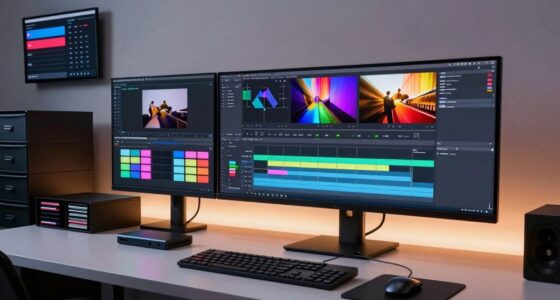

Using dual monitors can greatly boost your editing speed by allowing you to keep essential tools, references, and previews open at the same time. You spend less time switching between tabs and more time focusing on your work. Proper setup also improves ergonomics, reducing fatigue during long sessions. This organized workspace helps you make quicker decisions and stay focused. If you keep exploring, you’ll discover even more ways to optimize your editing workflow.

Get movie nights delivered free — and shop member deals
- Fast, free delivery on millions of items
- Access to Prime Big Deal Days deals on October 6–7
- Prime Video, Amazon Music and more included
Key Takeaways
- Enables simultaneous access to multiple tools, references, and timelines, reducing task-switching time.
- Facilitates quicker color comparisons and adjustments, improving editing accuracy and speed.
- Enhances workspace organization, minimizing distractions and streamlining workflow processes.
- Promotes ergonomic positioning, reducing fatigue and maintaining productivity during long editing sessions.
- Allows for efficient management of complex projects by keeping essential resources visible at all times.

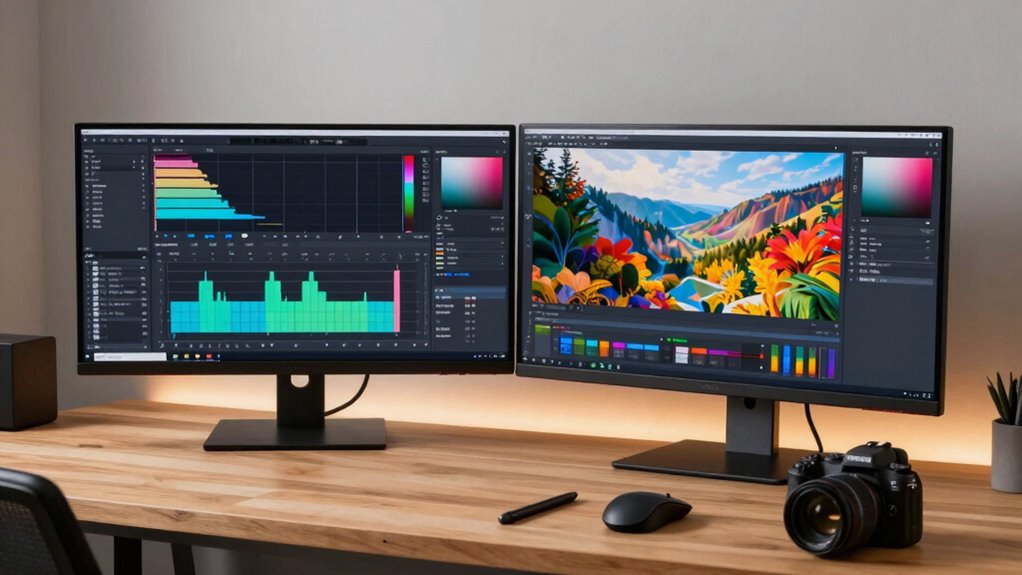
Using dual monitor setups can markedly boost your editing speed by allowing you to view more tools, references, and timelines simultaneously. When you have two screens, you can keep your primary editing window open on one, while dedicating the other to auxiliary tasks like color grading, asset management, or previewing clips. This setup minimizes the need to constantly switch between tabs or windows, which can slow you down and disrupt your workflow. As a result, you can focus more on the creative aspects of editing rather than on managing your workspace. Incorporating efficient workspace organization can further enhance your productivity and make your dual monitor setup more effective.
Using dual monitors streamlines editing by enabling simultaneous access to tools, references, and timelines for faster workflow.
Color accuracy becomes especially important with a dual monitor setup. When you’re editing footage, having a monitor that displays true-to-life colors ensures your adjustments are precise. Many professional editors invest in color-calibrated displays to maintain consistency across projects, and with two monitors, you can compare color profiles side by side. This comparison helps you make more accurate color corrections, leading to better final output. Additionally, keeping a dedicated monitor for color grading means you don’t have to switch back and forth, saving time and reducing errors.
Ergonomic comfort also plays a significant role in boosting your editing speed. When your monitors are positioned correctly—at eye level and at a comfortable distance—you reduce strain on your neck, eyes, and shoulders. This physical comfort allows you to work longer without fatigue, maintaining focus and efficiency. Plus, ergonomic setups help prevent discomfort-related distractions, so your attention stays on your project. With two screens, you can arrange your workspace to keep frequently used tools within easy reach, further streamlining your process. For instance, placing your timeline on one monitor and your media bins or effects panel on the other reduces unnecessary movement, keeping your workflow smooth and uninterrupted. Incorporating proper ergonomic setup into your workspace can also prevent long-term health issues, ensuring consistent productivity over time. Furthermore, monitor placement is crucial for reducing glare and reflections, which can cause eye strain during extended editing sessions. Additionally, investing in color calibration tools ensures your monitors display accurate colors consistently, which is crucial for professional editing. Ultimately, a dual monitor setup enhances your editing speed by creating an environment that promotes efficiency, precision, and comfort. You can manage multiple tasks more seamlessly, especially when you pay attention to color accuracy and ergonomic positioning. The ability to keep essential tools and references visible at all times means fewer interruptions and a more focused editing session. Over time, this setup helps you develop a faster, more intuitive workflow, making complex projects feel more manageable and less time-consuming. When you invest in the right hardware and arrange your workspace thoughtfully, you’ll notice your editing speed improves noticeably, all while maintaining high-quality output.
dual monitor setup for video editing
As an affiliate, we earn on qualifying purchases.
As an affiliate, we earn on qualifying purchases.
Frequently Asked Questions
Does Monitor Size Affect Editing Efficiency?
Yes, monitor size affects your editing efficiency. Larger screens offer more space for color accuracy and detailed views, making it easier to spot issues and adjust accurately. They also enhance ergonomic comfort by reducing eye strain and the need for constant head movement. When choosing a monitor, prioritize size for better workflow, but guarantee it maintains good color accuracy to achieve professional-quality edits efficiently.
Are There Specific Monitor Brands Better for Editing?
Certain monitor brands excel for editing because they prioritize color accuracy and easy calibration. Brands like Dell, Eizo, and LG are known for precise displays that make your work more reliable and consistent. When choosing, look for models with good factory calibration or those that allow simple calibration adjustments. This guarantees your colors stay true, helping you work efficiently with confidence and produce professional-quality edits.
How Does Monitor Placement Impact Workflow?
You’ll find that ergonomic positioning and visual alignment are essential for an efficient workflow. Position your monitors at eye level, keeping screens directly in front of you to reduce neck strain. Place them close enough to minimize head movement, with primary tasks on your dominant monitor. Proper placement guarantees comfort, helps maintain focus, and speeds up editing, preventing fatigue and allowing you to work longer and more effectively.
Is Dual Monitor Setup Beneficial for Video Editing?
A dual monitor setup is highly beneficial for video editing, especially when working on tasks like color grading and audio calibration. It allows you to dedicate one screen to your timeline and editing tools, while the other displays reference footage, color scopes, or audio meters. This setup streamlines your workflow, reduces switching between windows, and helps you focus on details, ultimately speeding up editing and improving your project quality.
What Budget Options Exist for Dual Monitor Setups?
A dual monitor setup is like a well-organized toolbox—you work faster and more efficiently. For budget options, consider cost-effective solutions like affordable entry-level monitors that deliver decent quality without breaking the bank. Brands like ASUS, Acer, and Dell offer budget-friendly monitors that pair well for dual setups. You can find reliable, budget-friendly monitors online or during sales, making a dual monitor setup accessible without a big investment.
color calibrated monitors for editing
As an affiliate, we earn on qualifying purchases.
As an affiliate, we earn on qualifying purchases.
Conclusion
Setting up dual monitors is like giving your workflow a turbo boost—you’ll find your editing speed soaring, and your projects coming together faster than ever. With more screen real estate, you can effortlessly juggle tools, timelines, and previews without losing your focus. Embrace this setup, and watch your editing efficiency grow like a well-tended garden—blooming with productivity and creativity at every turn. Your workday will never feel the same again.
ergonomic monitor stands for editing
As an affiliate, we earn on qualifying purchases.
As an affiliate, we earn on qualifying purchases.
monitor arm mounts for dual screens
As an affiliate, we earn on qualifying purchases.
As an affiliate, we earn on qualifying purchases.
Fall Picks
fall essentials
As an affiliate, we earn on qualifying purchases.