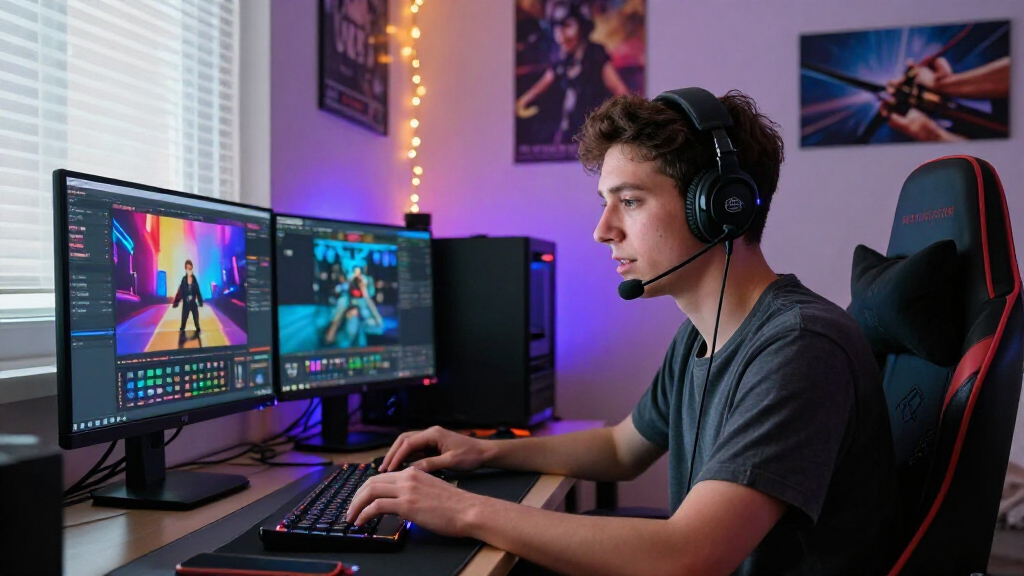
Choosing a gaming laptop for streaming means balancing the game you want to play, the quality of the broadcast, and the money and desk space you can devote to the setup. RTX 4060 and RTX 4080 laptops are common points on that range: both can use NVIDIA’s hardware video encoder to stream gameplay, but their gaming performance and prices differ sharply. An RTX 4060 model is usually the sensible choice for 1080p gaming with a standard stream. An RTX 4080 model makes more sense when you want higher frame rates, demanding games, or room to stream while running other intensive software. The decision is not simply whether the more powerful laptop is faster; it is whether your games and audience benefit enough to justify its higher cost.

Get movie nights delivered free with Prime
- Fast, free delivery on millions of items
- Prime Video, Amazon Music and more included
- Member-only deals all year
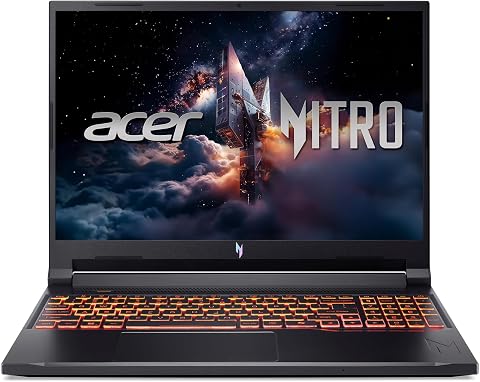
Acer Nitro V Gaming Laptop, Intel Core 7 240H, RTX 5050, 16-inch WUXGA 180Hz, 16GB DDR5, 1TB SSD (ANV16-72-73EW)
- ✔ Processor: Intel Core 7 240H
- ✔ Graphics: NVIDIA GeForce RTX 5050 Laptop GPU, 8GB GDDR7 listed
- ✔ Memory: 16GB DDR5; two slots, supports up to 32GB

Acer Nitro V Gaming Laptop, Intel Core i7-13620H, RTX 4050, 15.6-inch FHD 165Hz, 16GB DDR5, 1TB SSD (ANV15-52-76NK)
- ✔ Processor: Intel Core i7-13620H
- ✔ Graphics: NVIDIA GeForce RTX 4050 Laptop GPU, 6GB GDDR6
- ✔ Memory: 16GB DDR5; two slots, supports up to 32GB

Gaming Laptop 2026, Intel Core i7, 16GB RAM, 512GB SSD, 15.6-inch FHD
- ✔ Processor: Intel Core i7, listed up to 3.9GHz; exact generation unspecified
- ✔ Graphics: Intel HD Graphics 620 integrated graphics listed
- ✔ Memory: 16GB LPDDR3, 1666MHz listed
At a Glance
| Criteria | RTX 4060 gaming laptops | RTX 4080 gaming laptops | Winner |
|---|---|---|---|
| Streaming and encoding | Hardware encoding supports a good-quality stream with modest impact on gameplay in many setups. | Hardware encoding plus greater performance headroom for demanding games and concurrent production tasks. | Tie |
| Gaming performance | Good fit for 1080p gaming, though demanding titles may require reduced settings to maintain high frame rates. | Substantially faster in graphics-heavy games, subject to cooling and the laptop’s power configuration. | B |
| Resolution and graphics settings | Best suited to 1080p; some games benefit from upscaling or lower settings. | Better suited to high settings, higher frame rates, and laptop displays above 1080p. | B |
| Multitasking and production | Adequate for a game, streaming software, and typical background apps; less spare capacity for heavy workloads. | More capacity for demanding games, multiple apps, and heavier streaming or editing workflows. | B |
| Cooling and sustained performance | Often easier to cool than a high-end system, but performance depends on the laptop’s design and power limits. | High performance can produce more heat and fan noise; chassis cooling has a large effect. | Depends |
| Price and overall value | Usually the better value for a first streaming setup or a defined budget. | Costs much more; worthwhile when the extra graphics performance will be used regularly. | A |
| Portability and power use | Often lower power draw and a wider choice of less bulky designs, though laptop size varies. | Typically found in larger, heavier, higher-power laptops, with exceptions by model. | A |
Acer Nitro V Gaming Laptop, Intel Core 7 240H, RTX 5050, 16-inch WUXGA 180Hz, 16GB DDR5, 1TB SSD (ANV16-72-73EW)
For a single laptop in this lineup to handle both the game and the stream, we put the Nitro V 16 first. Its RTX 5050 is the most capable dedicated GPU listed here, while the Intel Core 7 240H and 16GB of DDR5 provide a solid foundation for running a game alongside streaming tools. The graphics advantage matters more to this use than a processor name alone: the lightweight i7 model has integrated graphics and is a substantially weaker fit for demanding games.The 16-inch 1920 x 1200, 16:10 screen gives us more vertical workspace for chat, dashboards, and editing than the Nitro V 15’s 15.6-inch 16:9 panel. Both Acer screens have high refresh rates, but the V 16’s 180Hz is a gaming convenience rather than a guarantee of stream output quality. Its stated dual-fan, quad-intake cooling and fan controls are useful inclusions for extended sessions, though the listing does not provide noise levels or sustained performance tests.We would choose this model over the V 15 when the larger workspace, newer GPU, and stated cooling design matter most. The tradeoff is portability: at 5.29 pounds, it is the heaviest listed laptop, and its 16GB memory may be a constraint for especially demanding games plus multiple creator apps. It supports upgrades to 32GB, but that requires adding memory separately.
Pros:
- RTX 5050 dedicated graphics and Intel Core 7 240H
- 16-inch 1920 x 1200 IPS display with 180Hz refresh
- Dual-fan cooling with fan-speed controls
- 1TB SSD, Ethernet, HDMI 2.1, and Thunderbolt 4
Cons:
- Heaviest option here at 5.29 pounds
- 16GB RAM may need expansion for heavier multitasking
- No listed battery runtime, GPU power limit, or measured streaming performance
Best for: Streamers who want the strongest listed gaming hardware in this group, a larger 16:10 display, and useful wired and USB-C connectivity.
Not ideal for: Buyers who prioritize a lighter carry, need more than 16GB of memory out of the box, or expect long unplugged sessions; battery runtime is not provided.
Bottom line: We recommend the Nitro V 16 as the most complete gaming-and-streaming choice here, provided its weight and 16GB starting memory suit your setup.
“We recommend the Nitro V 16 as the most complete gaming-and-streaming choice here, provided its weight and 16GB starting memory suit your setup.”
Acer Nitro V Gaming Laptop, Intel Core i7-13620H, RTX 4050, 15.6-inch FHD 165Hz, 16GB DDR5, 1TB SSD (ANV15-52-76NK)
The Nitro V 15 is the more compact dedicated-graphics pick. Its RTX 4050 and Core i7-13620H are specifically presented for playing, recording, and streaming, giving it a much stronger basis for demanding games than the integrated graphics in the lightweight laptop. It also keeps the useful 1TB SSD and 16GB DDR5 found in the V 16, so game storage and everyday multitasking start on similar footing.Compared with the V 16, this model trades the newer listed RTX 5050 and taller 16:10 display for a 15.6-inch 1920 x 1080 IPS screen at 165Hz. That smaller Full HD format can make sense when a narrower footprint matters or when the streamer’s main display is external. Wi-Fi 6, Gigabit Ethernet, HDMI, and Thunderbolt 4 give the desk setup practical flexibility, including a wired network option where one is available.Its place at number two reflects the GPU and display differences, not a lack of streaming relevance. The supplied information does not describe a dedicated cooling system, and the laptop weighs 4.7 pounds, so we cannot assume it will run quieter or cooler than its larger sibling. Like the V 16, it starts with 16GB and lists a maximum of 32GB; buyers who plan to run a game, broadcast software, browser sources, and editing tools together may want to account for that upgrade headroom.
Pros:
- RTX 4050 dedicated graphics paired with Core i7-13620H
- 15.6-inch IPS Full HD display with 165Hz refresh
- 1TB Gen 4 SSD and 16GB DDR5
- Wi-Fi 6, Gigabit Ethernet, HDMI, and Thunderbolt 4
Cons:
- RTX 4050 is a step below the V 16’s RTX 5050 in this lineup
- 16GB memory may be limiting for heavier streaming workflows
- Cooling behavior and battery runtime are not specified
Best for: Streamers looking for a 15.6-inch gaming laptop with dedicated RTX graphics, Ethernet, and a fast Full HD display.
Not ideal for: Buyers seeking the strongest graphics option in this comparison or more screen workspace; the Nitro V 16 has the newer listed GPU and larger 16:10 panel.
Bottom line: We would choose the Nitro V 15 when a smaller gaming-focused laptop matters more than the V 16’s newer GPU and roomier screen.
“We would choose the Nitro V 15 when a smaller gaming-focused laptop matters more than the V 16’s newer GPU and roomier screen.”
Gaming Laptop 2026, Intel Core i7, 16GB RAM, 512GB SSD, 15.6-inch FHD
This lightweight laptop is the outlier in our roundup: it is positioned for work, study, and everyday use, but the listed Intel HD Graphics 620 is integrated. That makes it a poor match for demanding modern games streamed at the same time. The Core i7 description and 16GB of memory may sound competitive beside the Acer models, but they do not replace their dedicated RTX graphics. We would treat it as a general-use laptop that can handle lighter games, rather than as a streaming gaming rig.Its strongest case is mobility and everyday utility. At 3.5 pounds, it is notably lighter than either Nitro, and it includes a 15.6-inch Full HD display, backlit keyboard, Windows 11 Pro, and Office according to the listing. For someone who wants to attend classes, work on documents, watch video, and occasionally play less demanding titles, this bundle may be more relevant than a high-refresh gaming screen. Its listed 512GB SSD is half the capacity of either Acer’s 1TB drive.There are also specification uncertainties worth taking seriously. The title gives only a generic Core i7 description and speed, while the product data names Intel HD Graphics 620; the generation and sustained gaming capability are not clearly established. Compared with the Nitro V 15, this laptop gives up dedicated graphics, DDR5 memory, Ethernet, and Thunderbolt 4. It wins on stated weight and bundled office software, but streaming buyers should skip it if their plan depends on smooth performance in current graphics-heavy games.
Pros:
- Lightest listed option at 3.5 pounds
- Windows 11 Pro and Office are listed as included
- 16GB RAM and a 15.6-inch Full HD display
- Backlit keyboard and a stated 2-year warranty
Cons:
- Intel HD Graphics 620 is integrated, not an RTX gaming GPU
- 512GB SSD is smaller than the Acer models’ 1TB drives
- Processor generation and graphics configuration are unclear in the listing
Best for: Students or office users who want a light laptop for everyday tasks, video streaming, and occasional lightweight gaming.
Not ideal for: Anyone planning to play and broadcast demanding games, rely on a dedicated hardware encoder, or run several heavy creator applications at once.
Bottom line: We would consider it for portable work and casual play, but not for a gaming laptop purchase centered on streaming demanding games.
“We would consider it for portable work and casual play, but not for a gaming laptop purchase centered on streaming demanding games.”
As an Amazon Associate we earn from qualifying purchases.
Key Differences
For a typical stream, both tiers can encode video in hardware, so a higher GPU tier does not automatically make viewers see a dramatically better broadcast. Stream quality also depends on the chosen resolution and bitrate, the platform, the encoder settings, and the quality of the internet connection. The RTX 4060 can be enough for a 1080p stream while playing many games, especially if you are willing to adjust graphics settings. Its limitation is less about basic encoding and more about how much performance remains when a demanding game competes for the same system resources.
The RTX 4080’s clearest advantage is gaming headroom. It can make higher settings, higher frame rates, and more demanding games easier to manage while streaming. That matters if you want a high-refresh gaming experience, play graphically intensive releases, or edit footage on the same machine. The tradeoff is a much higher purchase cost, and powerful laptops may also run hotter, louder, and for less time away from an outlet. If you mostly play competitive games at 1080p and stream casually, the price gap may buy performance you rarely notice. If you need high settings in demanding games and plan to keep the laptop for several years, it may be easier to justify.
Detailed Comparison
Streaming and encoding (minor difference)
Tie; usually a minor difference for a standard stream. Both tiers can use hardware video encoding, so an RTX 4060 laptop can produce a strong stream without relying entirely on the CPU. The RTX 4080 leaves more room for simultaneous gaming and production work, but it does not automatically improve the stream if both systems use the same sensible settings and connection. Choose based on the game and your workflow rather than assuming the more expensive GPU is required to broadcast.
Gaming performance (RTX 4080 gaming laptops wins — major)
RTX 4080 wins; major gap. Its higher graphics performance gives you more room to maintain smooth gameplay while streaming, particularly in demanding games. An RTX 4060 remains capable, but you may need to lower graphics settings or accept less consistent frame rates in newer, graphics-heavy titles. For competitive 1080p games, that extra power may matter less than it would in visually demanding releases.
Resolution and graphics settings (RTX 4080 gaming laptops wins — major)
RTX 4080 wins; major for high-resolution gaming, moderate for 1080p. The RTX 4060 is a practical match for 1080p play, while the RTX 4080 is better suited to higher settings, high-refresh displays, and resolutions above 1080p. Laptop screens and GPU power limits vary, so check independent reviews of the specific model. Paying for the RTX 4080 is easier to defend if you plan to use those extra pixels or settings regularly.
Multitasking and production (RTX 4080 gaming laptops wins — moderate)
RTX 4080 wins; moderate gap. A typical streaming setup can run on an RTX 4060 laptop, but the RTX 4080 offers more breathing room when a game runs alongside streaming software, browser sources, voice chat, and other demanding apps. It can also help when you edit footage or use GPU-heavy creative tools. For a simple single-game stream, this advantage may not change your day-to-day experience.
Cooling and sustained performance (moderate difference)
Depends on the laptop; moderate difference. A high-end GPU can generate more heat and fan noise, particularly during long gaming and streaming sessions. A larger chassis may cool it effectively, while a thin design can limit sustained performance. RTX 4060 laptops are often easier to cool, but a poorly designed model can still run hot or loud. Compare reviews of the exact laptop, since the GPU name alone does not settle this choice.
Price and overall value (RTX 4060 gaming laptops wins — major)
RTX 4060 wins for most budget-conscious streamers; major gap in cost, smaller gap in basic streaming. It offers the more accessible route to playing and streaming at 1080p. The RTX 4080 can be worth its premium when high settings, frame rates, or GPU-heavy work are central to your plans. If the extra performance will sit unused, put the savings toward a quality microphone, lighting, an external display, or a reliable network connection.
Portability and power use (RTX 4060 gaming laptops wins — moderate)
RTX 4060 wins in many model lineups; moderate difference. Midrange laptops more often offer practical everyday sizes and lower power demands, though individual models vary. RTX 4080 laptops tend to use larger cooling systems and power supplies, making them less convenient to carry and more dependent on a wall outlet for full performance. If you stream at a desk, that may be a small sacrifice; if you move between locations, it counts.
RTX 4060 gaming laptops: Pros and Cons
Pros:
- Lower upfront cost leaves more budget for a microphone, lighting, or other stream equipment.
- A good fit for 1080p gaming and standard streaming.
- Often available in more portable, lower-power designs.
Cons:
- Less headroom for demanding games at high settings while streaming.
- May require lower graphics settings or upscaling in newer titles.
- Less comfortable for GPU-heavy editing and extensive multitasking.
RTX 4080 gaming laptops: Pros and Cons
Pros:
- Much stronger graphics performance for demanding games and high frame rates.
- More headroom for concurrent streaming, gaming, and GPU-heavy work.
- Better fit for higher-resolution or high-setting gaming.
Cons:
- Costs substantially more than an RTX 4060 laptop.
- Powerful configurations can be heavier, louder, and hotter under sustained load.
- Its extra performance may go unused in casual 1080p streaming.
Who Should Choose What
Choose RTX 4060 gaming laptops if:
- You mainly play at 1080p and want a reliable, affordable streaming laptop.
- You play competitive or moderately demanding games and can adjust settings when needed.
- You would rather put the price difference toward audio, lighting, storage, or a second screen.
Choose RTX 4080 gaming laptops if:
- You play demanding games and want high settings or high frame rates while streaming.
- You also plan to edit video or run other GPU-heavy applications on the laptop.
- You expect to use a high-resolution display and will keep the laptop long enough to benefit from its extra performance.
Skip both if: You need a quiet, long-lasting mobile streaming setup: consider a desktop paired with a lightweight laptop, or prioritize a laptop reviewed for low fan noise and strong battery life.
Value for Money
The RTX 4060 is generally the better value for people starting out or streaming at 1080p. It can handle the core job, and the money saved can make a visible difference in audio and lighting, which often shape a stream more than a jump in GPU tier. The RTX 4080 premium is worth paying when its graphics performance will be used regularly: demanding games, higher resolutions, high frame rates, or GPU-heavy editing. Compare complete laptop configurations, including RAM, storage, screen, cooling, and power limits. A GPU label alone does not tell you whether a particular laptop is well equipped or performs consistently.
Final Verdict
For most people who want a gaming laptop for streaming at 1080p, choose an RTX 4060 model with sufficient memory, a good screen, and well-reviewed cooling. It handles the basic streaming workload and leaves room in the budget for the equipment viewers will notice. Choose an RTX 4080 laptop if you regularly play graphics-heavy games at high settings, want higher-resolution gaming, or edit demanding video on the same machine. The biggest deciding factor is how much graphics headroom your games need while the stream is running. If that need is occasional, save the money; if it shapes nearly every session, the RTX 4080 premium is easier to justify.
Frequently Asked Questions
Is an RTX 4060 laptop enough for streaming games?
For many 1080p gaming streams, yes. Its hardware encoder can handle video encoding while you play. Results vary with the game, laptop cooling and power limits, stream settings, and internet connection, so check reviews of the specific model.
Will an RTX 4080 make my stream look better?
Not automatically. Stream quality also depends on resolution, bitrate, encoder settings, platform limits, and connection quality. The RTX 4080’s main advantage is extra gaming and multitasking headroom, which can make it easier to maintain smooth gameplay during a demanding stream.
Is it worth paying more for an RTX 4080 laptop?
Pay more if you regularly play demanding games at high settings or use GPU-heavy editing software. For casual 1080p streaming, an RTX 4060 is usually the stronger value; the difference may be better spent on a microphone, lighting, or display.
What matters besides the GPU in a streaming laptop?
Check cooling, sustained performance, memory, screen quality, fan noise, and available ports. A stable internet connection, microphone, and lighting also shape a stream. Reviews of the exact laptop matter because two models with the same GPU can behave differently.