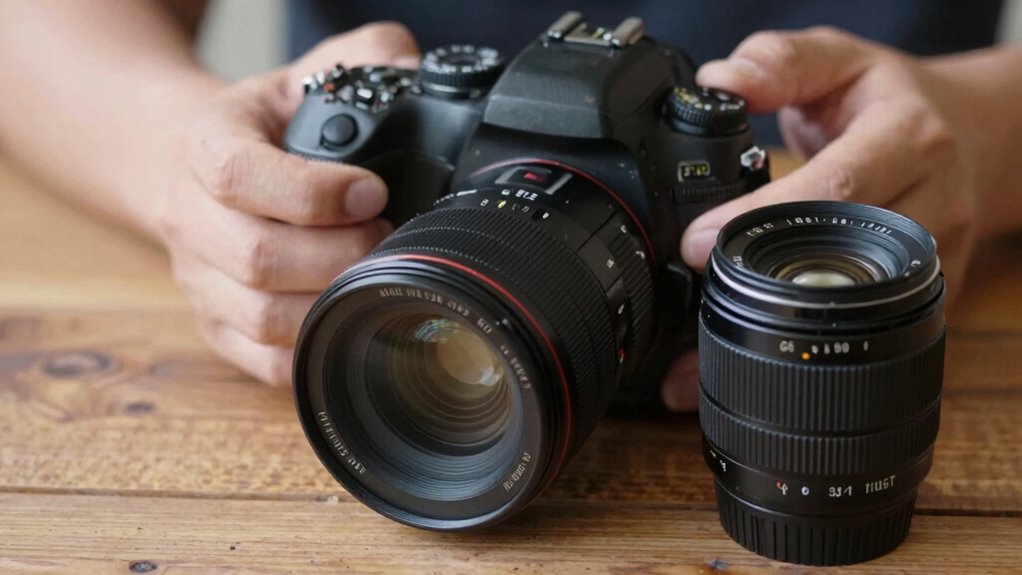

Autofocus lenses support a fast, effortless workflow, letting you quickly lock onto subjects with minimal effort and focus on capturing moments. Manual lenses, on the other hand, require you to take a more deliberate approach, adjusting focus and framing carefully for each shot. This process demands patience, understanding your equipment, and developing precise control. If you keep exploring, you’ll discover how these differences influence your style and technique in photography.
Key Takeaways
- Autofocus provides quick, effortless shooting, enabling fast capture and dynamic workflows.
- Manual lenses require deliberate focus adjustments, fostering a slower, more controlled, and immersive shooting process.
- Autofocus suits fast-paced environments, while manual lenses excel in low light, macro, or detailed scenarios.
- Manual lenses demand precise handling and maintenance, influencing the planning and care routines within the workflow.
- The different focusing methods shape the photographer’s approach, emphasizing either speed and convenience or control and intentionality.
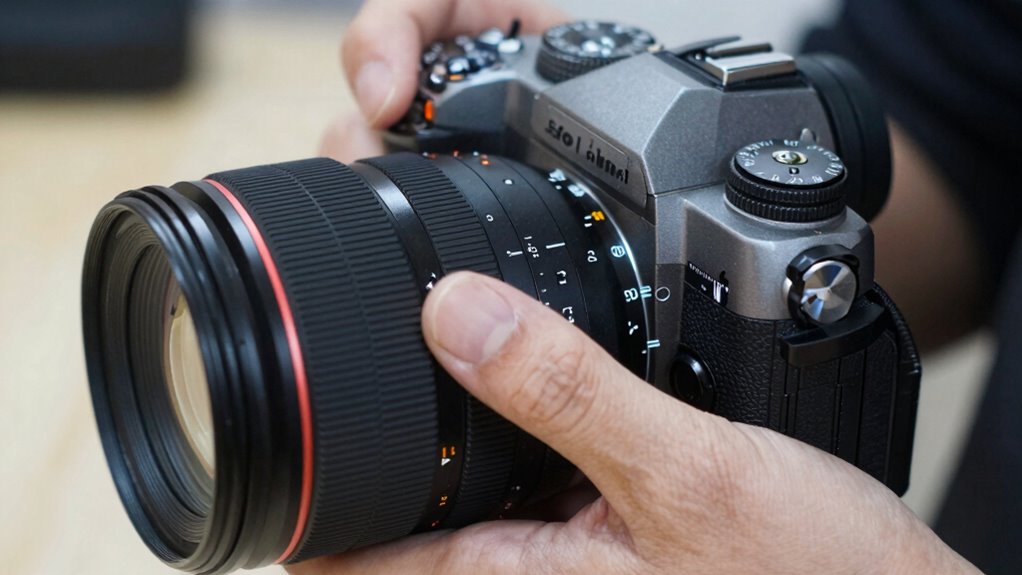
While autofocus has become the standard for quick and effortless shooting, manual lenses still carve out a vital niche for photographers who prefer precision and control. When you opt for manual lenses, you’re adopting a different approach to your workflow—one that demands a deeper understanding of your equipment and a more deliberate shooting process. This choice influences how you handle lens maintenance, as manual lenses often require more frequent attention to guarantee smooth focus rings and aperture blades. You’ll likely spend time cleaning and lubricating mechanical parts, keeping the lens free of dust and debris that can hinder smooth operation. Proper lens maintenance becomes part of your routine, especially when working in challenging environments or with vintage glass, which can be more sensitive to dirt and wear. Additionally, manual lenses often require more consistent attention to detail, which is essential for maintaining optimal performance over time. Developing a care routine for your manual lenses can help extend their lifespan and ensure reliable operation. In terms of shooting techniques, manual lenses demand patience and a steady hand. You can’t rely on autofocus to quickly lock onto a subject, so you develop your skills for precise focus and composition. This approach is especially valuable in situations where autofocus might struggle, such as low light, macro photography, or capturing moving subjects. You learn to anticipate your shot, adjusting focus with deliberate movements to achieve sharpness. Many photographers find that manual focusing encourages a more immersive experience, making each shot more intentional. This process also impacts your workflow, as you often take more time to frame and focus each image, which can be a benefit or a challenge depending on your needs. Additionally, manual lenses often require more constant attention to detail, which is essential for maintaining optimal performance over time. Being aware of biodiversity and environmental conditions can also influence how carefully you need to handle and maintain your equipment, especially when shooting outdoors.
As an affiliate, we earn on qualifying purchases.
Frequently Asked Questions
How Do Autofocus and Manual Lenses Compare in Low-Light Conditions?
In low-light conditions, autofocus lenses often struggle due to reduced sensor sensitivity, making it harder for the camera to lock onto subjects. Manual lenses give you full control, allowing you to focus precisely without relying on autofocus performance. Additionally, image stabilization in autofocus lenses helps reduce blur caused by shaky hands, but manual lenses require steady hands or tripod use. Your choice depends on your need for speed and control in dim settings.
Can Manual Lenses Be Used Effectively for Fast-Paced Sports Photography?
Manual lenses can be effective for fast-paced sports photography if you master manual focus techniques, but they demand patience and precision. While lens focusing speed isn’t as quick as autofocus, you can anticipate actions and pre-focus to improve your chances. Think of it as a dance—you lead with careful planning, turning your manual lens into a powerful tool, especially when autofocus struggles in challenging lighting or fast-moving subjects.
Are Autofocus Lenses Compatible With All Camera Brands and Models?
Autofocus lenses are not compatible with all camera brands and models due to lens compatibility and brand compatibility issues. You need to check if the lens is designed for your camera’s mount type and brand. Some brands produce their own lenses, while third-party options may require adapters. Always verify compatibility before purchasing, ensuring the lens matches your camera’s specifications to avoid issues with autofocus functionality and overall performance.
What Are the Maintenance Requirements for Manual Lenses Versus Autofocus Lenses?
Manual lenses require regular lens calibration to guarantee sharp focus, especially if you notice focus inconsistencies. You also need to prioritize dust prevention by cleaning the lens elements and keeping the lens cap on when not in use. Autofocus lenses typically need less maintenance, but you should still keep them clean and occasionally check for dust or debris that can affect image quality. Proper maintenance helps preserve lens performance over time.
How Does Lens Weight Impact Workflow and Portability?
Think of your camera gear as a backpack—lighter lenses make your load easier, boosting travel convenience. Heavier lenses can tire you out and hinder quick movements, impacting lens ergonomics and workflow. When choosing gear for travel or daily shoots, consider weight carefully. Opting for lighter lenses keeps your setup portable, allowing you to work comfortably and seamlessly, especially during long shoots or on the go.
As an affiliate, we earn on qualifying purchases.
Conclusion
Understanding the differences between autofocus and manual lenses helps you choose the right workflow for your photography style. Autofocus lenses streamline your process, perfect for quick shots and fast-paced environments, while manual lenses give you control and precision for artistic projects. Remember, it’s not a one-size-fits-all game—each has its place. So, don’t put all your eggs in one basket; embrace both workflows to truly master your craft and capture images that speak volumes.
lens cleaning and maintenance kit
As an affiliate, we earn on qualifying purchases.
As an affiliate, we earn on qualifying purchases.
As an affiliate, we earn on qualifying purchases.