
To work with natural light for cinematic shots, you need to plan your schedule around key times like golden hour, when the light is warm and soft. Be mindful of weather conditions; overcast days provide diffused light, while sunny days create strong contrasts. Use reflectors to fill shadows and adjust your camera settings to match the changing light. With patience and observation, you can harness natural light’s authenticity to craft visually stunning, emotionally resonant scenes—exploring more will help you master its full potential.

Get movie nights delivered free with Prime
- Fast, free delivery on millions of items
- Prime Video, Amazon Music and more included
- Member-only deals all year
Key Takeaways
- Schedule shoots during golden hour for warm, directional light and long shadows that add depth.
- Use reflectors to fill shadows on bright, sunny days and maintain balanced exposure.
- Adjust camera settings based on weather conditions to capture natural light accurately.
- Embrace overcast days for diffused, soft lighting that creates a subdued, introspective mood.
- Observe and adapt to changing natural light to enhance authenticity and emotional impact in scenes.
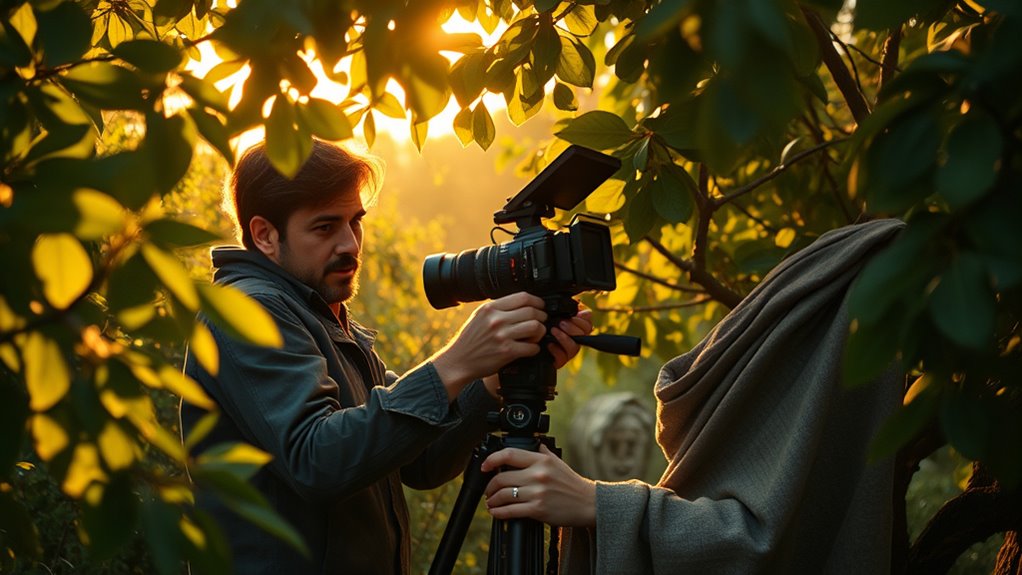
Natural light can transform your cinematic shots, adding authenticity and mood that artificial lighting often can’t replicate. One of the most beautiful times to work with natural light is during the golden hour, the period shortly after sunrise or before sunset when the sunlight bathes everything in a warm, soft glow. During this time, the light is less harsh, creating gentle shadows and even, flattering illumination that enhances your subject’s features. As you plan your shoot, keep in mind that weather conditions play a significant role in shaping the quality of natural light. Overcast days produce diffused, even lighting that minimizes shadows and reduces contrast, making it easier to capture balanced images. Bright, sunny days, on the other hand, can create strong contrasts and deep shadows, so you’ll need to adjust your camera settings or use reflectors to fill in shadows and maintain detail.
Understanding how weather conditions influence natural light allows you to adapt quickly and make the most of the environment. For example, if you’re shooting on a cloudy day, embrace the soft, muted light for a more subdued, introspective mood. Cloud cover acts like a giant diffuser, spreading light evenly across your scene, which can be perfect for capturing intimate moments or emphasizing textures. Conversely, if the sun is blazing and the sky is clear, consider scheduling shots during the golden hour to take advantage of the warm, directional light that adds depth and richness to your visuals. This time also offers a natural, cinematic glow that elevates your footage without the need for extensive post-production. Additionally, understanding the color temperature of natural light can help you achieve the mood you desire and ensure your footage looks natural and cohesive.
As you work with natural light, remember that it’s constantly changing. The intensity, angle, and color temperature shift throughout the day, so timing is vital. For instance, during the golden hour, the low angle of the sun produces long, dramatic shadows that can add visual interest and depth to your shots. Be mindful of how weather conditions influence these changes—an overcast sky can soften the light, while a clear day enhances the warm tones of sunset or sunrise. Always keep an eye on the sky and adjust your shooting schedule accordingly. Using natural light effectively demands patience and observation, but when you harness these conditions well, your cinematic scenes will feel more genuine, vibrant, and emotionally resonant.
cinematic reflectors for filmmaking
As an affiliate, we earn on qualifying purchases.
As an affiliate, we earn on qualifying purchases.
Frequently Asked Questions
How Can I Balance Natural Light With Artificial Lighting?
To balance natural light with artificial lighting, start by evaluating your scene’s natural light levels. Use diffusing filters to soften harsh sunlight, making it easier to blend with artificial lights. Reflectors are great for bouncing natural light onto your subject, reducing shadows. Adjust your artificial lights’ intensity and color temperature to match the natural light, creating a seamless, cinematic look. Keep experimenting until the balance feels natural and visually appealing.
What Equipment Is Essential for Shooting in Natural Light?
Imagine you’re crafting cinematic magic; essential gear makes it smoother. You’ll want diffusion filters to soften harsh sunlight and reflectors to bounce light into shadows, adding depth. A sturdy tripod helps keep your shots steady, while a portable reflector or bounce card can manipulate natural light effortlessly. These tools give you control and flexibility, ensuring your natural light looks stunning and cinematic, even when the sun’s playing hide and seek.
How Does Weather Impact Natural Light Availability?
Weather markedly impacts natural light availability, so keep an eye on cloud cover and seasonal changes. Cloud cover can diffuse sunlight, creating softer, more even lighting, or block it altogether, resulting in darker scenes. Seasonal changes affect the angle and intensity of sunlight, altering shadows and color temperature. By monitoring these factors, you can adapt your shooting schedule and techniques to achieve the desired cinematic look, even in unpredictable weather conditions.
What Time of Day Offers the Best Natural Lighting for Filming?
Imagine golden rays wrapping around your scene—this is golden hour, the perfect time for filming. You’ll find the best natural lighting during the early morning or late afternoon when the sun casts a warm glow. Alternatively, blue hour offers cool, subdued tones just after sunset or before sunrise. Both times create cinematic magic, but golden hour’s rich warmth often enhances mood and depth in your shots.
How Can I Modify Natural Light Without Advanced Tech?
To modify natural light without advanced tech, use diffusing sources like white cloth or paper to soften harsh sunlight. Reflectors, such as aluminum foil or white boards, bounce light onto your subject for a fill. Flags made from black fabric or cardboard block unwanted light or create shadows. These simple tools help shape and control natural light, giving you more cinematic shots without expensive equipment.
As an affiliate, we earn on qualifying purchases.
Conclusion
So, next time you step into the sunlight without a reflector or diffuser, remember—you’re basically a cinematic genius, right? Who needs fancy lighting gear when Mother Nature’s got your back? Just embrace those unpredictable shadows and blinding highlights. After all, if your shot looks “artsy,” it’s totally intentional. Keep chasing that perfect natural light, and maybe, just maybe, you’ll make even a sun-drenched alley look like Hollywood. Or at least, pretend you did.
golden hour photography lighting kit
As an affiliate, we earn on qualifying purchases.
As an affiliate, we earn on qualifying purchases.
As an affiliate, we earn on qualifying purchases.
Columbus Day / Indigenous Peoples' Day Picks
long weekend sales
As an affiliate, we earn on qualifying purchases.