If you’re filming a narrative project, you’ll want a camera that handles complex lighting and color to craft mood, emotion, and a cinematic look. These cameras focus on high dynamic range, sensor quality, and compatibility with different lighting conditions, helping you tell immersive stories with authentic visuals and sound. Unlike YouTubers who prioritize simplicity and fast shooting, narrative filmmakers seek equipment that supports artistic depth. Keep exploring to discover how to choose the right gear for your storytelling goals.
Key Takeaways
- Narrative filmmakers prioritize advanced sensor technology and dynamic range to craft mood and emotion through lighting and shadow manipulation.
- They require cameras capable of handling diverse lighting conditions without losing detail, unlike YouTubers who often shoot in controlled or well-lit environments.
- High-quality audio integration is essential for storytelling, prompting filmmakers to choose cameras with superior sound recording capabilities.
- Cinematic color science and lens options help evoke specific atmospheres, which are less critical for quick, casual YouTube content.
- Filmmakers focus on technical features that support artistic vision and emotional depth, beyond basic specifications favored by YouTubers.
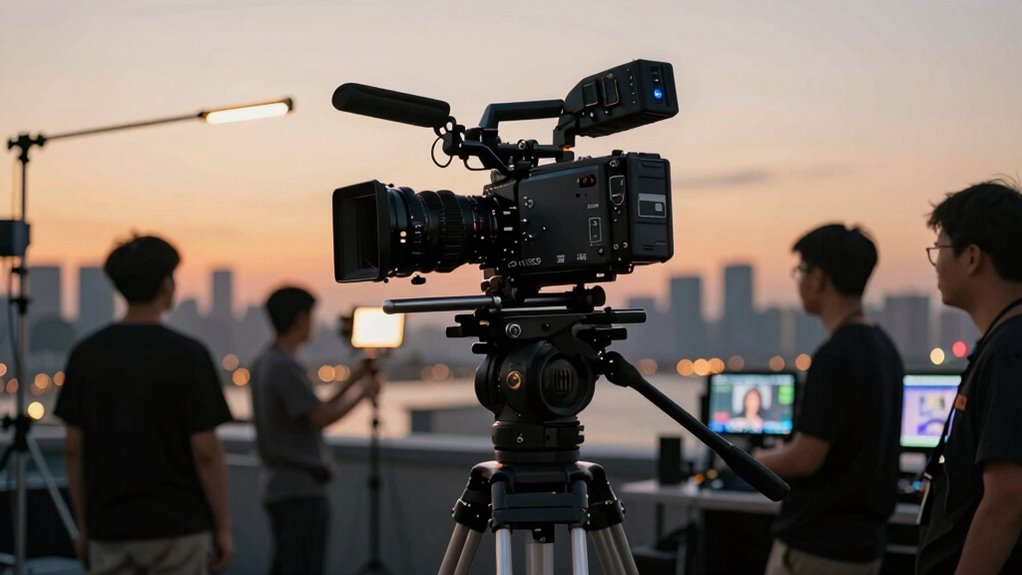
Have you ever wondered how filmmakers choose the perfect camera to tell their stories? It’s not just about capturing a high-resolution image; it’s about creating a mood, emphasizing emotion, and immersing viewers into the narrative. For narrative filmmakers, selecting a camera involves considering various factors beyond simple specs. They often prioritize how lighting techniques will interact with the camera’s sensor, allowing them to craft a specific visual style. They want a camera that can handle different lighting conditions—whether it’s natural light on location or carefully controlled studio lighting—without losing detail or introducing unwanted noise. The way a camera captures shadows, highlights, and color richness directly influences how effectively a filmmaker can manipulate lighting to evoke mood and atmosphere.
Sound design is another essential aspect that influences camera choice. While sound is often overlooked when comparing cameras, it plays a crucial role in storytelling. Narrative filmmakers usually shoot with an eye toward post-production editing, where sound design can dramatically enhance the emotional impact of scenes. They prefer cameras with audio inputs that allow for high-quality sound recording directly from the camera or with minimal additional equipment. This guarantees clean dialogue capture and seamless integration of sound effects and score, making the story more convincing and immersive.
Narrative filmmakers prioritize cameras with high-quality audio inputs for seamless sound and emotional storytelling.
Unlike YouTubers, who might prioritize portability and ease of use due to quick shooting schedules, narrative filmmakers focus on a broader range of technical features. They need a camera that offers excellent dynamic range, so they can push the limits of lighting and shadow without losing detail. This flexibility helps them craft a visually rich environment that supports storytelling, whether it’s a dimly lit room or a brightly lit outdoor scene. Additionally, they seek cameras that deliver a cinematic look through color science and lens options, allowing them to create a consistent visual language throughout the film. Understanding how sensor technology influences image quality is also key in making informed camera choices that align with their artistic vision. Moreover, they often consider the camera’s ability to handle different lighting conditions effectively, which is crucial for maintaining image quality across diverse shooting environments.
Ultimately, narrative filmmakers make camera choices based on how well the equipment supports their storytelling goals. They consider how lighting techniques will interplay with the camera’s sensor to evoke specific moods and how sound design will be integrated into the overall production. This careful selection process assures that every frame, every sound, and every moment comes together cohesively to serve the story. For them, the right camera isn’t just about technical specs—it’s about how it helps bring their vision to life with authenticity and emotional depth.
cinematic camera for filmmaking
As an affiliate, we earn on qualifying purchases.
As an affiliate, we earn on qualifying purchases.
Frequently Asked Questions
How Do Budget Constraints Influence Camera Choices for Narrative Filmmakers?
Budget constraints force you to prioritize equipment affordability and make strategic choices. You might opt for cameras that offer good image quality at a lower cost, even if they lack advanced features. Limited budgets push you to balance quality with affordability, often leading to the selection of versatile, affordable gear that still meets your narrative needs. This guarantees you create compelling stories without overspending, maximizing your resources effectively.
What Role Does Camera Ergonomics Play in Long Shooting Days?
Camera ergonomics plays a vital role during long shooting days because comfort and grip design directly affect your stamina and focus. If the camera feels uncomfortable or awkward to hold, it can cause fatigue and distraction. Prioritize models with ergonomic features that fit your hand well, offering a secure grip and easy access to controls. This way, you stay comfortable, maintain precision, and keep shooting efficiently without unnecessary strain.
Do Narrative Filmmakers Prioritize Resolution Over Color Science?
You might think resolution is king, but narrative filmmakers often prioritize color science over raw resolution. They value color accuracy and image sharpness to convey mood and emotion authentically, giving the story depth. A camera with excellent color science guarantees skin tones stay true and visuals stay consistent, even if the resolution isn’t the highest. It’s like putting your best foot forward—quality over quantity—so the story resonates more deeply with viewers.
How Important Is Camera Size and Weight for Narrative Productions?
Camera size and weight are essential for narrative productions because they impact camera stability and lighting compatibility. A lighter camera allows you to move smoothly and capture dynamic shots without extra gear, enhancing stability. Smaller cameras work better with various lighting setups, making it easier to adapt quickly on set. If your camera is too bulky, it can limit your angles and slow down your workflow, affecting the overall quality of your storytelling.
Are There Specific Cameras Preferred for Certain Genres or Styles?
Certain genres, like horror or romance, often favor specific cameras to enhance storytelling. For example, horror films typically use cameras with excellent low-light capabilities, paired with appropriate lighting accessories to create suspense. Romance genres might prefer cameras with beautiful color science, complemented by lighting setups that emphasize warmth. These choices guarantee the camera’s features align with the genre’s mood, making lighting compatibility and accessories vital for achieving the desired visual style.
professional audio input camera
As an affiliate, we earn on qualifying purchases.
As an affiliate, we earn on qualifying purchases.
Conclusion
You now see that choosing the right camera is like picking the perfect paintbrush for a masterpiece. Narrative filmmakers often prefer specialized gear to craft a polished, cinematic look, while YouTubers prioritize practicality and versatility. Understanding these differences helps you appreciate why each group makes their choices. Whether you’re aiming for studio-quality or quick, engaging content, remember: the right camera can be as essential as the story itself—like a compass guiding your creative journey.
high dynamic range digital camera
As an affiliate, we earn on qualifying purchases.
As an affiliate, we earn on qualifying purchases.
camera with cinematic color science
As an affiliate, we earn on qualifying purchases.
As an affiliate, we earn on qualifying purchases.