
If you ignore the basics of green screen lighting, you’ll end up with harsh shadows, uneven illumination, and color spill that make keying difficult or impossible. Poor light placement creates shadows on your subject or background, while inconsistent lighting causes patches and green spill. Maintaining proper distance and using diffusion helps avoid these issues. If you want to learn how to fix these common mistakes and achieve professional results, keep exploring for expert tips.

Get movie nights delivered free — and shop member deals
- Fast, free delivery on millions of items
- Access to Prime Big Deal Days deals on October 6–7
- Prime Video, Amazon Music and more included
Key Takeaways
- Shadows cast onto the green screen create uneven backgrounds that complicate keying and produce jagged edges.
- Inconsistent green illumination causes color spill and difficulty distinguishing subject from background.
- Insufficient subject-to-background distance leads to shadows and green spill, reducing keying quality.
- Poorly placed or uneven lighting results in harsh shadows and ghosting effects on the subject and backdrop.
- Neglecting diffusion and proper ratios produces harsh shadows and uneven lighting, hindering clean key extraction.

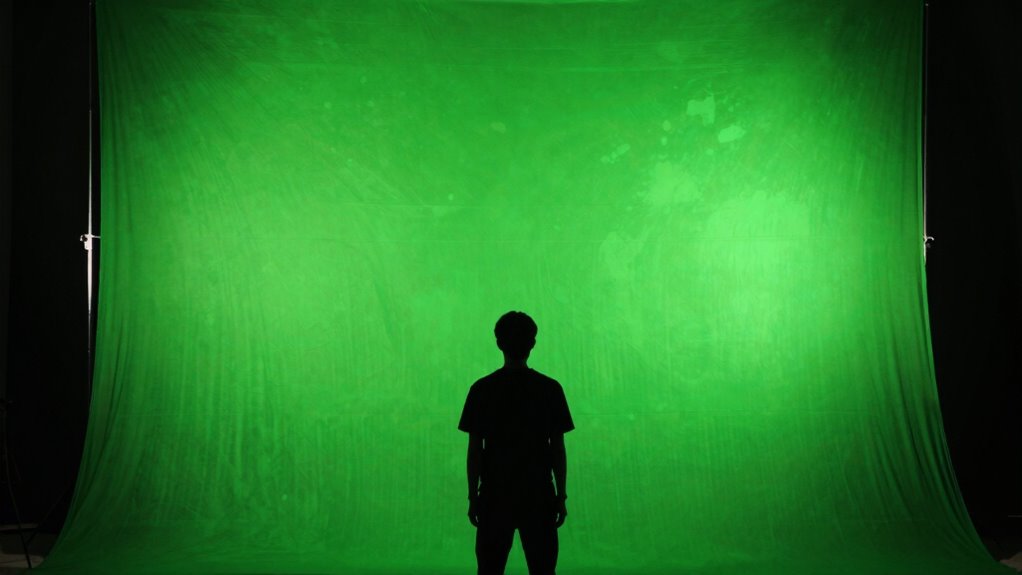
Shadow casting is another common problem that stems from neglecting fundamental lighting principles. If your lights aren’t positioned correctly, shadows will fall across your subject or the backdrop, disrupting the illusion of a seamless green screen. These shadows can be harsh or uneven, and they often get accentuated by poor placement of your lights or inconsistent background lighting. When shadows are cast onto the green screen, it complicates keying, as the software struggles to differentiate between the subject and the background. This results in jagged edges, ghosting, or missing parts of your subject, which requires extra effort to fix in editing. Additionally, neglecting the importance of even lighting on the green screen itself can lead to patches where the green appears brighter or darker, making it difficult for the keying software to produce a smooth, uniform background. This inconsistency amplifies issues like color spill, as areas with more intense green light tend to bleed more into your subject’s edges. To avoid this, you need to set up your lights symmetrically and ensure the background is lit evenly from multiple angles. Proper lighting setup can also help prevent uneven light distribution that causes these problems. Another mistake is not controlling the distance between your subject and the green screen. Too close, and the subject can cast shadows directly onto the backdrop, which worsens shadow casting problems. Too far, and light falloff can cause uneven illumination, increasing the risk of color spill and uneven backgrounds. You should maintain a proper distance—usually about 3 to 5 feet—so that light reflects evenly and shadows don’t fall onto the backdrop or onto your subject. In short, disregarding the basics of lighting—such as even illumination, correct positioning, and maintaining an appropriate distance—can lead to serious issues like color spill and shadow casting. Proper lighting principles and setup are essential for achieving a seamless keying process. Paying attention to fundamental lighting principles ensures your green screen footage remains clear and professional. Additionally, understanding lighting ratios can help you balance light intensity for more consistent results. Furthermore, using proper light diffusion can help minimize harsh shadows and create a more evenly lit background.
As an affiliate, we earn on qualifying purchases.
Frequently Asked Questions
How Do I Choose the Right Green Screen Material?
You should choose a green screen material with a consistent, vibrant color that matches your lighting’s color temperature for even illumination. Opt for durable fabric or paint that resists wrinkles and wear, ensuring a smooth, professional look. Avoid flimsy or low-quality materials, as they can cause shadows and uneven keying. Selecting the right material helps prevent lighting issues and makes your post-production process much easier.
What Is the Ideal Distance Between Subject and Green Screen?
Like a painter needs space to breathe life into a canvas, you should keep your subject about 3 to 10 feet from the green screen. Proper lighting placement and subject positioning prevent shadows and color spill, creating a seamless background. If you’re too close, uneven lighting causes issues; too far, and it reduces realism. Find the balance for a clean, professional composite that truly stands out.
How Do I Correct Color Spill During Post-Production?
To correct color spill during post-production, start with color correction tools in your editing software to adjust the green hues. Use spill suppression features to minimize green cast around your subject’s edges, ensuring a more natural look. Carefully tweak the sliders until the spill diminishes without affecting your subject’s colors. This process helps you achieve cleaner compositing and a professional finish, especially when green screen lighting wasn’t perfect initially.
What Lighting Equipment Is Best for Green Screen Setup?
For your green screen setup, you need reliable lighting equipment like softboxes, LED panels, and light stands. Use lighting accessories such as barn doors or flags to control spill and even out the light. Aim for consistent, diffuse lighting on the green screen to prevent shadows and color inconsistencies. Properly positioning and diffusing your lights guarantees a clean key, making your post-production process much smoother.
How Can I Troubleshoot Inconsistent Green Screen Lighting?
You notice inconsistent green screen lighting, and it all comes down to lighting consistency and subject positioning. To troubleshoot, double-check your lights to guarantee even coverage without flickering or shadows. Adjust your subject’s position so they stay within the uniformly lit area, avoiding areas where the light falls unevenly. Small tweaks in lighting angles and maintaining consistent distance from the lights keep your shots smooth and professional.
As an affiliate, we earn on qualifying purchases.
Conclusion
Ignoring the basics of green screen lighting is like neglecting the roots of a tree; no matter how vibrant the leaves appear, instability at the foundation will eventually cause it to falter. Your scene’s success hinges on these unseen, fundamental principles—each light, each shadow, a silent guardian of illusion. When you overlook them, the illusion collapses, revealing the truth beneath. Master the basics, and you build a sturdy bridge between imagination and reality, unbreakable and true.
diffusion filters for studio lighting
As an affiliate, we earn on qualifying purchases.
As an affiliate, we earn on qualifying purchases.
professional green screen backdrop lighting
As an affiliate, we earn on qualifying purchases.
As an affiliate, we earn on qualifying purchases.
Fall Picks
fall essentials
As an affiliate, we earn on qualifying purchases.