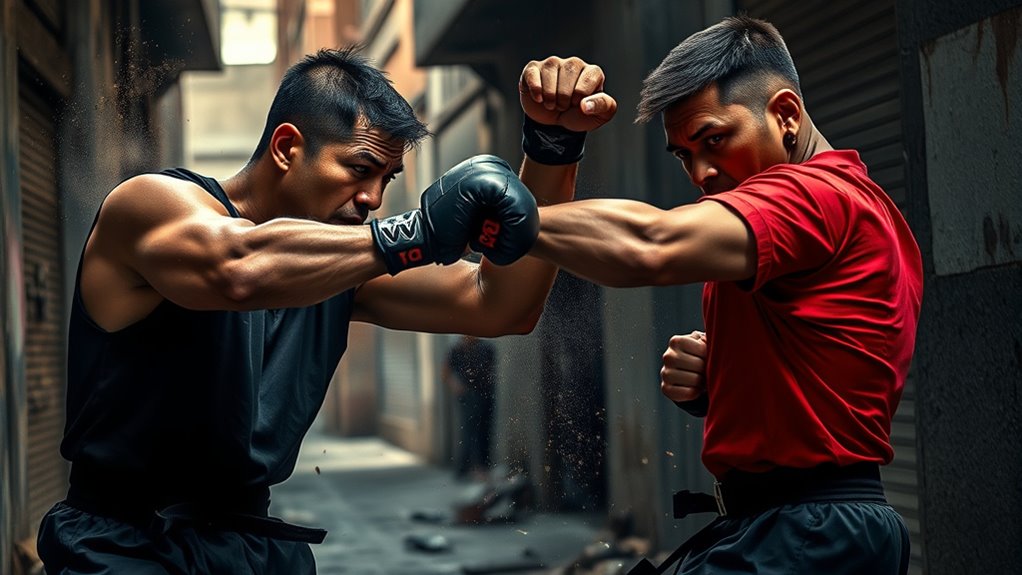

To create realistic fight scenes, focus on authentic martial arts choreography that highlights proper technique, timing, and movement. Plan moves carefully to guarantee safety while maintaining believability, and rehearse repeatedly to refine each sequence. Incorporate character expressions and purpose into your moves to make fights more engaging. Master the fundamentals of various styles for credibility, and pay attention to rhythm and impact. Keep experimenting, and you’ll discover how to craft convincing fight sequences that captivate your audience.
Key Takeaways
- Incorporate authentic martial arts techniques and stances to enhance believability.
- Focus on precise timing and rhythm to simulate real combat dynamics.
- Emphasize control and safety to prevent injuries while maintaining intensity.
- Use character-driven actions and reactions to convey purpose and emotion.
- Rehearse routines thoroughly to refine movement flow and improve realism.
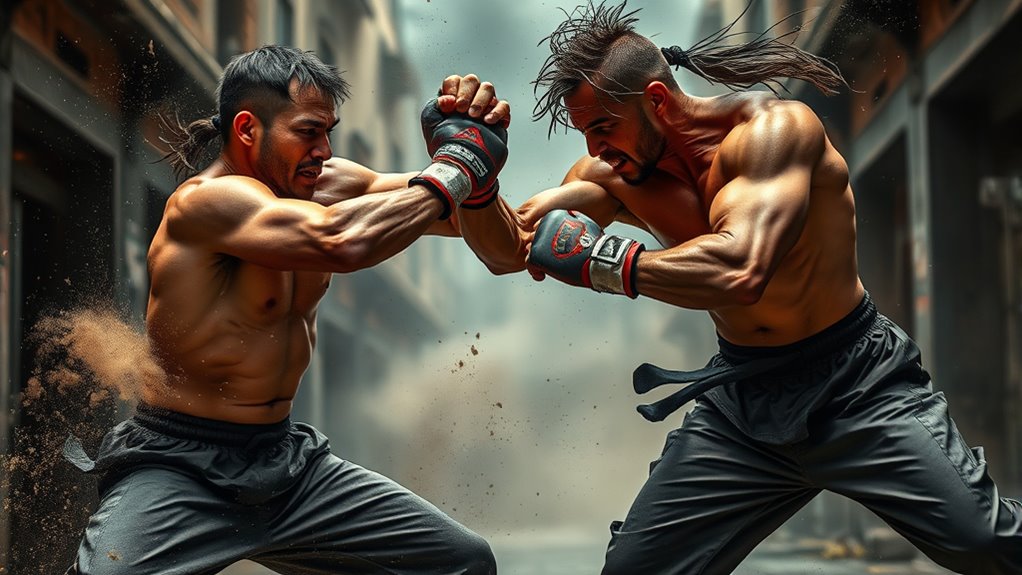
Crafting realistic fight scenes requires more than just describing punches and kicks; it demands an understanding of movement, timing, and consequence. When you focus on martial arts choreography, you’re not just stringing together random moves—you’re creating a sequence that flows naturally and convincingly. Proper choreography helps you visualize how fighters move, react, and balance themselves, making the scene believable. It’s vital to understand the fundamentals of different martial arts styles, because each has unique stances, strikes, and footwork. Incorporating these elements into your fight scenes ensures authenticity and keeps your audience engaged.
Effective fight scenes blend movement, timing, and martial arts authenticity for a believable, engaging sequence.
But realism isn’t just about the moves; it’s equally about safety. Injury prevention techniques play a fundamental role in making your fight scenes credible without risking your actors or stunt performers. You should plan every move carefully, emphasizing control and precision over brute force. For example, when depicting a punch, focus on the proper form and timing rather than exaggerated force. This approach not only enhances realism but also minimizes the risk of injury. Choreographers often rehearse routines repeatedly, refining each motion to guarantee safety and fluidity.
Timing is key. You want your fight to feel dynamic and spontaneous, yet carefully choreographed. Pay attention to how fighters react to each strike or block—this reaction time adds authenticity. When you simulate contact, consider the impact’s weight and the fighter’s positioning, so it appears convincing without actual harm. Practice slow-motion drills first, then gradually increase speed, to perfect the rhythm and guarantee safety. This way, you avoid missteps that could cause injuries or break the illusion of realism.
Additionally, understanding the consequences of each move helps you craft more believable scenes. Every punch, kick, or throw should have a purpose, either setting up the next move or showcasing character emotion. Use visual cues—like a fighter’s stance or facial expressions—to communicate intent clearly. Remember, the audience can tell if a fight is staged or stiff. Incorporate natural breathing, believable reactions, and proper pacing to elevate your scene’s authenticity. Developing a clear understanding of martial arts techniques can greatly improve the accuracy and believability of your fight choreography.
As an affiliate, we earn on qualifying purchases.
Frequently Asked Questions
How Do I Choreograph Fights for Multiple Attackers?
To choreograph fights with multiple attackers, focus on group coordination by assigning clear roles and movements for each attacker. Use dynamic camera angles to emphasize spatial relationships and make the scene more believable. Plan your shots to show how attackers work together, avoiding confusion. Practice the choreography thoroughly, ensuring everyone hits their marks, and use camera angles to highlight the chaos and intensity of the fight without losing clarity.
What Are Common Mistakes to Avoid in Fight Choreography?
You should avoid overly exaggerated movements and poor timing, as they can make fight scenes seem unrealistic. For example, if a character throws a punch that takes a second to wind up, it breaks the illusion of immediacy. Focus on precise, natural movements and sharp timing. This keeps your fight scenes believable and engaging, ensuring your audience stays immersed in the action without distraction.
How Can I Make Fights Look More Intense Without Violence?
To make fights look more intense without violence, focus on precise stunt coordination and impactful sound design. Use quick, sharp movements and exaggerated reactions to convey tension, even without real harm. Enhance the scene with well-timed sound effects that emphasize hits and clashes, creating a sense of urgency. This combination keeps viewers engaged and heightens the fight’s intensity while avoiding actual violence, making your scenes compelling and safe.
Which Weapons Are Safest for Staged Fight Scenes?
You should choose weapons like rubber swords, foam daggers, or plastic guns for staged fight scenes. Always follow safety protocols and work closely with stunt coordinators to guarantee everyone’s protected. These props are designed to look realistic while minimizing risk. Make sure to rehearse carefully, communicate clearly, and double-check all safety measures before filming. This way, you create exciting scenes that are safe for everyone involved.
How Do I Adapt Fight Scenes for Different Character Strengths?
To adapt fight scenes for different character strengths, focus on character development and fight realism. Highlight each character’s unique abilities, limitations, and fighting style to make scenes believable and engaging. For stronger characters, incorporate powerful moves, while weaker ones depend on agility or clever tactics. This approach guarantees the fight scene reflects each character’s personality, making it more authentic and compelling for the audience.
As an affiliate, we earn on qualifying purchases.
Conclusion
Now, you’re ready to craft fight scenes that feel as real as a thunderstorm. Remember, every punch and kick should flow naturally, like a dance of chaos and control. Keep your characters’ actions believable, and don’t forget to sprinkle in details that ground your fight in reality. With practice, your scenes will hit harder than a punch to the gut, leaving your readers breathless and craving more. So, go ahead—bring your battles to life with authenticity.
As an affiliate, we earn on qualifying purchases.
rehearsal safety gear for stunt performers
As an affiliate, we earn on qualifying purchases.
As an affiliate, we earn on qualifying purchases.