
To use B-Roll for effective visual storytelling, select footage that adds depth, context, or emotion to your main narrative. Incorporate camera angles like low, high, or close-ups to evoke specific feelings or highlight details. Thoughtfully compose shots to guide viewer attention, and use editing techniques like color grading, slow motion, or seamless changeovers to enhance impact. When combined intentionally, B-Roll weaves seamlessly into your main footage, enriching your story—if you keep exploring, you’ll discover even more ways to master this craft.

Get movie-night favorites delivered free — and shop member deals
- Fast, free delivery on millions of items
- Access to Prime Big Deal Days deals on October 6–7
- Prime Video, Amazon Music and more included
Key Takeaways
- Select B-Roll shots that complement and deepen the main narrative, providing context and emotional resonance.
- Use varied camera angles—close-ups, wide shots, high and low angles—to evoke specific feelings and highlight details.
- Incorporate thoughtful shot composition and framing to guide viewer focus and support storytelling goals.
- Edit B-Roll with techniques like color grading, slow-motion, and seamless transitions to enhance mood and maintain flow.
- Integrate B-Roll smoothly with main footage, ensuring every shot adds purpose and enriches the viewer’s emotional experience.
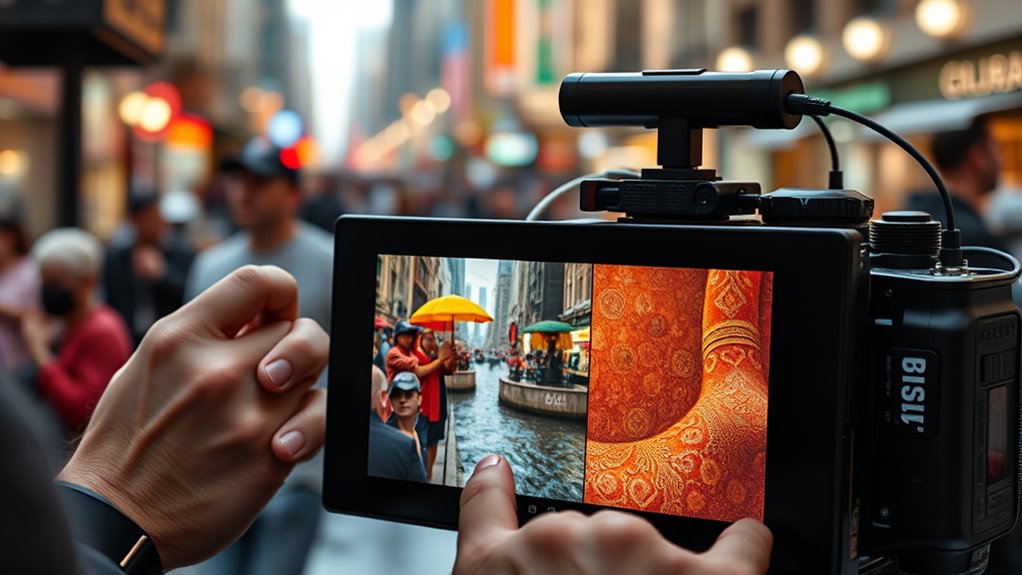
Have you ever wondered how filmmakers and videographers create compelling stories beyond just the main footage? The secret often lies in how they use B-roll to enhance their narrative. B-roll isn’t just filler; it’s a powerful storytelling tool that adds depth, context, and emotion to your videos. To do this effectively, you need to pay attention to camera angles and editing techniques. These elements work together to craft a seamless visual experience that keeps your audience engaged and emotionally connected.
When capturing B-roll, your choice of camera angles is vital. Different angles can evoke specific feelings or highlight particular details. For example, a low-angle shot can make a subject seem more powerful or dominant, while a high-angle shot can create a sense of vulnerability or insignificance. Close-ups focus on details, emphasizing emotions or key objects, whereas wide shots establish the environment or setting. Experimenting with these angles allows you to tell a richer story, giving your audience multiple perspectives that deepen their understanding of the scene. By thoughtfully selecting camera angles, you guide viewers’ attention and influence their emotional response, making your story more engaging. Additionally, understanding the importance of shot composition can help you frame your footage more effectively to support your narrative.
Once you’ve captured your B-roll footage, mastering editing techniques is essential to maximize its impact. Good editing involves more than just cutting clips together; it’s about creating a visual rhythm that complements the main narrative. You can use techniques like match cuts, where you seamlessly transition between similar shots, to maintain flow and coherence. Color grading is another influential tool—adjusting brightness, contrast, and saturation can unify your footage visually or evoke specific moods. Slow-motion shots can emphasize a moment of importance, while quick cuts can generate excitement or tension. Strategic use of transitions, such as fades or wipes, can also help your B-roll weave smoothly into the main footage, avoiding jarring shifts that distract viewers.
Master editing techniques like match cuts, color grading, slow-motion, and smooth transitions to elevate your B-roll storytelling.
Ultimately, the combination of camera angles and editing techniques transforms simple B-roll into an integral part of your storytelling. When you select the right angles, you reveal different facets of your story, and through careful editing, you shape the viewer’s experience, guiding their emotional journey. The more intentional you are with these elements, the more your B-roll will serve to enhance your narrative, making your video not just informative but truly mesmerizing. Remember, every shot should serve a purpose—adding layers of meaning and context that elevate your storytelling beyond the main footage alone.
As an affiliate, we earn on qualifying purchases.
Frequently Asked Questions
How Do I Choose the Best B-Roll Footage for My Story?
You choose the best B-roll footage by focusing on visual coherence and thematic relevance. Think about how each clip supports your story, conveying mood or details that enhance the main narrative. Select shots that complement your visuals, maintaining a consistent style and tone. Avoid distractions, and prioritize footage that clarifies or deepens the viewer’s understanding. This way, your B-roll seamlessly integrates, enriching your storytelling and keeping viewers engaged.
What Equipment Is Necessary for Capturing Quality B-Roll?
Brilliantly balanced gear boosts your B-roll brilliance. To capture quality footage, you’ll need reliable camera gear like a versatile DSLR or mirrorless camera, along with lenses suited for your scene. Stabilization tools such as gimbals, tripods, or shoulder rigs are essential to keep your shots steady and smooth. Don’t forget extra batteries, memory cards, and proper lighting. With these tools, you’ll produce professional, polished footage that vividly visualizes your story.
How Can I Seamlessly Integrate B-Roll Into My Main Footage?
You can seamlessly integrate B-roll into your main footage by using visual shifts like cuts, fades, or wipes to create a smooth flow. Match the B-roll’s tone and pace with your primary footage to enhance the narrative. Incorporate B-roll during key moments to provide context or emotional depth, ensuring it acts as a visual transition that supports and enriches your story for effective narrative enhancement.
What Are Common Mistakes to Avoid When Using B-Roll?
Imagine you’re seasoning a dish; too much salt ruins it. Similarly, overusing footage can overwhelm your story, and neglecting continuity confuses viewers. Avoid these mistakes by using b-roll sparingly and ensuring smooth shifts. Keep your visuals relevant and cohesive, so your audience stays engaged without feeling lost. Balance is key—think of b-roll as a seasoning that enhances, not dominates, your narrative.
How Does B-Roll Impact the Overall Emotional Tone of a Story?
B-roll greatly impacts the emotional tone of your story by enhancing emotional resonance and boosting viewer engagement. When you choose visuals that complement the narrative’s mood, you evoke stronger feelings and create a more immersive experience. Thoughtful B-roll can deepen understanding, evoke empathy, or build tension, making your story more compelling. By carefully aligning visuals with emotion, you guarantee your audience connects deeply and stays engaged throughout your story.
As an affiliate, we earn on qualifying purchases.
Conclusion
By mastering how to use B-Roll effectively, you can elevate your storytelling and keep viewers engaged. For example, if you’re documenting a local coffee shop, showing shots of beans being roasted, customers chatting, and baristas preparing drinks adds depth and emotion. These visuals complement your main footage, creating a richer narrative. When you thoughtfully incorporate B-Roll, your story becomes more compelling and memorable, making your audience feel truly connected to your message.
As an affiliate, we earn on qualifying purchases.
As an affiliate, we earn on qualifying purchases.
Halloween Picks
halloween
As an affiliate, we earn on qualifying purchases.