To master set design basics for trailers, focus on transforming empty spaces into engaging worlds that reflect the story’s mood and tone. Use color theory to evoke emotions and set the scene’s atmosphere. Build believable, functional environments with authentic materials, paying attention to scale and details. Plan your layout for smooth filming and lighting while avoiding clutter. By integrating these elements skillfully, you’ll create a compelling visual experience—keep exploring to learn more about making your sets stand out.
Key Takeaways
- Use color theory to set the mood and evoke emotions quickly through warm or cool tones.
- Design functional, authentic environments with simple, scalable set constructions that support storytelling.
- Incorporate modular elements for efficient reconfiguration and seamless camera transitions.
- Ensure set elements complement narrative, emphasizing key story moments without clutter.
- Plan layout to optimize camera angles, lighting, and movement, creating a cohesive visual experience.
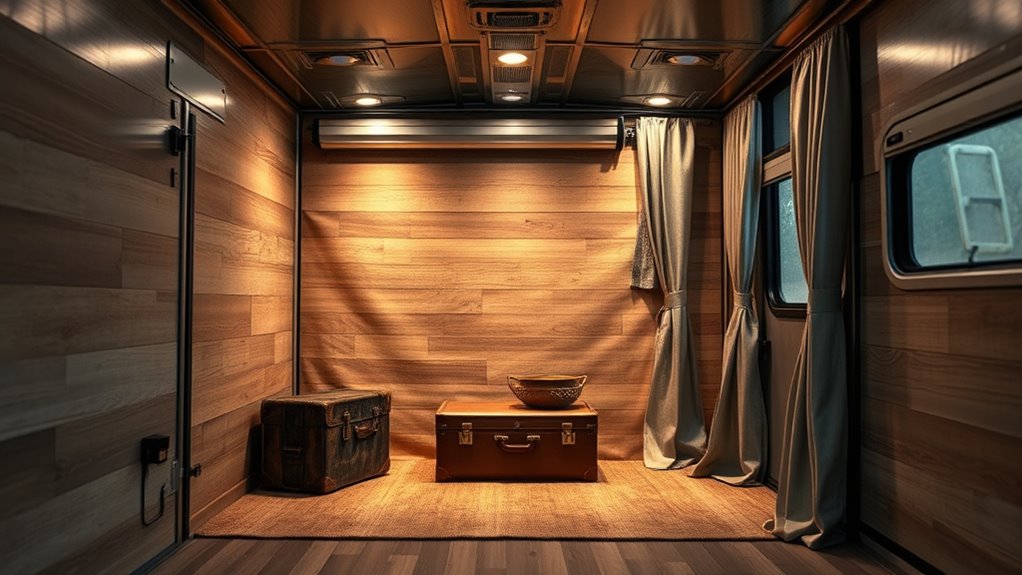
Set design is the foundation that brings a production’s visual story to life, transforming a blank space into a convincing world. When working on trailers, your goal is to create an engaging environment that captures viewers’ attention quickly and communicates the story’s mood effectively. To do this, you need to understand how to use color and space strategically. Color theory becomes your best friend here—by selecting specific colors, you influence how viewers feel about the scene before any dialogue or action occurs. Warm tones like reds and oranges evoke excitement or tension, while cool tones such as blues and greens can create calm, mystery, or melancholy. Knowing how colors interact helps you set the right tone instantly. You also need solid set construction skills. Building your set isn’t just about assembling pieces; it’s about creating a believable, functional environment that looks good on camera. Good set construction ensures your set is stable, safe, and visually cohesive. It involves choosing materials that look authentic and are easy to manipulate, whether you’re building walls, furniture, or props. When designing for a trailer, simplicity is often key—you want the environment to support the story without overwhelming it. This means paying attention to scale, proportions, and details that reinforce the setting’s authenticity. Efficient set construction also means considering how the space will be shot and lit. For example, if your trailer includes a small room, you’ll want to build it in a way that allows for multiple camera angles without feeling cramped. Using modular pieces that can be rearranged or repurposed saves time and resources. Color plays a crucial role here, too—paint choices or fabric textures can enhance the mood and help differentiate spaces within the limited environment of a trailer. As you plan your set, think about how the colors and construction elements will work together to create a seamless visual experience. You’ll want to avoid clutter and ensure that each element serves a purpose, guiding the viewer’s eye and emphasizing key story moments. Your set design should support the narrative, evoke emotion, and be practical enough to execute smoothly during filming. Additionally, considering the materials used can impact both the authenticity and ease of construction. Remember, effective set design isn’t just about making things look good—it’s about crafting a believable world that draws viewers in from the first frame. By mastering color theory and honing your set construction skills, you give yourself the tools to produce compelling, immersive trailers that leave a lasting impact.
modular set design for film trailers
As an affiliate, we earn on qualifying purchases.
As an affiliate, we earn on qualifying purchases.
Frequently Asked Questions
How Do I Choose the Right Color Palette for My Trailer Set?
To choose the right color palette for your trailer set, consider color psychology to evoke the desired mood and emotions. Select colors that align with your story’s tone and target audience. Aim for visual harmony by balancing bold and neutral tones, ensuring the set doesn’t overwhelm the viewer. Test different combinations, and trust your instincts to create a cohesive look that enhances the narrative and keeps viewers engaged.
What Are the Most Cost-Effective Materials for Set Construction?
You should focus on budget-friendly options like plywood, foam board, and cardboard for set construction. These materials are cost-effective, easy to work with, and readily available. To guarantee durability, reinforce with paint or sealant, especially for areas that need to withstand handling or movement. Using recycled or repurposed materials can also save costs and add unique textures. Always prioritize lightweight, durable materials to keep your project both affordable and long-lasting.
How Can I Make Small Sets Appear Larger on Camera?
To make small sets appear larger on camera, you should use forced perspective techniques, like placing objects closer to the camera and background elements farther away, creating depth. Incorporate mirror illusions to reflect space and add a sense of expansiveness. These methods trick the viewer’s eye, making the set seem bigger than it actually is. Experiment with camera angles and lighting to enhance the illusion and maximize the perceived size.
What Safety Precautions Should I Consider During Set Assembly?
You should prioritize fire safety and structural integrity during set assembly. Confirm fire exits are clear, fire extinguishers are accessible, and materials are flame-retardant. Regularly check that structures are stable, properly supported, and built to code. Use safety gear like gloves and helmets, communicate clearly with your team, and avoid shortcuts. By focusing on these precautions, you create a safe environment that minimizes risks and promotes efficient, secure set construction.
How Do Lighting Choices Impact the Set’s Overall Mood?
Lighting choices markedly impact your set’s overall mood by using specific lighting techniques. Bright, high-key lighting creates an energetic, cheerful atmosphere, while dim, low-key lighting adds tension or mystery. You can enhance the mood by adjusting color temperature or using shadows strategically. Thoughtful lighting design guides viewers’ emotions, making your trailer more immersive and compelling, ultimately aligning the visual tone with your story’s intended vibe.
authentic set construction materials
As an affiliate, we earn on qualifying purchases.
As an affiliate, we earn on qualifying purchases.
Conclusion
Now that you know the fundamentals of set design for trailers, you’re ready to start creating compelling spaces that captivate your audience. Remember, every detail matters in telling your story visually. Are you ready to bring your trailer to life with a set that truly stands out? With these basics in mind, you’re well on your way to designing sets that leave a lasting impression and elevate your project to the next level.
color theory lighting gels for film
As an affiliate, we earn on qualifying purchases.
As an affiliate, we earn on qualifying purchases.
film set design props and backgrounds
As an affiliate, we earn on qualifying purchases.
As an affiliate, we earn on qualifying purchases.