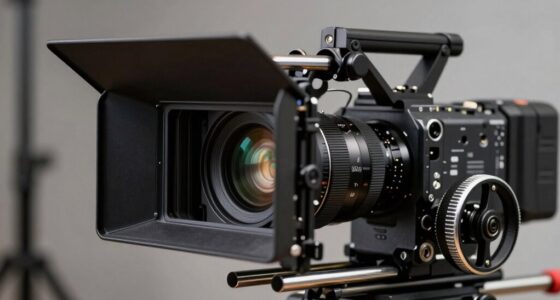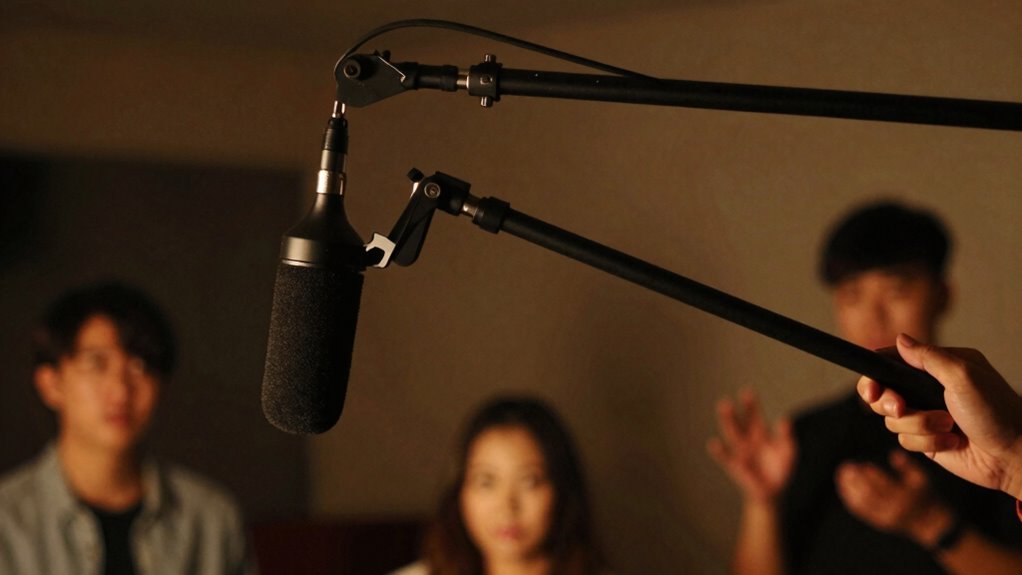

Using proper boom mic technique is essential for capturing clear, natural dialogue that keeps your scene feeling realistic and immersive. By positioning the mic close to actors’ mouths and adjusting for movement, you prevent unwanted noise and fluctuations in sound quality. Consistent placement also minimizes editing time and helps tell your story with authentic audio. If you want to master how to enhance your scenes through sound, keep exploring these key tips and tricks.
Key Takeaways
- Ensures consistent, high-quality dialogue capture, maintaining realism and immersion in narrative scenes.
- Proper technique minimizes ambient noise and echoes, enhancing audio clarity.
- Keeping the mic close and well-positioned prevents fluctuations in volume, supporting smooth storytelling.
- Skilled boom mic operation adapts to actors’ movements, preserving natural sound throughout the scene.
- High-quality sound recording contributes to scene authenticity and viewer engagement.
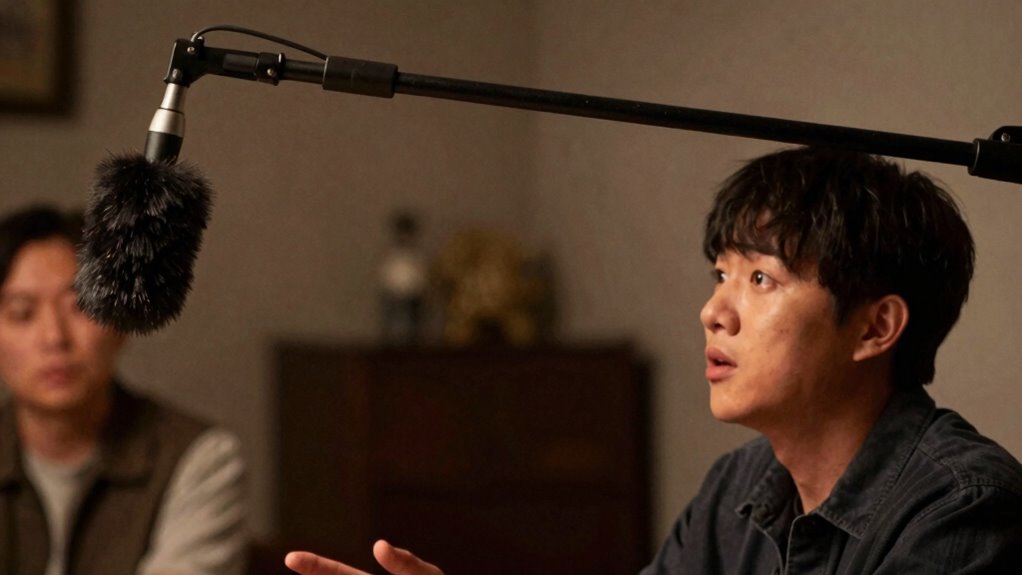
Have you ever wondered how filmmakers capture clear, immersive dialogue without distracting the audience? The secret lies in mastering the boom mic technique, which hinges on sound consistency and strategic equipment placement. When done correctly, it guarantees your scene feels natural and engaging, without the jarring effects of uneven audio or distracting background noise. Your goal is to make dialogue sound seamless, as if characters are speaking directly to viewers, and that’s where proper boom mic use becomes vital.
Sound consistency is essential because it maintains the illusion of realism. If the audio fluctuates—getting louder or softer unexpectedly—it pulls viewers out of the story. As the boom operator, you need to keep the microphone at a steady distance and angle relative to the actors’ mouths. This means constantly adjusting to their movements while avoiding sudden dips or peaks in volume. When you focus on sound consistency, you help create a smooth auditory experience that supports the narrative flow, making conversations feel natural and unforced.
Maintaining consistent audio ensures realism, keeping dialogue natural and immersive without distracting fluctuations.
Equally important is equipment placement. Positioning the boom mic correctly involves more than just holding it above the actors’ heads. You want the microphone close enough to capture crisp, clear dialogue but far enough to avoid being visible in the shot or interfering with the scene. The mic should hover just out of frame, directed toward the actors’ mouths, and stay at a consistent height and distance. This careful placement helps minimize ambient noise and echoes, especially in challenging environments, ensuring that speech remains the focal point. Additionally, understanding the sound environment is crucial for adapting your technique to different settings and background noises. Proper equipment placement also involves considering sound coverage to ensure all actors are equally audible.
Your awareness of equipment placement also involves understanding the scene’s layout and background sounds. For example, if there’s a lot of movement or a noisy environment, you might need to adjust the mic’s position or use a windscreen to prevent unwanted noise from creeping in. Proper placement not only enhances sound quality but also reduces the need for excessive post-production editing, saving time and preserving scene authenticity. Developing a keen sense of sound calibration allows for better adjustments based on environmental conditions. Being familiar with sound propagation helps in optimizing microphone positioning in various acoustic spaces. Proper placement and calibration are essential for achieving consistent audio levels throughout the scene.
Ultimately, mastering boom mic technique requires attentiveness, precision, and adaptability. When you pay close attention to sound consistency and carefully position your equipment, you help craft a scene that feels genuine and immersive. Your work ensures that dialogue is captured cleanly and naturally, making it easier for viewers to connect emotionally with the story. In the end, the success of a narrative scene often hinges on the quality of its audio, and your skill with the boom mic plays a pivotal role in achieving that seamless, engaging experience.
As an affiliate, we earn on qualifying purchases.
Frequently Asked Questions
How Do Boom Operators Choose the Best Mic Placement?
You choose the best mic placement by considering microphone angles to capture clear sound without intruding on the scene visually. You also focus on maintaining sound consistency throughout the shot, adjusting the boom’s position as actors move. You test different angles and distances to find the sweet spot, ensuring the mic picks up dialogue naturally while avoiding unwanted noise or muffling. This careful placement results in professional, seamless audio.
What Are Common Mistakes to Avoid With Boom Mic Techniques?
Did you know that 60% of audio issues in films stem from common boom mic mistakes? To avoid these, focus on sound consistency and crew coordination. Don’t place the mic too close or too far from actors, as this causes inconsistent audio levels. Always communicate with the crew, especially the camera operator, to guarantee the mic stays clear of shadows or obstructions. Proper technique keeps scenes seamless and professional.
How Does Environment Affect Boom Mic Positioning?
Your environment greatly influences boom mic positioning, especially with ambient noise and environmental challenges. You need to modify the mic’s height and angle to minimize unwanted sounds like wind, traffic, or crowd chatter. For outdoor scenes, using windshields or positioning the mic closer to actors helps. Indoors, avoid echo by placing the mic near sound-absorbing surfaces. Flexibility and awareness of environmental factors ensure clear, professional audio quality.
What Equipment Is Essential for Effective Boom Mic Work?
Imagine you’re on set, aiming for crystal-clear sound. Essential equipment includes a shotgun mic, a sturdy boom pole, and a windscreen to block noise. You also need a portable audio recorder and headphones for real-time monitoring. Proper equipment setup guarantees ideal sound quality, allowing you to capture dialogue seamlessly even in challenging environments. Investing in quality gear makes a significant difference in achieving professional results.
How Do Boom Mic Techniques Vary Across Different Film Genres?
You adjust your boom mic techniques based on the genre to guarantee dialogue clarity and capture emotional intimacy. In dramas, you stay close to actors’ faces for nuanced sound, while in action films, you keep a wider distance to avoid disruptions. Comedy scenes may require more precise positioning to catch quick lines. Adapting your approach helps deliver clear audio that enhances storytelling and emotional impact across genres.
As an affiliate, we earn on qualifying purchases.
Conclusion
Mastering the boom mic technique isn’t just about clear sound; it’s about immersing your audience in the story. When your mic captures every whispered secret and emotional pause, you create a more authentic experience. Believe that sound shapes perception—because it does. By honing this skill, you’re not just recording dialogue; you’re evoking emotion, connecting viewers deeply, and making your narrative unforgettable. In storytelling, every sound matters—trust that your mic can make all the difference.
As an affiliate, we earn on qualifying purchases.
microphone windscreen for video production
As an affiliate, we earn on qualifying purchases.
As an affiliate, we earn on qualifying purchases.