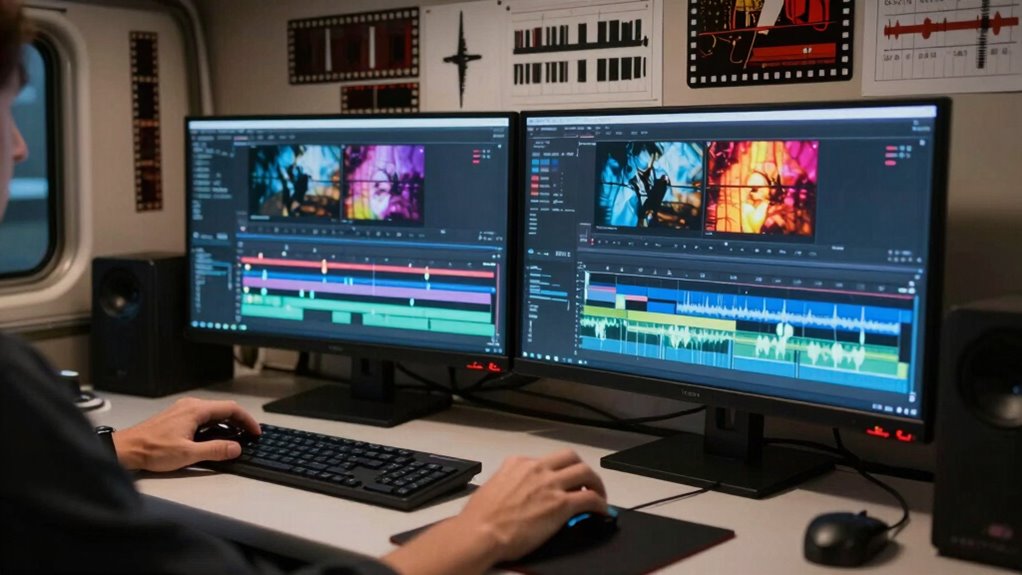

As a trailer editor, you should think like a composer because music and sound design are key to emotional storytelling. By syncing music to visuals and understanding rhythm, you can amplify tension, release, and narrative beats. Recognizing how sound influences viewer emotions will help you craft seamless, immersive trailers that resonate deeply. Mastering this approach transforms your edits from simple cuts into powerful emotional journeys—continue exploring to reveal even more impactful techniques.
Key Takeaways
- Thinking like a composer allows editors to synchronize visuals with musical cues, amplifying emotional impact.
- It helps create a cohesive narrative arc that guides viewers through tension, release, and payoff.
- Composing perspective enhances sound design, making ambient sounds and layers more immersive and emotionally resonant.
- It enables editors to craft trailers that evoke deeper emotional responses beyond simple visuals.
- Adopting a composer’s mindset elevates editing from mere cuts to a mastery of emotional storytelling.

Have you ever wondered how trailer editors craft such compelling, emotionally charged previews? It’s a skill that goes beyond simple editing; it’s about orchestrating a powerful experience that resonates with viewers long after they’ve watched it. At the heart of this craft lies music synchronization and emotional storytelling. When you approach trailer editing like a composer, you recognize that every beat, pause, and crescendo serves a purpose. You don’t just cut clips together—you shape a narrative that stirs emotions, builds anticipation, and heightens excitement. Music becomes your most essential tool, not just as background noise but as a driving force that guides the viewer’s emotional journey.
By thinking like a composer, you learn to see music as a narrative element that complements and amplifies the visuals. When you synchronize the right musical cues with specific moments in the trailer, you effectively amplify the emotional impact. For example, a tense build-up in the music can underscore a pivotal scene, making the audience feel the urgency or fear more intensely. Conversely, a gentle, melodic line can evoke hope or nostalgia, drawing viewers into the story on a deeper level. This harmony between music and visuals isn’t accidental; it’s carefully crafted through precise music synchronization, which ensures that every note aligns perfectly with the storytelling beats. Additionally, understanding how to incorporate free floating elements like ambient sounds or subtle musical layers can further enhance the emotional depth of the trailer. Incorporating contrast ratios between sound levels can also help emphasize key moments and guide emotional responses more effectively. Developing an awareness of audio balance is essential in creating a cohesive emotional experience. Recognizing the importance of sound design helps in crafting a more immersive and impactful trailer.
Music as a narrative tool amplifies visuals, creating emotional resonance through precise synchronization and storytelling harmony.
Emotional storytelling is at the core of what you do as a trailer editor. You’re not just selecting clips; you’re constructing a narrative arc that hooks the audience from the first second. To do this effectively, you need to understand the emotional rhythm of the story—knowing when to escalate tension, when to provide relief, and when to deliver a powerful payoff. When you approach this task like a composer, you’re constantly analyzing how music influences emotions and how visuals can be timed to enhance that effect. The importance of music synchronization in elevating the emotional impact cannot be overstated, as it creates a seamless connection between sound and image that resonates deeply with viewers. The goal is to create a seamless experience where the viewer feels pulled into the story, almost as if they’re experiencing it firsthand.
Thinking like a composer elevates your craft from simple editing to emotional storytelling mastery. You become aware of the subtle interplay between sound and image, using music synchronization to evoke feelings that words alone can’t capture. In doing so, you craft trailers that don’t just inform—they emotionally engage, leaving viewers eager to see the full story unfold. That’s the true power of trailer editing done with a composer’s mindset.
trailer editing sound design tools
As an affiliate, we earn on qualifying purchases.
As an affiliate, we earn on qualifying purchases.
Frequently Asked Questions
How Do Trailer Editors Develop Their Musical Storytelling Skills?
You develop your musical storytelling skills by focusing on emotional resonance and rhythm synchronization. Pay close attention to how music evokes feelings and enhances visuals, shaping the audience’s experience. Practice syncing your edits with the music’s beats and crescendos, creating a seamless flow. By studying effective trailers and experimenting with different musical cues, you’ll sharpen your ability to craft compelling stories that resonate emotionally and keep viewers engaged.
What Are the Key Differences Between Editing Trailers and Composing Music?
You focus on emotional resonance and visual synchronization, unlike composers who craft melodies and harmonies. As a trailer editor, you must rapidly match cuts and shifts to the music’s mood, creating an immediate impact. While composers build layered soundscapes, you fine-tune edits to amplify feelings and guarantee every visual aligns perfectly with the soundtrack’s rhythm, making the trailer compelling and memorable in seconds.
How Can Trailer Editors Improve Their Musical Intuition?
Imagine tuning a guitar to open perfect harmony—that’s how you improve your musical intuition. Focus on emotional resonance and rhythmic pacing in scenes; ask yourself what music would heighten the moment. Study scores and analyze trailers for their musical choices. Practice by improvising with footage, noticing how different sounds evoke feelings. Over time, this sharpens your ear, making your editing more emotionally impactful and rhythmically compelling.
What Tools or Software Best Aid Trailer Editors in Composing?
You should explore tools like Adobe Premiere Pro and After Effects for sound design and editing, which help shape emotional pacing effectively. Digital audio workstations like Logic Pro or Ableton Live are great for crafting custom soundscapes and mixing. These tools enable you to manipulate sound and music dynamically, ensuring your trailer’s emotional flow resonates with viewers. Using them, you can seamlessly integrate sound design with visual storytelling to heighten impact.
How Does Understanding Music Theory Benefit Trailer Editing?
Understanding music theory helps you craft the perfect musical mood and achieve precise rhythm synchronization in your trailers. When you grasp how melodies and harmonies evoke emotions, you can select or create music that amplifies the scene’s impact. Knowing rhythm structures allows you to sync visuals seamlessly with beats, enhancing tension or excitement. This knowledge empowers you to edit more effectively, making your trailers more compelling and emotionally resonant.
music synchronization software for video editing
As an affiliate, we earn on qualifying purchases.
As an affiliate, we earn on qualifying purchases.
Conclusion
By thinking like composers, trailer editors can craft more emotionally impactful and memorable trailers. Remember, studies show that trailers influence up to 60% of a movie’s box office success, highlighting their power. When you approach editing with the creativity of a composer, you create a harmonious blend of visuals and sound that resonate deeply with viewers. So, embrace your inner composer—your edits can truly make a film’s first impression unforgettable.
ambient sound effects for trailers
As an affiliate, we earn on qualifying purchases.
As an affiliate, we earn on qualifying purchases.
video editing software with music editing features
As an affiliate, we earn on qualifying purchases.
As an affiliate, we earn on qualifying purchases.