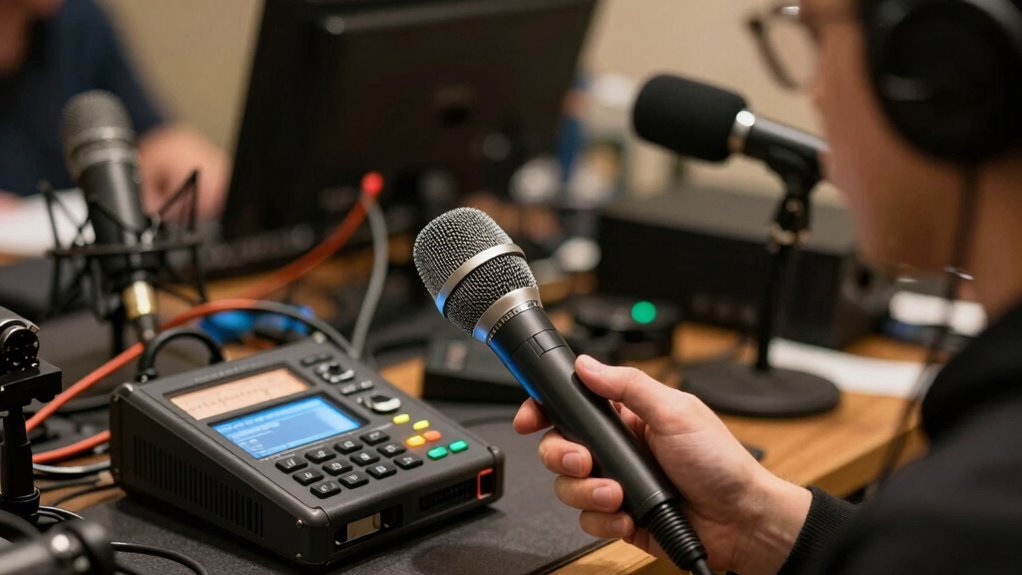

When capturing interview audio, you focus on spontaneity and authenticity, letting conversations flow naturally to reveal real emotions and genuine reactions. In contrast, narrative audio is carefully planned, using scripts, pacing, sound effects, and music to craft a specific emotional experience. While interviews capture raw, unfiltered moments, narratives give you control over tone and story structure. Want to discover how these differences shape the listener’s experience? Keep exploring to learn more.
Key Takeaways
- Interview audio emphasizes spontaneity and authentic responses through improvisation, while narrative audio relies on deliberate scripting and planning.
- Interviews capture real-time emotions and subtle cues, whereas narratives shape emotional impact with sound design and editing.
- Spontaneity is central to interviews, allowing for unexpected moments; narratives focus on controlled pacing and tone.
- Interview recordings prioritize unedited, natural responses; narrative audio incorporates layered sounds, effects, and music for storytelling.
- Active listening in interviews adapts to responses, while narrative crafting involves precise manipulation of delivery and sound elements.
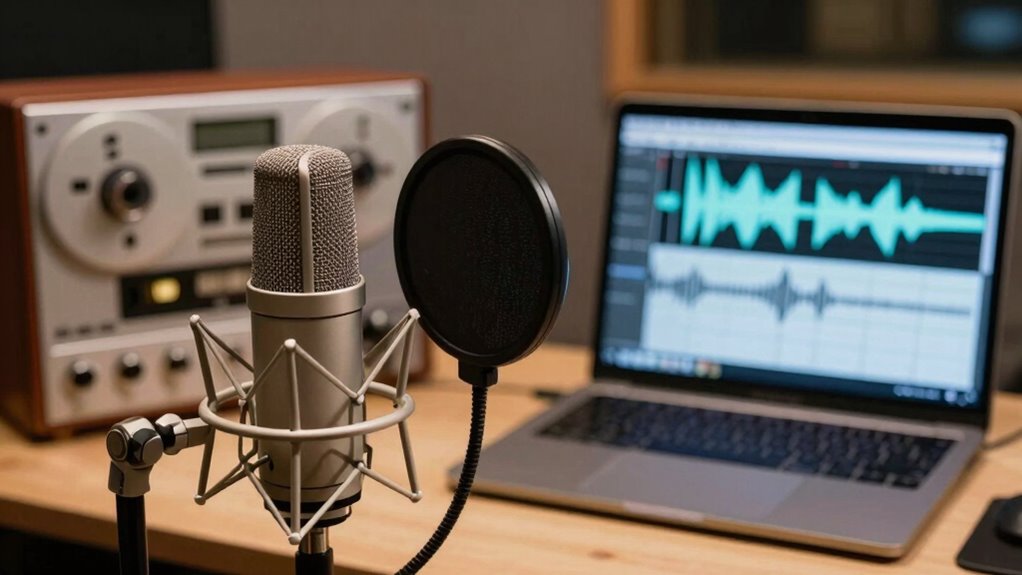
Have you ever wondered how interview audio differs from narrative audio in storytelling? When you’re capturing interview audio, the focus is on recording a real-time conversation, where spontaneity and authenticity are key. You often rely on improvisation techniques to navigate unexpected answers or shifts in the dialogue. These techniques help you adapt on the fly, ensuring that the conversation flows naturally and that the emotional tone remains genuine. Instead of scripting responses, you listen actively and respond intuitively, which allows the listener to feel connected to the interviewee’s true feelings and perspectives. The improvisation techniques you employ help capture the authenticity that makes interview audio compelling, revealing nuanced emotions and subtle reactions that scripted content might miss. This improvisation process is essential to capturing the genuine emotional connection in interview recordings.
In contrast, narrative audio is typically crafted from a well-planned script or a structured outline. You have more control over pacing, tone, and emotional delivery, aiming to guide the listener through a story with clarity and impact. Because narrative audio often involves storytelling that’s been carefully edited, you can manipulate the emotional tone deliberately—adding sound effects, adjusting pacing, or emphasizing certain words—to evoke specific feelings. Unlike interviews, where the emotional tone depends heavily on the interviewee’s spontaneous responses, narrative audio allows you to shape the emotional landscape intentionally. You might use voice modulation, music, or sound design to heighten suspense, evoke nostalgia, or create a sense of wonder, ensuring the audience remains engaged throughout.
The key difference lies in the level of spontaneity and control. With interview audio, the unpredictability is part of the charm, capturing real moments and raw emotion. You need to be flexible, using improvisation techniques to steer the conversation without losing authenticity. Conversely, narrative audio is more about precision and storytelling craft, where you have the opportunity to craft emotional tone deliberately. You can revisit recordings, adjust pacing, and layer sounds to enhance the story’s emotional depth. Both forms require a keen ear and understanding of how sound influences emotion, but they demand different approaches—one rooted in capturing real, unscripted moments, and the other in shaping a compelling, deliberate narrative.
interview microphone for podcasting
As an affiliate, we earn on qualifying purchases.
As an affiliate, we earn on qualifying purchases.
Frequently Asked Questions
How Do Equipment Choices Differ for Interview and Narrative Audio?
For interviews, you focus on microphone placement to clearly capture the speaker’s voice, often using handheld or lapel mics for mobility. Equipment durability is essential since interviews may happen on location, exposing gear to varied conditions. In contrast, narrative audio often employs stationary mics and more sensitive equipment for high-quality sound, requiring less durability but more precise placement. Your choice depends on mobility needs and environment.
What Editing Techniques Are Unique to Interview Versus Narrative Recordings?
Did you know that 60% of listeners notice poor audio quality? When editing interview recordings, you focus on voice modulation and pacing techniques to maintain clarity and engagement. You might smooth out uneven speech or emphasize natural pauses. Conversely, narrative audio often involves seamless storytelling, so your edits emphasize sound design and background layering. In interviews, you’re more attentive to preserving authentic vocal nuances, while narratives require cohesive flow and atmosphere.
How Does Background Noise Impact Each Type of Audio?
Background noise, like ambient interference, can substantially impact both interview and narrative audio, but differently. In interviews, background noise may distract listeners and obscure the speaker’s voice, reducing sound clarity. For narrative recordings, ambient sounds add atmosphere but can also interfere if too loud or inconsistent. You need to balance capturing authentic background sounds with maintaining sound clarity, often by using noise reduction techniques or careful microphone placement.
What Are the Best Practices for Capturing Authentic Responses?
To capture authentic responses, you need to create a relaxed environment where responses flow naturally. Encourage spontaneity by asking open-ended questions and avoid scripting answers. Make sure to listen actively, giving your subject space to express themselves without interruption. Keep background noise minimal, and use quality microphones to preserve authenticity. When you do these, you’ll catch genuine responses that truly reflect the person’s true feelings and perspectives.
How Do Audience Engagement Strategies Vary Between Interview and Narrative Audio?
You tailor audience engagement strategies differently for interview and narrative audio by focusing on emotional resonance and storytelling techniques. In interviews, you evoke authenticity and personal connections through direct, candid responses, making listeners feel involved. With narrative audio, you craft compelling stories using vivid descriptions, pacing, and emotional cues to draw listeners in. Both approaches rely on storytelling techniques, but you adapt your tactics to suit the format’s goal of deepening audience engagement.
sound editing software for storytelling
As an affiliate, we earn on qualifying purchases.
As an affiliate, we earn on qualifying purchases.
Conclusion
Understanding the differences between interview and narrative audio helps you craft more compelling stories. For instance, imagine capturing a heartfelt interview with a survivor sharing their journey—those raw emotions become powerful when edited into a narrative. Your choice of audio style shapes how listeners connect with your story. When you tailor your approach to fit the message, you create an immersive experience that resonates deeply, leaving your audience truly moved and inspired.
portable audio recorder for interviews
As an affiliate, we earn on qualifying purchases.
As an affiliate, we earn on qualifying purchases.
studio headphones for audio editing
As an affiliate, we earn on qualifying purchases.
As an affiliate, we earn on qualifying purchases.