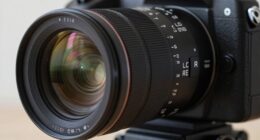
To think more clearly about focal length, focus on how it shapes your trailer’s emotional tone and viewer perception. Use wide-angle lenses to create a sense of space and grandeur, perfect for establishing setting or chaos, and switch to telephoto lenses to highlight intimacy, tension, or specific details. Experiment with different focal lengths to guide audience attention and evoke targeted emotions. Stay tuned to discover how mastering those choices can elevate your storytelling approach even further.
Key Takeaways
- Understand how different focal lengths influence scene scale, emotional tone, and viewer perception.
- Use wide-angle lenses for establishing context and creating a sense of grandeur or chaos.
- Select telephoto lenses to isolate subjects, emphasize details, or build intimacy and tension.
- Match camera angles and focal lengths to the emotional storytelling goals of each scene.
- Experiment with focal length variations to develop a consistent visual language that enhances narrative clarity.

When creating trailers, understanding how focal length influences your shots can make a significant difference in conveying mood and focus. Focal length affects camera angles, which in turn shape how your audience perceives the scene. Shorter focal lengths, like wide-angle lenses, produce expansive shots that include more of the environment, making scenes feel larger or more open. These camera angles can create a sense of grandeur or chaos, depending on how you frame your shots. Conversely, longer focal lengths, such as telephoto lenses, compress space, bringing distant objects closer and isolating subjects. This perception of space can make scenes feel more intimate or tense, guiding viewer perception to focus on specific details or characters.
As a trailer creator, you need to think carefully about how these camera angles influence viewer perception. Wide-angle shots can establish context quickly, showing the environment and setting the mood. When you want to emphasize the scale or chaos of a scene, a wide lens helps viewers feel immersed and overwhelmed, enhancing the emotional impact. On the other hand, tight shots achieved with telephoto lenses narrow the viewer’s attention, making characters’ expressions or crucial objects stand out. This is especially effective in building suspense or highlighting emotional moments. By choosing the right focal length, you control what your audience notices first and how they interpret scenes.
Your choice of focal length also impacts how quickly and clearly your trailer communicates its story. For example, rapid cuts between wide-angle shots can create excitement or confusion, depending on what you aim to evoke. Meanwhile, zooming in with longer focal lengths can slow the viewer’s perception, making them dwell on specific details that hint at deeper story elements. As a trailer creator, you should think about how these camera angles work together to craft a visual rhythm that aligns with the emotional tone you want to set. Additionally, understanding the visual language of focal length can help you develop a more compelling and cohesive storytelling style. Recognizing the impact of camera angles can further enhance the storytelling by aligning visual choices with emotional cues. Developing an awareness of how focal length influences perception and mood allows you to craft trailers with more depth and emotional resonance. Knowing how to leverage focal length choices can also help you create a more dynamic and engaging viewing experience. Moreover, experimenting with different focal lengths can inspire innovative visual storytelling approaches that set your trailers apart.
Ultimately, understanding focal length helps you manipulate camera angles to shape viewer perception deliberately. It’s not just about capturing a scene; it’s about guiding how your audience experiences it. Whether you want to evoke awe, intimacy, tension, or suspense, your lens choice influences how your trailer’s visuals communicate those feelings. Being intentional with focal length allows you to craft a coherent visual language that resonates emotionally and directs attention precisely where you want it. This awareness makes your storytelling sharper and your trailers more compelling, ensuring every shot works toward your overall cinematic goal.
wide angle camera lens for filmmaking
As an affiliate, we earn on qualifying purchases.
As an affiliate, we earn on qualifying purchases.
Frequently Asked Questions
How Does Focal Length Affect Trailer Emotional Impact?
Focal length shapes your trailer’s emotional impact by influencing visual storytelling and cinematic mood. A wide lens pulls viewers into expansive scenes, creating excitement or tension, while a telephoto lens zooms in, highlighting characters’ emotions and adding intimacy. By choosing focal lengths deliberately, you control how your audience perceives the story’s mood, making your trailer feel more immersive and emotionally resonant.
What Focal Length Is Best for Capturing Action Scenes?
For capturing action scenes, use a wide-angle focal length, around 24mm or less, to emphasize movement and intensity. This choice, combined with camera stabilization, keeps your shots smooth even during fast motion. Be mindful of lens distortion, which can warp scenes; choosing a lens designed to minimize distortion helps maintain visual clarity. This combination creates dynamic, immersive action shots that draw viewers into the scene.
Can Focal Length Influence Trailer Pacing or Rhythm?
Focal length can definitely influence trailer pacing and rhythm, creating contrasting effects that hook viewers. Shorter focal lengths might add a sense of urgency through exaggerated depth perception, speeding up the scene’s pace. Conversely, longer focal lengths offer a flatter look, reducing visual distortion and slowing the rhythm, giving moments a more contemplative or tense feel. You use these variations intentionally to manipulate emotional impact and keep your audience engaged.
How Do Different Focal Lengths Impact Viewer Perception?
Different focal lengths shape viewer perception by altering lens distortion and depth perception. A wide-angle lens emphasizes space, making scenes feel expansive or distorted, which can create excitement or disorientation. Conversely, a telephoto lens compresses depth, bringing distant objects closer and emphasizing details. As a trailer creator, you can manipulate focal lengths to guide emotional response, focus attention, or evoke specific atmospheres, enhancing storytelling clarity and engagement.
Should Focal Length Vary Throughout the Trailer?
Yes, varying focal length throughout your trailer can enhance storytelling. When you change focal lengths, you can create dynamic shots that guide viewer emotion. Keep camera stability in mind, especially with longer lenses that can introduce lens distortion or shake. Using different focal lengths strategically helps emphasize key moments and maintains visual interest, making your trailer more engaging and immersive for your audience.
telephoto lens for video production
As an affiliate, we earn on qualifying purchases.
As an affiliate, we earn on qualifying purchases.
Conclusion
So, next time you’re crafting a trailer, remember that understanding focal length is your secret weapon—think of it as your own time machine, like the TARDIS, helping you shape how viewers see your story. By choosing the right lens, you control the mood, focus, and intensity, giving your trailer that extra cinematic punch. Don’t let your footage become a flop—think clearly, choose wisely, and make your audience feel like they’ve stepped into a whole new universe.
cinematic camera lens kit
As an affiliate, we earn on qualifying purchases.
As an affiliate, we earn on qualifying purchases.
professional focal length lens for trailers
As an affiliate, we earn on qualifying purchases.
As an affiliate, we earn on qualifying purchases.