
Cine lenses are designed for precise manual focus control, offering smooth, gear-driven rings that let you make subtle focus pulls easily. They’re built tough for professional shooting conditions and have specialized coatings to reduce glare and enhance image quality. Unlike photo lenses, they feature de-clicked aperture rings for silent, seamless exposure adjustments. If you want to master cinematic storytelling, understanding these differences will help you choose the right lens for your projects.
Key Takeaways
- Cine lenses are designed for manual focus with smooth, precise control for focus pulls, unlike autofocus photo lenses.
- They feature specialized coatings to reduce glare, ghosting, and enhance color accuracy in high-contrast scenes.
- Built with durable, ergonomic construction, including geared rings for seamless adjustments and compatibility with follow focus systems.
- Incorporate de-clicked aperture rings for silent, smooth exposure changes during filming, unlike stepped, clicky rings on photo lenses.
- Emphasize precise alignment and mechanical consistency for complex shots, prioritizing durability over portability.
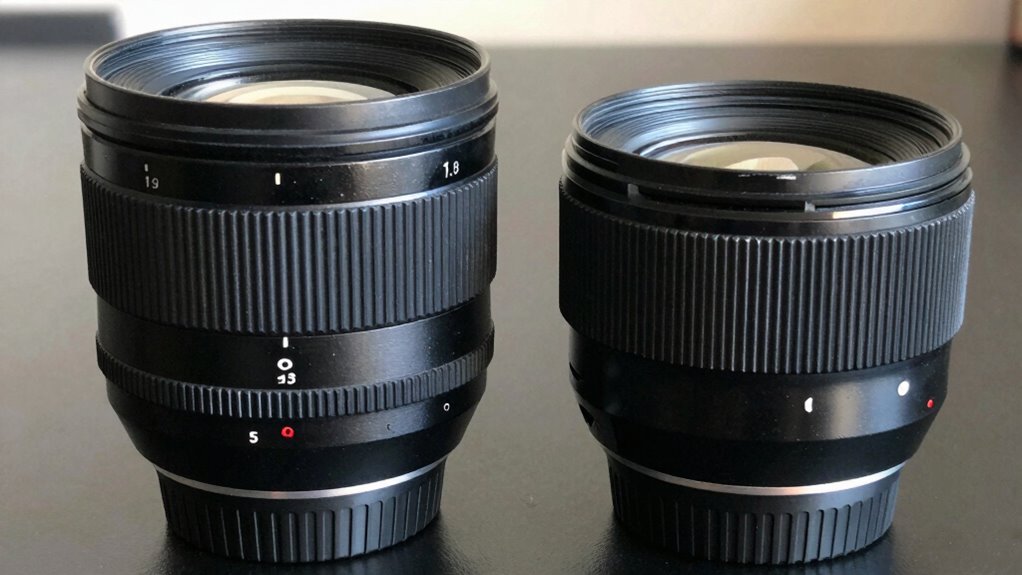
When choosing between cine lenses and photo lenses, understanding their differences can considerably impact your filmmaking or photography projects. One of the key distinctions lies in how each lens handles focus. Cine lenses are designed with manual focus in mind, providing smooth, precise control that allows you to make subtle adjustments during a shot. This is especially important in filmmaking, where focus pulls can add dramatic effect or ensure sharpness at specific moments. Photo lenses, on the other hand, are often optimized for autofocus, making them more convenient for quick shots but less suited for controlled focus adjustments needed in professional video work.
Another difference revolves around lens coatings. Cine lenses typically feature specialized coatings that reduce glare, ghosting, and lens flare, which are *vital* in high-contrast scenes or when shooting under bright lighting conditions. These coatings also promote color fidelity and contrast, *guaranteeing* consistent image quality across different lighting environments. Photo lenses may have coatings optimized for still photography, but they often lack the extensive multi-coating layers found on cine lenses. As a result, cine lenses tend to produce cleaner images with less unwanted reflections, helping you achieve a more cinematic look.
Build quality and physical design also set cine lenses apart. They’re built to withstand the rigors of professional filmmaking, often with geared focus and aperture rings that allow for smooth, precise adjustments during filming. These gears enable you to attach follow focus systems easily, giving you greater control over focus pulls. Additionally, the mechanical precision in cine lenses ensures reliable and repeatable performance for complex shots. Proper ergonomic design enhances handling comfort during long shoots, making them more suitable for professional use. Knowing about lens durability can help you select equipment that withstands demanding shooting conditions. Photo lenses usually prioritize portability and speed, with less emphasis on mechanical precision, which can make them less ideal for controlled focus techniques in video.
You’ll also notice differences in aperture control. Cine lenses feature de-clicked aperture rings, allowing you to change exposure smoothly without sudden jumps or clicking sounds that could disrupt your audio or filming rhythm. Photo lenses typically have stepped, clicky aperture rings designed for quick adjustments in still photography, which can be distracting during video shoots. When filming, the silent, smooth aperture control of cine lenses helps maintain seamless operation.
Furthermore, the alignment of focus and aperture rings in cine lenses is usually more precise, ensuring consistent performance during complex shots. In essence, the differences between cine and photo lenses come down to your specific needs. If your focus is on professional video production, investing in cine lenses with manual focus, specialized lens coatings, durable build, and de-clicked apertures can elevate your work. Meanwhile, photo lenses excel in versatility and convenience for still photography but may fall short in delivering the control and quality required for cinematic projects. Knowing these distinctions *helps you* pick the right tool for your creative vision.
As an affiliate, we earn on qualifying purchases.
Frequently Asked Questions
Can I Use Cine Lenses for Photography?
Yes, you can use cine lenses for photography. They often provide a vintage aesthetic, giving your images a cinematic, timeless feel. Cine lenses are designed for smooth focus shifts and minimal breathing, which enhances creative control. Plus, they excel in color grading, allowing you to fine-tune your images with professional precision. Using cine lenses for photography adds a unique, high-quality look that sets your work apart.
Are Cine Lenses Compatible With Mirrorless Cameras?
Yes, cine lenses are compatible with many mirrorless cameras, especially if you have the right mount adapter. You’ll appreciate their lens durability, designed to withstand intense shooting conditions. They also excel in color grading, offering smooth, consistent colors that help you achieve professional-looking footage. Keep in mind, some adjustments might be necessary, but overall, cine lenses are a great choice for mirrorless systems, balancing performance and durability.
Do Cine Lenses Have Autofocus Features?
Cine lenses are like seasoned storytellers—crafted for precision rather than automation. They typically don’t have autofocus features; instead, you rely on manual focus, which offers you greater control. To guarantee sharp images, you’ll often perform lens calibration, fine-tuning focus for perfect clarity. This meticulous craftsmanship allows you to craft seamless, cinematic shots, emphasizing your creative vision over quick autofocus, making every detail feel deliberate and beautifully intentional.
How Do Cine Lenses Perform in Low-Light Conditions?
Cine lenses perform well in low-light conditions thanks to their superior light sensitivity and precise aperture control. You can manually adjust the aperture smoothly, allowing you to optimize exposure without sacrificing image quality. This control helps you capture clearer, brighter footage even in challenging lighting. Unlike photo lenses, cine lenses are designed for consistent performance in low-light, making them ideal for professional filmmaking where lighting conditions can vary.
Are Cine Lenses More Affordable Than Photo Lenses?
Cine lenses are generally more expensive than photo lenses, with costs often reaching several thousand dollars, depending on brand variations. You might find some affordable options, but in most cases, the specialized build and smooth focus mechanisms drive up the price. Cost comparisons show that photo lenses usually come at a lower price point, making them more accessible for casual photographers. If budget is a concern, photo lenses are a more economical choice.
professional cine lens with geared rings
As an affiliate, we earn on qualifying purchases.
As an affiliate, we earn on qualifying purchases.
Conclusion
So, next time you’re choosing between cine and photo lenses, remember it’s not just about sharpness or focus rings—it’s about the story you want to tell. Ironically, the tools designed for precision filmmaking often require a bit of patience, while photo lenses are more for capturing fleeting moments. Whether you’re chasing perfection or a quick shot, just know that in the end, both will get you where you need to go—assuming you’re okay with a little extra drama along the way.
As an affiliate, we earn on qualifying purchases.
cine lens coatings for glare reduction
As an affiliate, we earn on qualifying purchases.
As an affiliate, we earn on qualifying purchases.