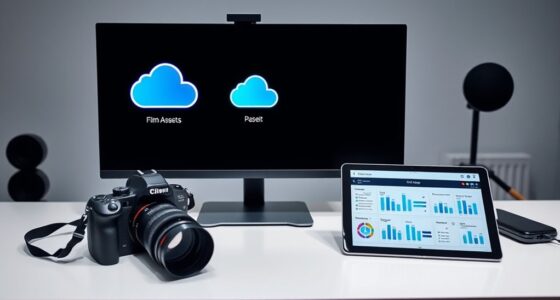

Storage is the quiet backbone of your video production because it keeps your footage safe, organized, and accessible without you noticing. It supports seamless collaboration, quick project retrieval, and protects against hardware failures through data redundancy. Reliable storage systems allow you to focus on creativity instead of technical issues, ensuring your work flows smoothly. If you want to understand how these behind-the-scenes tools make a difference, there’s more to explore below.
Open a free Amazon Business account
Business pricing, bulk buying and tax-exempt orders.
As an affiliate, we earn on qualifying purchases.
Key Takeaways
- Storage ensures smooth workflow and prevents project delays by securely managing large video files behind the scenes.
- Reliable storage systems protect against data loss, hardware failures, and accidental deletions, maintaining project integrity.
- Cloud integration offers easy access, sharing, and collaboration across multiple locations, enhancing efficiency.
- Scalability and rapid data transfer capabilities support growing project demands and quick editing processes.
- Proper storage management provides a resilient foundation, allowing creators to focus on storytelling without security concerns.

Storage may not grab headlines in video production, but it’s the silent backbone that keeps everything running smoothly. Without reliable storage systems, your projects could quickly fall apart, causing delays, data loss, or compromised quality. In today’s fast-paced environment, cloud integration has become essential. It allows you to access and share large video files across different locations effortlessly. With cloud-based storage, you no longer need to worry about physical limitations—your footage and project files are stored securely online, ready for quick retrieval whenever needed. This seamless integration simplifies collaboration, especially when team members are spread across different sites, enabling real-time updates and reducing turnaround times.
Data redundancy is another critical component of modern storage solutions. You can’t afford to lose valuable footage or edit data due to hardware failures or accidental deletions. That’s where data redundancy comes into play—by creating multiple copies of your data across different drives or servers, you ensure that a single failure doesn’t result in catastrophic data loss. This safety net is vital in video production, where losing even a few seconds of footage can mean starting over or missing deadlines. Redundancy also supports continuity; if one storage device goes down, your workflow continues uninterrupted, minimizing downtime and keeping your project on track. Additionally, automated backup systems further enhance your data protection strategies by ensuring consistent recovery points.
You might think of storage as just a place to hold your files, but it’s much more strategic than that. It’s about choosing systems that can scale with your needs, support rapid data transfer, and safeguard your work through backup and disaster recovery plans. Cloud integration doesn’t just provide convenience—it enhances security, allowing you to implement automated backups and off-site storage that protect your data from local hardware failures or disasters. Meanwhile, data redundancy ensures your footage and project files are always available, even if technical issues arise. Additionally, scalable storage solutions enable you to adapt to growing project demands without frequent hardware upgrades.
The importance of storage in video production is often underestimated because it operates behind the scenes. However, if you neglect its role, you risk losing valuable content, facing delays, or encountering costly downtimes. Embracing cloud integration and robust redundancy strategies makes your storage system a resilient foundation for your creative process. It’s the quiet hero that enables you to focus on what truly matters—crafting compelling stories without worrying about the integrity or availability of your data. Properly managing storage infrastructure can significantly enhance your overall workflow and project success.
video production external hard drive
As an affiliate, we earn on qualifying purchases.
As an affiliate, we earn on qualifying purchases.
Frequently Asked Questions
How Has Storage Technology Evolved Over the Past Decade?
Over the past decade, storage technology has evolved considerably. You’ve seen increased cloud scalability, making it easier to handle massive video files without hardware limits. Data security has improved with advanced data encryption, ensuring your content stays protected. These innovations allow you to store, access, and share high-resolution videos seamlessly, enabling more efficient production workflows. You benefit from faster, more reliable storage solutions that support the growing demands of modern video production.
What Are Common Storage Mistakes in Video Production?
You often make storage mistakes by neglecting data redundancy, risking data loss during hardware failures. Additionally, ignoring storage scalability can bottleneck your workflow as project sizes grow, leading to slower access and potential data corruption. To avoid these pitfalls, implement redundant storage solutions and plan for scalable storage options. Regular backups and monitoring help guarantee your video production stays smooth and secure, preventing costly disruptions.
How Does Storage Impact Collaboration in Video Projects?
Storage impacts collaboration in your video projects by enabling seamless access to files through cloud integration. When your team shares data securely, it speeds up workflows and reduces delays. Data security is crucial, ensuring sensitive footage stays protected. With reliable storage, everyone stays on the same page, edits sync smoothly, and project progress flows without interruptions. This efficient collaboration ultimately enhances the quality and timeliness of your final video.
What Are the Future Trends in Video Storage Solutions?
You’re about to see the future of video storage evolve rapidly. Cloud integration will enable seamless, scalable access from anywhere, transforming workflows. AI optimization will enhance data management, making storage smarter and more efficient. These innovations promise faster editing, improved collaboration, and reduced costs. Get ready for a new era where your storage solutions adapt dynamically, ensuring your video projects stay ahead in an increasingly competitive landscape.
How Can Small Studios Optimize Storage Costs Effectively?
You can optimize storage costs by leveraging cloud scalability, which allows you to pay only for the storage you need and easily adjust as your projects grow. Implement data encryption to secure sensitive footage without extra expenses. Regularly delete unused files and archive completed projects to cheaper storage tiers. These strategies help you manage costs efficiently while maintaining security and flexibility for your studio’s evolving storage needs.
As an affiliate, we earn on qualifying purchases.
Conclusion
So, next time you’re marveling at stunning videos, remember that storage is the silent hero making it all possible. Without it, your favorite footage would be lost in a digital abyss, never to be seen again. It’s like the heartbeat of video production — quiet, relentless, and absolutely essential. Without this backbone, the magic of film would crumble into oblivion. Embrace storage’s power, because it’s truly the unsung giant holding your visual dreams aloft!
network attached storage NAS for video
As an affiliate, we earn on qualifying purchases.
As an affiliate, we earn on qualifying purchases.
As an affiliate, we earn on qualifying purchases.
Flea & tick season Picks
flea and tick prevention
As an affiliate, we earn on qualifying purchases.