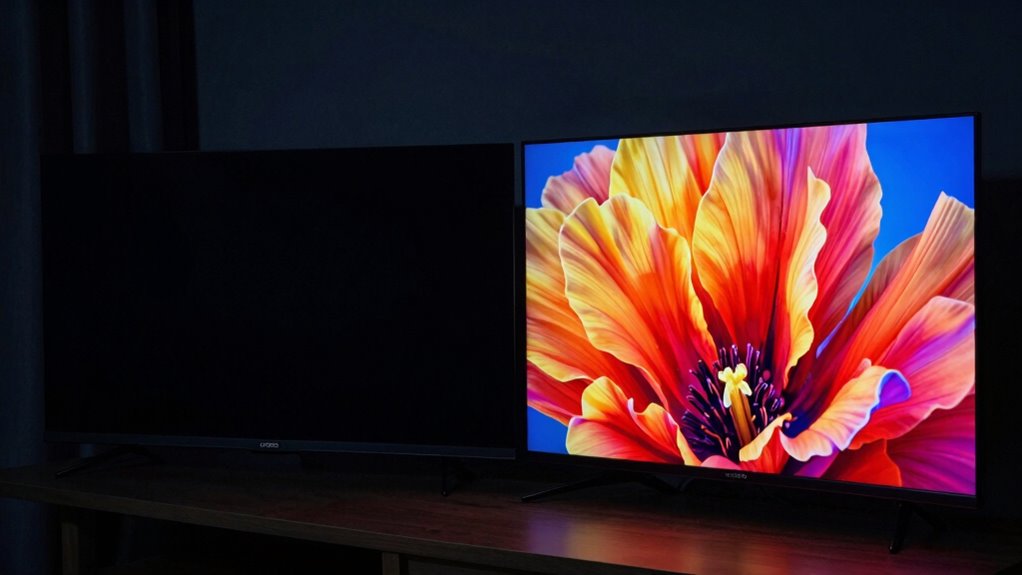

OLED and Mini-LED screens transform your viewing experience by delivering stunning contrast, vibrant colors, and impressive brightness. OLED’s self-emitting pixels create deep blacks and accurate hues from any angle, making images look more lifelike. Mini-LEDs excel in brightness and durability, adapting well to different lighting conditions. Together, they offer richer visuals and better overall picture quality. If you’re curious how these advancements can impact what you watch, keep exploring to uncover more details.
Listen free for 30 days with Audible
Thousands of audiobooks and originals — cancel anytime.
As an affiliate, we earn on qualifying purchases.
Key Takeaways
- OLED screens deliver perfect blacks and vibrant colors, enhancing contrast and realism in viewing experiences.
- Mini-LED displays offer higher brightness and better visibility in bright environments.
- OLED’s true-to-life colors and wide viewing angles improve color accuracy from different perspectives.
- Mini-LED technology provides increased durability and resistance to burn-in for long-term use.
- The combination of brightness, contrast, and color fidelity in both technologies transforms overall picture quality.

When choosing a display, understanding the differences between OLED and Mini-LED is essential, as each offers unique advantages that can considerably impact your viewing experience. OLED screens are prized for their exceptional color accuracy, delivering vibrant, true-to-life images with deep blacks and rich contrast. This is because each pixel in an OLED panel emits its own light, allowing for precise control over brightness at a granular level. As a result, you’ll notice more vivid colors and sharper details, especially in dark scenes. On the other hand, Mini-LED displays utilize thousands of tiny LEDs behind an LCD panel to create bright, dynamic images. While they may not match OLED in pure black levels, Mini-LEDs excel at producing high brightness levels and maintaining contrast in well-lit environments. This makes them versatile for various lighting conditions, ensuring you get consistent picture quality across different settings. Additionally, advancements in Mini-LED technology have improved their ability to deliver color accuracy, making them increasingly comparable to OLED screens. Color accuracy plays a pivotal role in your overall viewing satisfaction. OLED screens tend to outperform because their self-emissive pixels can produce a broader color spectrum with less color shifting at different angles. This means you’ll see more authentic hues and better color consistency when viewing from different positions. Mini-LED screens, although highly capable, sometimes face challenges with uniformity and color accuracy due to the nature of their backlighting system. However, recent advances have markedly improved their color reproduction, making them a solid choice for viewers who prioritize vivid visuals. The panel lifespan of OLED displays can be shorter than Mini-LEDs, which is an important consideration for long-term use. Durability of the panel is another important factor. OLED displays, despite their stunning visuals, are more susceptible to burn-in and pixel degradation over time, which can affect panel longevity. If you’re concerned about long-term durability, especially with static images or UI elements, you might lean toward Mini-LED screens, which are generally more resistant to burn-in and offer better panel durability. Ultimately, your choice hinges on what matters most to you. If you crave perfect blacks, superior color accuracy, and don’t mind the potential for burn-in, OLED might be the better option. But if you want a display that’s bright, durable, and versatile across different lighting conditions, Mini-LED provides a compelling alternative. Both technologies have revolutionized how you experience visuals, elevating clarity, contrast, and color fidelity to new heights. Recognizing these differences helps you make an informed decision, ensuring your screen choice enhances your viewing pleasure for years to come.
As an affiliate, we earn on qualifying purchases.
Frequently Asked Questions
How Long Do OLED and Mini-Led Screens Typically Last?
OLED screens typically last around 30,000 to 50,000 hours of use, while Mini-LED screens often offer a longer panel lifespan of about 60,000 to 100,000 hours. Your screen durability depends on usage patterns and settings, but generally, these panels are designed to last for years. You can expect your OLED or Mini-LED display to maintain quality well into its lifespan with proper care.
Are OLED and Mini-Led Screens More Energy-Efficient Than LCDS?
Yes, OLED and Mini-LED screens are more energy-efficient than LCDs because they use less power to deliver better color accuracy and contrast. OLEDs turn off pixels individually, saving energy in dark scenes, while Mini-LEDs boost brightness without consuming excessive power. Although they often cost more upfront, their improved energy efficiency can lead to savings over time, making them a smarter choice for your viewing needs.
Can OLED and Mini-Led Screens Be Repaired Easily?
Think of OLED and Mini-LED screens as delicate glass sculptures—beautiful but fragile. When it comes to repair accessibility, you might find them more challenging than traditional LCDs due to their intricate design and delicate components. Screen durability varies, but often, repairing these high-tech displays requires specialized skills and tools. So, if damage occurs, expect professional help, and be prepared for repairs that aren’t as straightforward as replacing an old LCD.
Do OLED and Mini-Led Screens Have Any Health Risks?
OLED and Mini-LED screens generally don’t pose significant health risks, but you might experience eye strain or discomfort from prolonged viewing. These screens emit blue light, which can contribute to eye fatigue and disrupt sleep patterns if you look at them late at night. To minimize risks, take regular breaks, adjust brightness settings, and use blue light filters. Staying mindful of your viewing habits helps protect your eye health.
How Do OLED and Mini-Led Screens Perform in Bright Sunlight?
Ever wondered how OLED and Mini-LED screens perform in bright sunlight? You’ll find they excel, thanks to superior contrast enhancement and high brightness levels. Their color accuracy remains vibrant, making outdoor viewing enjoyable. The high contrast helps reduce glare, ensuring images stay sharp and clear even in direct sunlight. So, whether you’re outside or near windows, these screens deliver a better viewing experience without sacrificing image quality.
As an affiliate, we earn on qualifying purchases.
Conclusion
With OLED and Mini-LED screens, you experience deeper blacks, brighter colors, and smoother contrasts. You see more detail, enjoy richer visuals, and feel more immersed in every scene. You get better clarity, enhanced realism, and a stunning cinematic experience. These screens elevate your viewing, improve your entertainment, and transform your moments. Embrace the change, embrace the difference, and enjoy the revolution in display technology that keeps you connected, captivated, and constantly amazed.
As an affiliate, we earn on qualifying purchases.
As an affiliate, we earn on qualifying purchases.
NFL season / tailgating Picks
team gear
As an affiliate, we earn on qualifying purchases.