Your camera choice affects sound, lighting, and post-production by determining audio quality with built-in mics or external setups, influencing how easily you can capture clear sound. It also impacts lighting flexibility through sensor performance and lens options that shape scene mood. Good design guarantees quick adjustments and minimizes post-production work, leading to smoother editing. Exploring these aspects further reveals how selecting the right camera can elevate your entire production process.

Get movie nights delivered free — and shop member deals
- Fast, free delivery on millions of items
- Access to Prime Big Deal Days deals on October 6–7
- Prime Video, Amazon Music and more included
Key Takeaways
- Camera design affects accessibility of ports and controls, influencing sound equipment setup and adjustments during filming.
- Lens selection impacts scene lighting and exposure, shaping overall image quality and lighting flexibility.
- Camera ergonomics and handling ease reduce operator fatigue, improving shot stability and efficiency in post-production.
- Built-in microphones often produce poor audio; external mics and proper placement depend on camera compatibility and design.
- High-quality, low-noise footage from suitable cameras simplifies editing, color correction, and enhances final output.

Choosing the right camera isn’t just about image quality; it directly affects your entire production process, from sound to lighting and editing. When you pick a camera, consider how lens selection influences your shots. The lens you choose determines the depth of field, sharpness, and overall aesthetic, which can make or break the mood you’re trying to create. A versatile lens allows you to adapt quickly to different scenes, reducing the need for constant equipment swaps that could disrupt your workflow. Additionally, the camera’s ergonomics play a pivotal role in how smoothly you operate during shoots. A well-designed camera with intuitive controls and comfortable handling enables you to focus on capturing the perfect shot without fatigue or distraction.
Your choice of camera impacts sound recording more than you might realize. Some cameras have built-in microphones, but relying solely on them often results in subpar audio. External microphones and proper placement become indispensable, and your camera’s compatibility with these accessories matters. When your camera’s design allows easy access to input ports and controls, you can quickly adjust audio levels or switch microphones without missing a beat. The ergonomics of the camera also influence how easily you can set up and operate these audio devices, ensuring you capture clean sound without fuss.
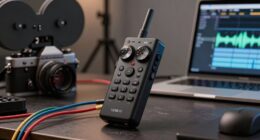
Camera design affects audio setup—easy access to ports and controls ensures quick adjustments and clean sound capture.
Lighting setup is another area affected by your camera selection. Different cameras handle exposure and color temperature differently, which can influence your lighting choices. Cameras with good dynamic range and accurate color reproduction give you more flexibility in how you light your scene, reducing post-production adjustments. If a camera’s ergonomics allow for easy access to settings like ISO, aperture, and shutter speed, you can fine-tune your exposure on the fly, saving time and ensuring consistent results. Proper lens selection complements this by letting you control how light enters the camera, affecting the overall look and feel of your footage. Additionally, understanding your camera’s image capabilities helps you plan effective lighting setups to maximize image quality. Recognizing a camera’s sensor performance can guide your decisions about lighting and exposure to optimize your footage.
Post-production depends heavily on the initial footage quality. When your camera offers high-quality images with minimal noise and excellent color fidelity, editing becomes more straightforward. You’re less likely to spend hours correcting issues that could have been avoided during shooting. The ergonomic design also means less strain during long editing sessions, especially if you’re reviewing footage on a camera’s screen or making quick adjustments on set. Fundamentally, your camera’s lens selection, ergonomics, and image capabilities all intertwine to influence the efficiency and quality of your entire production pipeline.
As an affiliate, we earn on qualifying purchases.
Frequently Asked Questions
How Does Camera Size Affect Portability and Setup Time?
A smaller camera size makes your setup quicker and easier because of its reduced weight and simpler design. You can carry it effortlessly, which boosts portability, and it usually requires less time to assemble. However, larger cameras with more features might take longer to set up due to increased weight and complexity. So, if you prioritize quick, mobile shoots, a compact camera is the way to go, minimizing setup complexity.
Are High-End Cameras Always Better for Sound Quality?
High-end cameras aren’t always better for sound quality; they’re like a fancy chassis that doesn’t guarantee a smooth ride. Your sound depends more on proper sound calibration and effective microphone integration. Even the most expensive camera can produce poor audio if you neglect these details. Focus on quality microphones and calibration, regardless of your camera’s price tag, to guarantee crisp, professional sound that complements your visuals seamlessly.
What Camera Features Influence Lighting Compatibility?
Your camera’s sensor sensitivity and lens compatibility directly influence lighting compatibility. A sensor with high sensitivity performs well in low-light conditions, reducing the need for extensive lighting setups. Meanwhile, choosing lenses compatible with your camera’s mount allows you to use filters and accessories that improve lighting control. Together, these features help you adapt to different lighting environments, ensuring better image quality without over-relying on external lighting equipment.
How Does Camera Choice Impact Editing Software Options?
Your camera choice directly affects your editing software options because of sensor compatibility and file formats. Cameras with higher-end sensors produce files compatible with advanced editing tools, enhancing color grading possibilities. If your camera records in professional formats, you can use more sophisticated software for precise adjustments. Conversely, limited sensor compatibility may restrict software options, potentially complicating your workflow and affecting the quality of your final edits.
Can Budget Cameras Deliver Professional Post-Production Results?
Yes, budget cameras can deliver professional post-production results if you understand their limitations and optimize your workflow. You need to work within your budget constraints while maintaining professional standards by focusing on proper lighting, sound, and editing techniques. Use quality post-production software and shoot in the highest possible resolution. With careful planning, your budget camera footage can look polished and meet industry standards.
camera lens for video production
As an affiliate, we earn on qualifying purchases.
As an affiliate, we earn on qualifying purchases.
Conclusion
Choosing the right camera isn’t just a technical decision—it’s the cornerstone of your entire production universe. Your camera choice can turn a simple scene into a cinematic masterpiece or a chaotic mess that echoes through time. It influences every pixel, sound wave, and lighting beam, shaping your story’s destiny. So, pick wisely, because this tiny device holds the power to launch your project into legendary status—or leave it lost in the shadows of mediocrity forever.
As an affiliate, we earn on qualifying purchases.
camera accessories for sound and lighting
As an affiliate, we earn on qualifying purchases.
As an affiliate, we earn on qualifying purchases.
Fall Picks
fall essentials
As an affiliate, we earn on qualifying purchases.