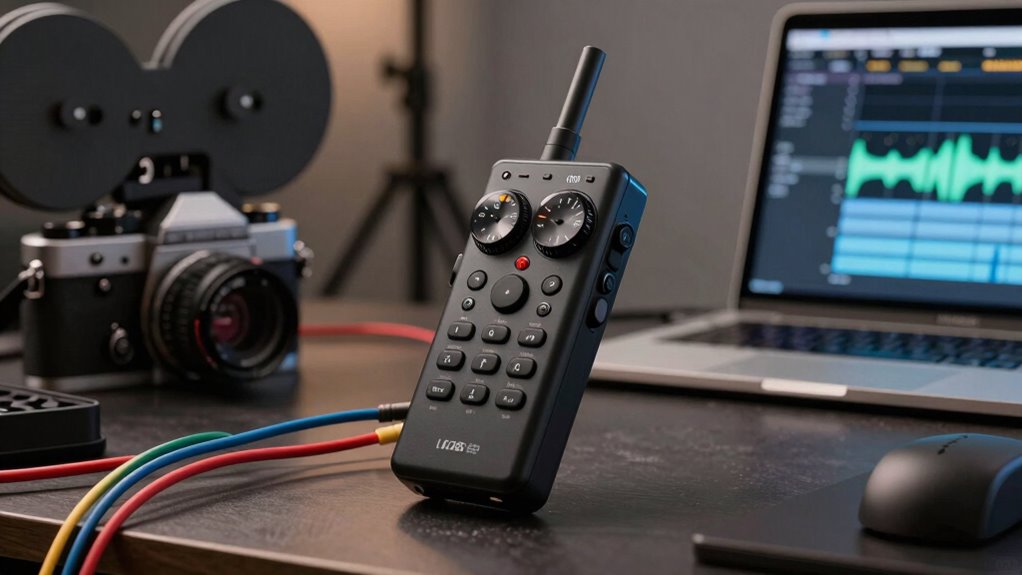
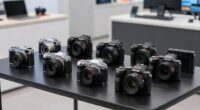
Choosing the right audio recorder is vital for capturing clear, professional sound in filmmaking. The Zoom H6 Essential 32-Bit Float Handheld Recorder stands out as the best overall for its versatility and high-fidelity recording capabilities. For those on a tighter budget, the Zoom H1 Essential Portable Recorder offers great value, while the TASCAM DR-70D is ideal for videographers needing multiple channels. Each option balances factors like ease of use, build quality, and expandability, but tradeoffs often involve size, complexity, and price. Keep reading for a detailed breakdown of these choices and what to consider before buying.

Get movie nights delivered free with Prime
- Fast, free delivery on millions of items
- Prime Video, Amazon Music and more included
- Member-only deals all year
Key Takeaways
- The top-ranked Zoom H6 offers unmatched versatility with multiple inputs, making it ideal for complex shooting setups.
- Budget options like the Zoom H1 Essential deliver surprisingly good sound quality but may lack expandability and advanced features.
- Multi-channel recorders such as the TASCAM DR-70D are better suited for videographers who need to sync audio directly with video footage.
- Build quality and ease of use vary significantly; more advanced models tend to be larger and require a steeper learning curve.
- Most of the best options include features like phantom power, multiple inputs, and portable design, but choosing the right one depends on your specific filming needs.
| Zoom H4 Essential 4-Track Handheld Recorder |  | Best Versatile Handheld Recorder for Filmmakers | Tracks: 4-track | Microphones: Built-in stereo | Inputs: 2x XLR/TRS | VIEW ON AMAZON | See Our Full Breakdown |
| Zoom H6 Essential 32-Bit Float Handheld Recorder |  | Best 32-Bit Float Handheld Recorder for Distortion-Free Audio | Tracks: 6 | Recording Format: 32-bit float | Inputs: 4x XLR/TRS combo | VIEW ON AMAZON | See Our Full Breakdown |
| Zoom H6 Studio Handy Recorder for Filmmakers & Musicians |  | Best Portable 6-Track Recorder for Loud Environments | Tracks: 6 individual plus stereo | Recording Bit Depth: 32-bit float | Max SPL Handling: 140 dB | VIEW ON AMAZON | See Our Full Breakdown |
| Zoom F2 Lavalier Field Recorder with LMF-2 Microphone |  | Best Ultra-Compact Clip-On Recorder for On-Set Foley and Dialogue | Recording Format: 32-bit float | Sample Rates: 44.1kHz / 48kHz | Included Microphone: LMF-2 omnidirectional lavalier | VIEW ON AMAZON | See Our Full Breakdown |
| Zoom H1 XLR 2-Channel Portable Recorder |  | Best Compact Dual-Channel Recorder for Filmmakers on the Go | Recording Quality: 32-bit / 96kHz | Channels: 2 | Inputs: 2x XLR/TRS combo | VIEW ON AMAZON | See Our Full Breakdown |
| Zoom H1 Essential Portable Recorder |  | Best Compact Recorder for On-the-Go Filmmaking | Brand: Zoom | Recording: Stereo | Connectivity: USB-C | VIEW ON AMAZON | See Our Full Breakdown |
| Zoom H5 4-Track Portable Handy Recorder |  | Best Versatile Multichannel Recorder for Filmmakers | Tracks: 4-track simultaneous recording | Input Capsule: Detachable X/Y capsule (XYH-5), interchangeable system | Inputs: 2 x XLR/TRS combo with phantom power | VIEW ON AMAZON | See Our Full Breakdown |
| Zoom H1essential Handy Recorder Bundle with Lavalier Microphone, 32GB microSDHC Card, Windscreen, and Batteries |  | Best Budget Bundle for Field and Interview Recording | Bundle Items: Recorder, lavalier mic, 32GB SD card, windscreen, batteries | Recording Format: 32-bit float | Microphones: X/Y stereo | VIEW ON AMAZON | See Our Full Breakdown |
| Zoom F3 Professional Field Recorder |  | Best Professional-Grade Recorder for Demanding Conditions | Recording format: 32-bit float | Inputs: Dual locking XLR | Preamps: Ultra-low-noise | VIEW ON AMAZON | See Our Full Breakdown |
| TASCAM DR-70D 4-Channel Portable Audio Recorder for Videographers |  | Best Multi-Channel Recorder with Safety Features for Filmmaking | Channels: 4 | Inputs: 4x Combo XLR/TRS with phantom power | Built-in Microphones: 2 | VIEW ON AMAZON | See Our Full Breakdown |
| audio recorders for filmmaking | Inputs | Recording Format |
|---|---|---|
| Zoom H4 Essential 4-Track Hand | 2x XLR/TRS | — |
| Zoom H6 Essential 32-Bit Float | 4x XLR/TRS combo | 32-bit float |
| Zoom H6 Studio Handy Recorder | — | — |
| Zoom F2 Lavalier Field Recorde | — | 32-bit float |
| Zoom H1 XLR 2-Channel Portable | 2x XLR/TRS combo | — |
| Zoom H1 Essential Portable Rec | — | — |
| Zoom H5 4-Track Portable Handy | 2 x XLR/TRS combo with phantom power | WAV |
| Zoom H1essential Handy Recorde | — | 32-bit float |
| Zoom F3 Professional Field Rec | Dual locking XLR | 32-bit float |
| TASCAM DR-70D 4-Channel Portab | 4x Combo XLR/TRS with phantom power | — |
More Details on Our Top Picks
Zoom H4 Essential 4-Track Handheld Recorder
The Zoom H4 Essential stands out for its combination of built-in stereo microphones and two XLR/TRS inputs, making it ideal for capturing a wide range of sounds—from quiet dialogue to loud environments—without needing external mics. Unlike the Zoom H1 XLR 2-Channel Recorder, which lacks built-in mics, this model offers greater flexibility in a single device. Its ability to record simultaneously to an SD card and directly to a connected device provides redundancy, crucial on busy sets. The accessible spoken menu guidance enhances usability for all crew members. The main tradeoff is its lack of detailed technical specifications and higher price point compared to simpler recorders. This pick makes the most sense for filmmakers needing a portable, adaptable recorder that can handle different sound scenarios on set or location.
Pros:- Versatile input options with built-in mics plus two XLR/TRS inputs
- Simultaneous recording to device and SD card backup
- Accessible, spoken menu guidance for ease of use
- Suitable for a wide range of recording scenarios from dialogue to loud performances
Cons:- Limited technical specs and no detailed pricing info in listing
- No advanced onboard editing features or software included
Best for: Filmmakers who need a versatile, all-in-one handheld recorder capable of capturing multiple sound sources with minimal gear.
Not ideal for: Budget-conscious shooters who prefer a basic recorder without extra inputs or built-in mics, or those needing more advanced editing features.
- Tracks:4-track
- Microphones:Built-in stereo
- Inputs:2x XLR/TRS
- Connectivity:USB-C
- Storage:SD card
- Accessibility:Spoken menu guidance
Our verdict“This recorder is perfect for filmmakers seeking a flexible, portable solution that combines internal mics with external input options.”
Zoom H6 Essential 32-Bit Float Handheld Recorder
The Zoom H6 Essential offers the advantage of 32-bit float recording, which prevents clipping and makes handling unpredictable sound levels easier—a significant benefit over the Zoom H4 Essential. Its four XLR/TRS combo inputs plus built-in X/Y microphones provide versatile recording options, suitable for capturing loud audio without distortion. Compared with the Zoom H1 XLR 2-Channel Recorder, which has fewer inputs, the H6’s flexibility is ideal for complex shoots. However, the need to purchase additional capsules separately for the capsule system can add to costs. Its ability to double as a USB audio interface makes it a strong choice for post-production. This model makes the most sense for sound recordists and filmmakers who need reliable, distortion-proof recordings in unpredictable environments.
Pros:- 32-bit float recording prevents clipping and lost takes
- Four XLR/TRS inputs plus built-in X/Y mics for versatile capturing
- Functions as a USB audio interface for seamless editing
- Spoken menu navigation enhances accessibility
Cons:- Additional capsules for the system are sold separately, increasing overall cost
- No bundled software or accessories included in base package
Best for: Filmmakers and sound recordists who require high flexibility and distortion-free audio in variable sound environments.
Not ideal for: Budget buyers or those needing an all-in-one device with built-in mics, as the H6 is more modular and potentially more costly with accessories.
- Tracks:6
- Recording Format:32-bit float
- Inputs:4x XLR/TRS combo
- Built-in Microphones:X/Y, up to 135 dB SPL
- Max SPL:135 dB
- Capsule System:3.0 interchangeable
Our verdict“This recorder makes the most sense for professionals who need reliable, distortion-free audio with flexible input options and high-quality recording technology.”
Zoom H6 Studio Handy Recorder for Filmmakers & Musicians
The Zoom H6 Studio combines portability with powerful features like 6-channel recording and 32-bit float technology, making it suited for capturing loud environments, like concerts or noisy sets. Its large 19.4mm microphones handle up to 140 dB SPL, comparable to the Zoom H6 Essential, but with a focus on high SPL handling. The look-ahead limiters are a key addition, proactively preventing clipping, unlike models that rely solely on gain adjustments. While its reliance on AA batteries might be seen as a drawback compared to rechargeable options, the long 15-hour battery life makes it practical for extended shoots. This model is best for filmmakers working in loud or unpredictable environments who need both high SPL handling and long-lasting power.
Pros:- High SPL handling (140 dB) suitable for loud environments
- Look-ahead limiters prevent clipping proactively
- Long 15-hour battery life on affordable AA batteries
- 32-bit float recording eliminates distortion
Cons:- Dependent on AA batteries, not rechargeable built-in packs
- Limited to external mics, no built-in microphones
Best for: Filmmakers capturing loud scenes or working in noisy environments who prioritize high SPL handling and long battery life.
Not ideal for: Shooters who prefer rechargeable batteries or need built-in mics, as the device relies solely on external microphones and AA batteries.
- Tracks:6 individual plus stereo
- Recording Bit Depth:32-bit float
- Max SPL Handling:140 dB
- Microphone Size:19.4mm
- Sample Rates:44.1 kHz to 192 kHz
- Battery Life:Up to 15 hours
Our verdict“This recorder is ideal for filmmakers working in loud environments who need durable, long-lasting equipment with high SPL capacity.”
Zoom F2 Lavalier Field Recorder with LMF-2 Microphone
The Zoom F2 excels in portability, offering 32-bit float recording in an ultra-compact form factor perfect for discreet capturing of dialogue or foley. Its size rivals a smartphone, making it ideal for on-the-go use. Unlike larger recorders like the Zoom H4 Essential, the F2 relies on an included lavalier mic, which is excellent for capturing close-up speech but limits flexibility if you need ambient or multiple mic options. The long 15-hour battery life and support for microSD cards up to 512GB make it a reliable choice for extended shoots. The absence of a built-in microphone means you depend on the supplied lavalier, which could be a limitation for versatile environments. This device makes the most sense for filmmakers needing a small, unobtrusive recorder for interviews or discreet sound captures.
Pros:- Extremely small and wearable form factor
- 32-bit float recording eliminates gain concerns and clipping
- Long 15-hour battery life on inexpensive AAA batteries
- Includes a complete lavalier mic kit with windscreen and clip
Cons:- Requires separately purchased microSD cards for storage
- No built-in microphone limits versatility in different environments
Best for: Filmmakers and journalists needing a tiny, clip-on recorder for capturing dialogue or ambient sounds discreetly.
Not ideal for: Users requiring versatile microphone options or onboard microphones for capturing a variety of sounds without additional gear.
- Recording Format:32-bit float
- Sample Rates:44.1kHz / 48kHz
- Included Microphone:LMF-2 omnidirectional lavalier
- Battery Life:Up to 15 hours on 2 AAA batteries
- Storage:microSD up to 512GB
- Internal Clock:+/-0.5ppm
Our verdict“This recorder is perfect for discreet, on-the-spot dialogue capture where size and ease of use are priorities.”
Zoom H1 XLR 2-Channel Portable Recorder
The Zoom H1 XLR 2-Channel Recorder offers a compact yet capable solution for capturing high-quality audio in the field, with 32-bit / 96kHz recording quality and two XLR/TRS combo inputs. Its OLED waveform display helps monitor levels precisely, a feature that sets it apart from more basic models like the Zoom H4 Essential. However, unlike the H4, which provides built-in microphones, the H1 relies entirely on external mics, making it less versatile for spontaneous recordings. Its support for SDXC cards up to 1TB ensures long recording sessions. The smaller size makes it perfect for quick setups, but the lack of built-in microphones means you need additional gear for complete on-the-fly recordings. It’s best suited for filmmakers who already have quality external mics and need a portable, high-res recorder.
Pros:- High-quality 32-bit / 96kHz recording
- OLED waveform display for precise level monitoring
- Supports large SDXC cards up to 1TB
- Dual XLR/TRS inputs for mics and instruments
Cons:- No built-in microphones, requiring external microphones
- Limited to external mic setup, less convenient for quick, spontaneous recordings
Best for: Filmmakers needing a small, portable recorder with high-quality dual XLR/TRS inputs and detailed level monitoring.
Not ideal for: Beginners or those expecting an all-in-one device with built-in microphones, as it requires external mics for operation.
- Recording Quality:32-bit / 96kHz
- Channels:2
- Inputs:2x XLR/TRS combo
- Display:OLED waveform
- Storage:SDXC up to 1TB
Our verdict“This compact recorder is ideal for filmmakers who already have quality external mics and need a reliable, high-res portable device for field work.”
Zoom H1 Essential Portable Recorder
This model stands out for its simplicity and portability, making it ideal for capturing high-quality stereo sound in quick, spontaneous filming situations. Compared with the more feature-rich Zoom H5, the H1 Essential lacks multiple inputs and advanced controls, but its streamlined design offers ease of use for solo filmmakers or content creators. Its ability to double as a USB-C microphone is a major plus for those who need a versatile tool for streaming or desktop use. The main tradeoff is that it doesn’t include accessories, which means additional purchases for tripod mounts or adapters may be necessary. Overall, this pick makes sense for solo shooters or field recordists who prioritize lightweight gear and straightforward operation.
Pros:- Compact, lightweight, and easy to carry on location
- Clear stereo sound quality suitable for most filmmaking needs
- Can be used as a USB-C microphone for live streaming or desktop recording
Cons:- Lacks additional inputs or external microphone options
- No included accessories for mounting or protection
Best for: Filmmakers who need a portable, all-in-one audio solution for interviews, quick shoots, or vlogging
Not ideal for: Pros who require multiple inputs, advanced audio controls, or professional-grade preamps, as it’s limited in connectivity and features
- Brand:Zoom
- Recording:Stereo
- Connectivity:USB-C
- Use Cases:Music recording, podcasting, voiceovers, field recording, streaming
Our verdict“This recorder is perfect for solo filmmakers and content creators seeking a portable, straightforward device for capturing quality stereo audio.”
Zoom H5 4-Track Portable Handy Recorder
The Zoom H5 excels in versatility due to its interchangeable input capsules and four-track recording capability, making it well-suited for complex filmmaking setups. Unlike the H1, which is limited to stereo, the H5 allows for multi-microphone configurations, supporting professional voice and ambiance capture. Its detachable shock-mounted X/Y capsule helps reduce handling noise during handheld shoots, and the two XLR/TRS combo inputs with phantom power support high-quality external mics. However, its reliance on AA batteries and limited SD card support to 32GB can be drawbacks during long recording sessions. This model makes the most sense for filmmakers who need flexibility and professional-grade inputs in a portable format.
Pros:- Interchangeable input capsules allow for tailored recording setups
- Supports professional XLR microphones with phantom power
- Doubles as a multichannel USB interface for seamless editing
Cons:- Limited SD card capacity may require frequent swapping
- Battery life may be a concern during extended shoots
Best for: Filmmakers who need multiple microphone inputs and flexible configurations for location sound recording
Not ideal for: Casual shooters or those working on simple projects who won’t utilize multi-mic setups or interchangeable capsules
- Tracks:4-track simultaneous recording
- Input Capsule:Detachable X/Y capsule (XYH-5), interchangeable system
- Inputs:2 x XLR/TRS combo with phantom power
- Power:2 AA batteries
- Recording Media:SD/SDHC cards up to 32GB
- Recording Format:WAV
Our verdict“This recorder is suited for filmmakers who require multi-mic capabilities and professional inputs without sacrificing portability.”
Zoom H1essential Handy Recorder Bundle with Lavalier Microphone, 32GB microSDHC Card, Windscreen, and Batteries
This bundle makes a compelling choice for filmmakers who prioritize ease of use and affordability, especially for interviews or field recordings. Its 32-bit float recording technology minimizes gain adjustment worries, rivaling the more advanced Zoom H3n in ease of use. Unlike the H5 and F3, which offer more input options and professional features, the H1essential provides onboard X/Y microphones rated up to 120 dB SPL—ideal for capturing loud sound sources without distortion. The included lavalier and accessories make it ready for quick setup, though the basic bundle may fall short for more demanding production needs. This pick is best for solo shooters, journalists, or podcasters working on a tight budget.
Pros:- 32-bit float recording reduces manual gain adjustments
- Handles loud audio sources up to 120 dB SPL effortlessly
- Includes useful accessories for immediate use
Cons:- Requires four AAA batteries, which may need frequent replacement
- Tripod mount is optional and not included
Best for: Content creators and journalists needing straightforward, portable audio recording in unpredictable environments
Not ideal for: Filmmakers requiring multiple inputs, advanced controls, or professional-grade preamps, as this model is quite simplified
- Bundle Items:Recorder, lavalier mic, 32GB SD card, windscreen, batteries
- Recording Format:32-bit float
- Microphones:X/Y stereo
- Max SPL:120 dB
- Features:Overdub, pre-record, auto record, playback speed
Our verdict“This recorder offers excellent value for solo filmmakers or journalists who want reliable, portable audio without complex features.”
Zoom F3 Professional Field Recorder
The Zoom F3 is tailored for professionals working in unpredictable environments, offering 32-bit float recording that removes the need for level adjustments—an advantage over the H1 and H5 in high-pressure situations. Its dual locking XLR inputs provide a secure connection for high-quality external mics, and the ultra-low-noise preamps ensure clean audio even in noisy or challenging settings. The F3’s flexible power options and USB workflow support make it suitable for long, demanding shoots. However, the advanced features and robust build quality come with a higher price point and may be excessive for casual or low-budget projects. This model suits seasoned filmmakers or sound professionals who need reliability in tough environments.
Pros:- Eliminates level adjustment with 32-bit float recording
- Locking XLR inputs secure professional microphone connections
- Ultra-low-noise preamps deliver pristine audio in difficult conditions
Cons:- Higher cost and complex interface may be overwhelming for novices
- More features than needed for simple projects or basic filming
Best for: Experienced filmmakers and sound recordists requiring rugged, high-fidelity recording in unpredictable locations
Not ideal for: Casual content creators or beginners who do not need ultra-low noise preamps or locking XLR inputs, as this is a professional tool
- Recording format:32-bit float
- Inputs:Dual locking XLR
- Preamps:Ultra-low-noise
- Power:Flexible options
- Connectivity:USB workflow
Our verdict“This recorder is best suited for professionals or experienced filmmakers tackling challenging environments requiring top-tier audio fidelity.”
TASCAM DR-70D 4-Channel Portable Audio Recorder for Videographers
The TASCAM DR-70D offers a comprehensive solution for filmmakers needing four channels of high-quality audio, with four XLR/TRS inputs supporting phantom power—making it a step above the more basic H1 or H5 in multi-mic setups. Its ability to mount above or below a camera adds flexibility on set, and the Dual Recording mode provides a safety backup to prevent distorted takes. The 64dB gain on HDDA preamps handles quiet sources well, but the lack of internal storage means you must plan for adequate SD cards, adding an extra step. Compared to the H5, it offers more channels but at the expense of increased size and complexity. This is best suited for professional shoots requiring multi-mic inputs and reliable safety features.
Pros:- Four XLR/TRS inputs with phantom power for professional-grade audio
- Mounts easily above or below a camera for versatile setup
- Dual recording mode prevents distortion and provides safety backup
Cons:- No internal storage—additional SD cards needed
- More complex setup may require extra training for new users
Best for: Filmmakers needing multi-channel audio with safety backup, especially in documentary or commercial projects
Not ideal for: Solo shooters or those with limited budgets, as it requires additional SD cards and is bulkier than simpler recorders
- Channels:4
- Inputs:4x Combo XLR/TRS with phantom power
- Built-in Microphones:2
- Preamp Gain:64dB
- Recording Media:SD, SDHC, SDXC up to 128GB
- Additional Features:Limiter, HP filter, Dual Recording
Our verdict“This recorder is ideal for multi-mic setups and professional environments where safety and reliability are priorities.”

How We Picked
To determine the best audio recorders for filmmaking, I evaluated each product based on performance, usability, durability, and value. Priority was given to models offering professional-grade audio quality, multiple input options, and reliable power sources. Ease of operation and portability were also key, as filmmakers often need quick setup in dynamic environments. Products were ranked by how well they balanced these factors relative to their price, with a focus on models suitable for both amateur and professional filmmaking scenarios.Factors to Consider When Choosing Audio Recorders For Filmmaking
Selecting the right audio recorder for filmmaking involves weighing several critical factors. The ideal device should deliver clear sound, be user-friendly under field conditions, and offer enough inputs for your equipment. Understanding these elements can prevent costly mistakes and ensure your recordings meet professional standards. Below are key factors to consider before making your purchase.Sound Quality and Bit Depth
High-quality audio is fundamental for filmmaking, so prioritize recorders that support at least 24-bit depth and 96kHz sampling. These specifications ensure detailed, noise-free recordings that can be easily post-processed. Cheaper models often compromise on bit depth or sample rate, leading to lower fidelity. Investing in a recorder with robust audio specs saves time and effort during editing and mixing.
Number and Type of Inputs
Filmmakers typically need multiple inputs for microphones, lavaliers, or line-level sources. Consider whether the recorder supports XLR, TRS, or combo jacks, and how many channels you require. Multi-input devices like the Zoom H6 cater to complex setups, while simpler models may only have stereo inputs. Matching your equipment’s needs with the recorder’s input options is essential to avoid adapters or missing connections.
Portability and Size
Size and weight can significantly influence your workflow. Compact recorders are easier to carry, especially for handheld or run-and-gun shoots, but might sacrifice input options or battery life. Larger units with more features tend to be bulkier but offer additional flexibility. Consider your typical shooting environment to find a balance that suits your mobility and setup speed.
Battery Life and Power Options
Prolonged recording sessions demand reliable power sources. Look for recorders with long battery life, or options for external power such as AA batteries or USB charging. Some models include removable batteries, which can be swapped in the field, minimizing downtime. Failing to account for power needs can result in lost recordings or interruptions during critical scenes.
Durability and Build Quality
Filmmaking often takes place outdoors or in demanding environments, so rugged construction is a plus. Water resistance, shockproofing, and solid casing help prevent damage. Cheaper, lightweight models may be more fragile and less suited for tough conditions. Investing in durable gear ensures longevity and consistent performance over multiple shoots.
Frequently Asked Questions
Can I connect my shotgun mic directly to these recorders?
Yes, most professional-grade recorders support XLR inputs, allowing you to connect shotgun microphones directly. This setup provides better sound quality than built-in or consumer-grade mics, especially in noisy environments. Always verify that the recorder has phantom power if your mic requires it, and check the input level controls to avoid clipping or low volume issues.
Is it better to choose a recorder with multiple channels or a simple stereo unit?
The decision depends on your shooting style and equipment needs. Multi-channel recorders like the Zoom H6 or TASCAM DR-70D provide greater flexibility, allowing you to record multiple sources simultaneously. This is especially useful for capturing ambient sound, lavaliers, or separate boom microphones. Conversely, stereo recorders are simpler, more portable, and easier to operate but may limit your options in complex setups.
How important is battery life when recording on location?
Battery life is critical for ensuring you don’t run out of power during a shoot. Longer-lasting batteries or external power options provide peace of mind, especially in remote locations where changing batteries isn’t feasible. Always carry spare batteries or portable chargers, and consider models with energy-efficient features to extend recording time.
Should I prioritize ease of use or advanced features?
This depends on your experience level and project complexity. Beginners benefit from straightforward interfaces, quick setup, and minimal controls. Advanced users might prefer more extensive features like customizable gain control, detailed metering, and multiple input options. Balancing usability with necessary features is key to getting reliable results without frustration.
Are built-in microphones enough for professional filmmaking?
While some recorders include decent built-in mics, they typically don’t match the quality of external microphones. Professional filmmaking relies on dedicated mics like shotgun or lavalier units for clarity and directionality. Built-in mics are convenient for quick reference or backup but shouldn’t be relied upon as the primary audio source for serious projects.
Conclusion
For filmmakers prioritizing overall versatility and professional quality, the Zoom H6 Essential 32-Bit Float Handheld Recorder makes the most sense. Beginners or those on a budget will find the Zoom H1 Essential Portable Recorder a great starting point, thanks to its simplicity and affordability. Videographers needing multi-channel sync should consider the TASCAM DR-70D, while those seeking premium durability and features might opt for the Zoom F3 Professional Field Recorder. Matching your specific shooting environment and sound requirements with these recommendations will help you capture cleaner, more reliable audio every time.
Fall Picks
fall essentials
As an affiliate, we earn on qualifying purchases.