
To build a reliable audio workflow, focus on soundproofing your space with foam panels or DIY solutions to minimize echoes and background noise. Choose dependable wireless microphones, test them beforehand, and position them close to your talent to guarantee clear sound. Keep your gear organized, regularly test equipment, and monitor audio levels during shoots. Organize your files meticulously to streamline post-production, and you’ll improve consistency and quality in your audio. Keep going to discover more tips for mastering your audio setup.

Get movie-night favorites delivered free — and shop member deals
- Fast, free delivery on millions of items
- Access to Prime Big Deal Days deals on October 6–7
- Prime Video, Amazon Music and more included
Key Takeaways
- Conduct thorough pre-shoot testing of all audio equipment and environment to identify and address potential issues early.
- Implement consistent organization and naming conventions for audio files to streamline post-production workflows.
- Use acoustic treatments like foam panels and bass traps to minimize reflections and external noise during recording.
- Select reliable wireless microphones with strong signals and test their performance in the actual environment beforehand.
- Regularly monitor audio levels in real-time with headphones to catch issues immediately and adjust settings as needed.
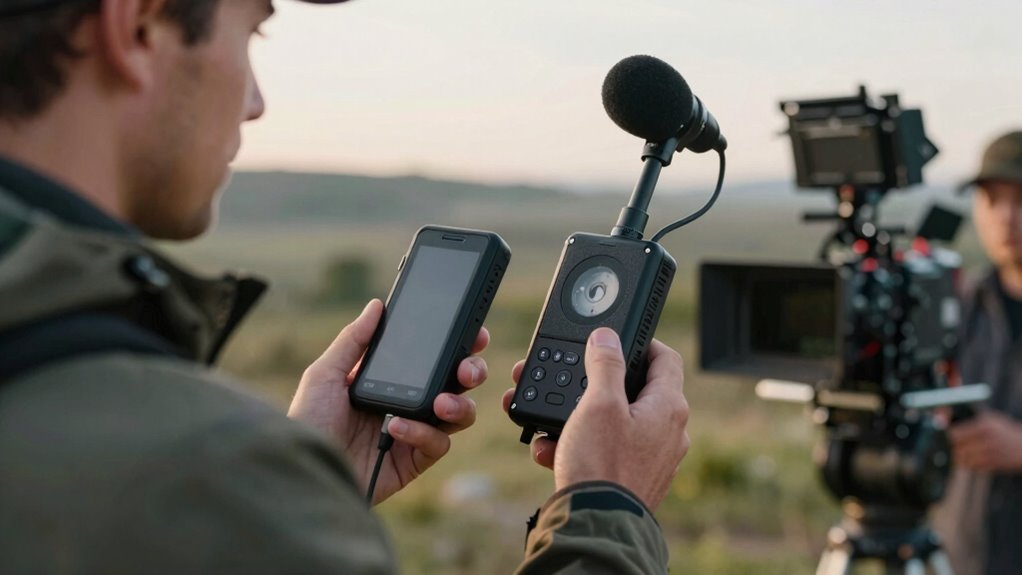
Creating a dependable audio workflow is fundamental for small film teams aiming to produce professional-quality sound without the resources of a large production crew. Your goal is to capture clear, crisp audio that enhances the storytelling, and that starts with understanding how to optimize your environment and equipment. Acoustic treatment is an essential step; it minimizes unwanted echoes and background noise, making your recordings much cleaner. You don’t need a professional studio—simple solutions like foam panels, bass traps, or even DIY methods, such as hanging blankets, can make a significant difference. By controlling the sound reflections in your shooting space, you guarantee that your audio recordings are as close to the source as possible, reducing the need for extensive post-production cleanup. This not only saves time but also improves overall quality, which is critical when working with limited resources. Additionally, understanding how to manage acoustic environments can greatly enhance the consistency of your recordings. Properly managing your acoustic environment can also help prevent unwanted ambient noise from seeping into your recordings, further improving clarity. Implementing soundproofing techniques can be a cost-effective way to further minimize external noise interference. Wireless microphones are another key component of your workflow. They offer flexibility and mobility, especially when you’re filming scenes with dynamic movement or multiple actors. Investing in reliable wireless systems ensures that your audio remains consistent and free from interference. When selecting wireless mics, prioritize those with robust transmission ranges and good battery life to prevent disruptions during shoots. Proper placement is equally important—clip the microphones close to the talent, but avoid any clothing noise or rustling, which can compromise audio clarity. Keep spare batteries and frequency management tools handy to troubleshoot interference swiftly if it occurs. Planning ahead by testing your gear in the actual shooting environment can help identify potential issues early on. It’s also beneficial to familiarize yourself with frequency management techniques to avoid interference from other wireless devices in the area. Integrating these elements into your workflow requires planning. Before filming, test your acoustic setup and wireless equipment in the actual shooting environment. Conduct quick runs to identify any issues, like unwanted echoes or signal drops, and adjust accordingly. During shoots, monitor audio levels with headphones, so you can catch problems in real time. Post-production should be streamlined by organizing your audio files meticulously and maintaining consistent naming conventions, making editing more efficient. Ultimately, building a dependable audio workflow means being proactive about your environment and equipment. Acoustic treatment reduces problematic reflections, while wireless microphones give you the freedom to move and capture authentic performances. When you combine thoughtful setup, proper equipment management, and ongoing testing, you’ll produce higher-quality sound that elevates your entire film project. Small teams can achieve professional results by focusing on these core principles, guaranteeing your audio is as compelling as your visuals.
soundproof foam panels for recording
As an affiliate, we earn on qualifying purchases.
As an affiliate, we earn on qualifying purchases.
Frequently Asked Questions
What Are the Most Cost-Effective Audio Equipment Options for Small Teams?
You should focus on budget microphones and portable recorders for cost-effective audio solutions. Budget microphones like the Audio-Technica ATR2100x or the Rode Lavalier GO offer good quality without breaking the bank. Pair them with portable recorders such as the Zoom H5 or Tascam DR-40X, which are versatile and easy to use on set. This combo guarantees reliable audio capture without overspending, making it perfect for small film teams.
How Can Small Teams Troubleshoot Audio Issues Quickly on Set?
Did you know that 60% of audio issues on set are caused by wireless interference or poor microphone placement? To troubleshoot quickly, check for wireless interference first—switch channels or turn off other devices. Next, adjust your microphone placement, ensuring it’s close to your subject and free from obstructions. Keep spare batteries and cables handy, and always test audio before filming to catch issues early and save time.
What Training Is Recommended for Small Film Teams to Improve Audio Skills?
To improve your audio skills, focus on targeted skill development through hands-on practice and online courses. Seek out audio mentoring from experienced professionals who can offer personalized feedback and guidance. Regular training helps you grasp essential techniques, troubleshoot issues faster, and enhance overall sound quality. By committing to continuous learning and mentorship, your small team can build reliable workflows, ensuring consistently high-quality audio in every project.
How Do You Manage Sound Continuity Across Multiple Shooting Days?
To manage sound continuity across multiple shooting days, you should plan for multiday recording by maintaining consistent microphone placement, settings, and audio levels. Keep detailed notes on each take, including environmental conditions and equipment adjustments. Use the same audio gear whenever possible, and review recordings daily to spot discrepancies. Label and organize audio files meticulously, ensuring smooth integration during editing. This approach helps maintain sound continuity and overall audio quality.
What Are Common Mistakes to Avoid in Small-Scale Audio Recording Setups?
Think of your audio setup as a delicate garden; neglecting microphoning and noise control can let weeds take over. Avoid common mistakes like poor microphone placement, which can capture unwanted noise or miss crucial sound details. Don’t overlook ambient noise control—background sounds can sabotage your scene. By carefully positioning mics and managing environment noise, you guarantee clean, reliable audio that enhances your story rather than distracts from it.
wireless microphone system for film
As an affiliate, we earn on qualifying purchases.
As an affiliate, we earn on qualifying purchases.
Conclusion
Remember, your audio workflow is the heartbeat of your film. Like a steady lighthouse guiding ships through fog, a reliable system keeps your project afloat amidst chaos. Embrace simple tools, plan ahead, and stay adaptable. With each step, you’re building a sturdy bridge across the waters of uncertainty, ensuring your story’s sound reaches safely ashore. Trust in your process, and let your audio be the beacon that leads your film to success.
As an affiliate, we earn on qualifying purchases.
As an affiliate, we earn on qualifying purchases.
Halloween Picks
halloween
As an affiliate, we earn on qualifying purchases.