
Using prime lenses in your trailer shoots encourages careful planning of scenes and lighting, promoting deliberate framing and aesthetic choices. They require you to move the camera physically for different shots, leading to a more thoughtful setup. On the other hand, zoom lenses give you flexibility to quickly adjust focal length, helping you adapt on the fly for spontaneous moments. Choosing between them influences your overall shooting approach and how you craft your story—exploring more details can reveal even more advantages.
Key Takeaways
- Prime lenses encourage detailed planning and deliberate shot composition due to fixed focal lengths.
- Zoom lenses provide flexibility for spontaneous framing adjustments during fast-paced shooting.
- Prime lenses facilitate optimized lighting setups, emphasizing artistic mood and scene quality.
- Zoom lenses allow quick adaptation to changing scenes without changing equipment, saving time.
- Lens choice influences overall shooting strategy, balancing meticulous planning versus on-the-fly adjustments.
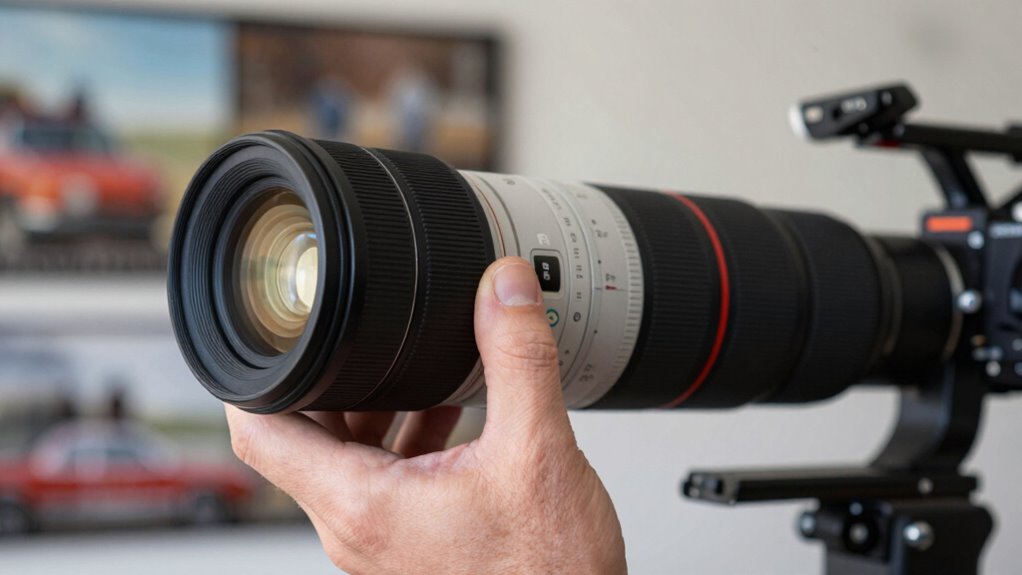
When it comes to trailer shooting, choosing the right lens can make a significant difference in how your footage looks and feels. Prime and zoom lenses each bring distinct advantages that shape your overall strategy. With prime lenses, you get sharp image quality and a wide aperture, which are perfect for capturing dramatic lighting techniques and creating mood through lighting. Their fixed focal length forces you to move around to frame your shots, encouraging a more deliberate approach that emphasizes scene composition and lighting. This can lead to more carefully crafted lighting setups, where every highlight and shadow plays a role in storytelling. Because prime lenses generally perform better in low light, you can also rely on them to enhance sound design by reducing the need for excessive lighting equipment, which sometimes causes unwanted noise or interference. Additionally, understanding the lens characteristics helps in planning your shot sequencing more effectively. Recognizing how different lenses affect image quality allows you to better tailor your camera choices to your desired visual style. A thorough understanding of lighting techniques further improves your ability to utilize prime lenses effectively, ensuring your creative vision is fully realized. Incorporating lens versatility into your planning can help you optimize your camera setup for various shooting conditions and storytelling needs. Moreover, considering the cost and practicality of each lens type can influence your shooting strategy, especially on tight production schedules.
Zoom lenses, however, offer versatility that can dramatically alter your shooting strategy. Instead of changing lenses, you can smoothly adjust focal lengths on the fly, allowing you to adapt quickly to changing scenes or spontaneous moments. This flexibility can be invaluable when capturing dynamic sequences that require quick framing adjustments without disturbing the scene’s flow. When it comes to lighting techniques, zoom lenses let you alter composition without repositioning lights or your camera, saving time and maintaining consistency in your lighting setup. For sound design, their ease of use means you can focus more on capturing clean audio, since you’re not constantly switching lenses or repositioning equipment. This helps keep the audio environment steady, avoiding disruptions that could compromise sound quality.
Your choice between prime and zoom lenses influences your overall approach to trailer shooting, especially regarding lighting techniques and sound design. With primes, you tend to plan more meticulously, setting up lighting to complement their fixed focal lengths and exploiting their superior low-light capabilities. This means your lighting setup becomes an integral part of your storytelling aesthetic. When using zooms, your strategy shifts toward adaptability. You can shift from wide to close-up shots seamlessly, allowing for a more fluid shooting process that can accommodate spontaneous creative ideas. This flexibility extends to sound, where the ability to quickly change shots without interrupting the scene helps maintain audio continuity. By understanding how each lens type interacts with your camera and scene setup, you can craft a more cohesive and visually compelling trailer.
Ultimately, whether you opt for prime or zoom lenses, understanding their impact on lighting techniques and sound design helps you craft a compelling trailer. Your lens choice shapes how you approach scene framing, lighting, and capturing audio—each decision a vital piece of the storytelling puzzle.
As an affiliate, we earn on qualifying purchases.
Frequently Asked Questions
How Do Lens Choices Affect Trailer Pacing?
Lens choices directly influence trailer pacing by shaping shot duration and movement. Prime lenses offer sharp, focused images perfect for slow, deliberate scenes, while zoom lenses enable quick shifts and dynamic framing, speeding up pacing. You can use lighting techniques to enhance mood, and camera stabilization to guarantee smooth shots, both affecting tempo. Combining these elements, your lens choice guides viewers’ emotional response and controls the trailer’s rhythm effectively.
What Are the Cost Differences Between Prime and Zoom Lenses?
Prime lenses generally cost more in lens rental costs due to their specialized manufacturing expenses, but they are often more affordable long-term since they have fewer moving parts and less complexity. Zoom lenses tend to be cheaper upfront because of their versatility, but their manufacturing expenses are higher, which can lead to increased rental costs over time. Your choice depends on your budget and shooting needs.
How Do Lens Preferences Influence Director’s Visual Style?
Your lens preferences shape your visual style by reinforcing your lens mythology, guiding how you craft cinematic storytelling. If you favor prime lenses, you might focus on sharp, detailed images with a deliberate aesthetic, creating intimacy or intensity. Conversely, zoom lenses allow you to adapt shots quickly, offering dynamic storytelling. Your choice influences the mood, pacing, and overall feel, helping you tell stories visually in a way that aligns with your creative vision.
Can Lens Selection Impact Shooting Schedule Flexibility?
Did you know that using zoom lenses can reduce setup time by up to 30%? Lens selection definitely impacts your shooting schedule flexibility. Prime lenses often require changing lenses, which can slow down filming, especially when adjusting lighting techniques or maintaining camera stabilization. Conversely, zoom lenses allow quick framing adjustments without stopping, giving you more control over your schedule. So, choosing the right lens can streamline your shoot and keep things running smoothly.
What Maintenance Considerations Are Unique to Each Lens Type?
You need to take into account lens durability and cleaning procedures for each lens type. Prime lenses, with fewer moving parts, generally offer better durability but require careful handling to avoid damage. Zoom lenses, with more complex mechanics, need regular cleaning of the zoom and focus rings to guarantee smooth operation. Always use appropriate lens cleaning tools and avoid harsh chemicals to maintain ideal performance and longevity of your lenses.
As an affiliate, we earn on qualifying purchases.
Conclusion
By understanding how prime and zoom lenses influence your trailer shooting strategy, you can craft more dynamic and engaging visuals. Prime lenses offer sharpness and unique depth, perfect for dramatic shots, while zoom lenses give you flexibility and speed. So, next time you’re planning a shoot, ask yourself: which lens will best tell your story? Mastering these tools empowers you to create trailers that captivate and leave a lasting impression. Ready to elevate your filmmaking game?
As an affiliate, we earn on qualifying purchases.
professional zoom lens for cameras
As an affiliate, we earn on qualifying purchases.
As an affiliate, we earn on qualifying purchases.