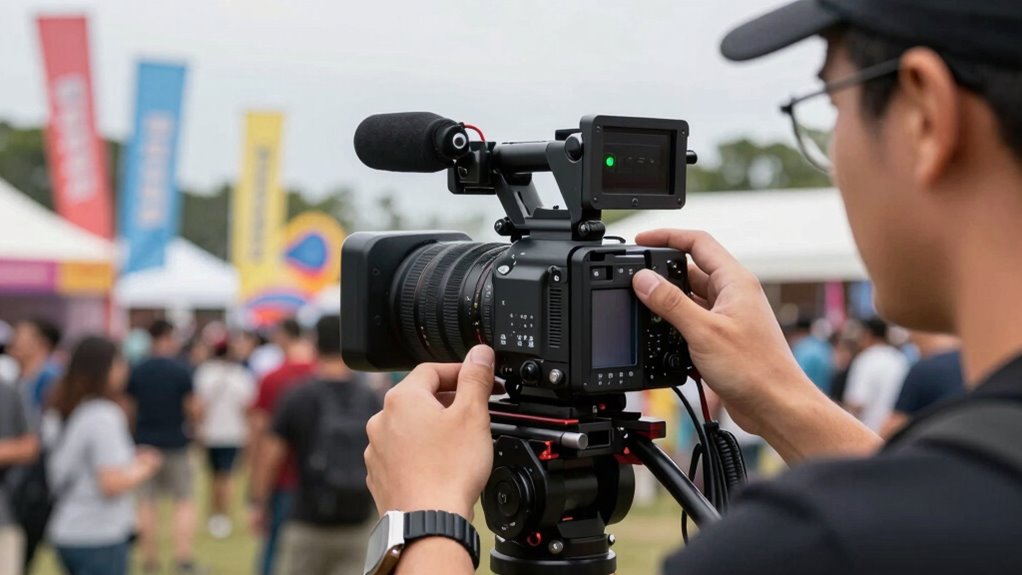

Backup audio is essential for documentary and event shoots because it guarantees your footage stays usable if technical issues happen. Relying on just one microphone or device risks losing important sound, but having backups preserves your project’s integrity. It allows you to choose the best quality recordings and adapt quickly to changing environments. Regular maintenance and proactive planning reduce stress and prevent failures. Keep going to find out how to make your sound capture even more reliable and professional.

Get movie nights delivered free — and shop member deals
- Fast, free delivery on millions of items
- Access to Prime Big Deal Days deals on October 6–7
- Prime Video, Amazon Music and more included
Key Takeaways
- Backup audio prevents data loss if primary equipment fails during critical moments.
- It ensures high-quality sound capture by comparing multiple recordings for the best version.
- Redundant audio sources provide flexibility to adapt to unpredictable environmental conditions.
- Regular testing and backups mitigate risks of technical issues disrupting the shoot.
- Maintaining backup audio upholds professional standards and project integrity in unpredictable scenarios.
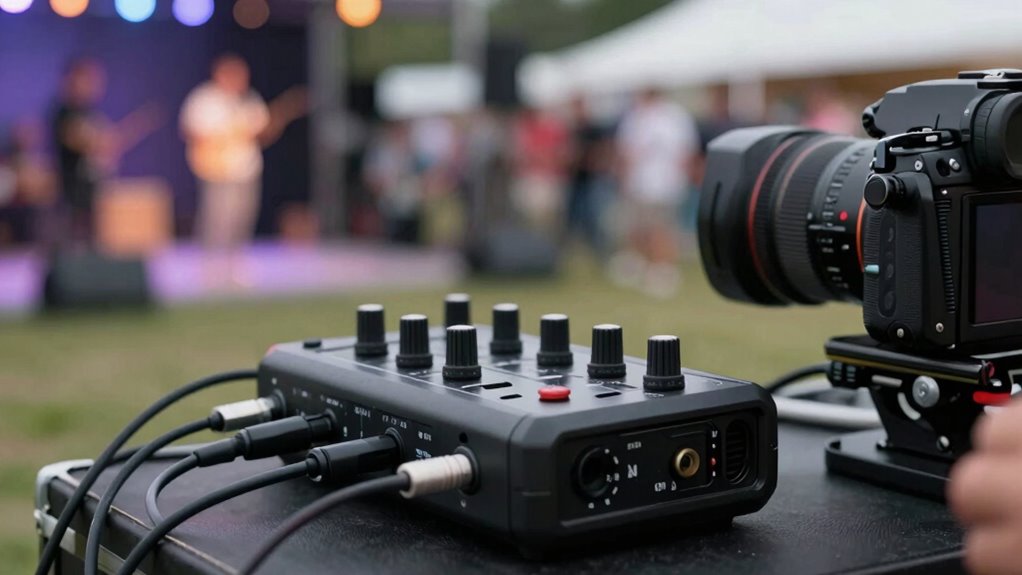
Have you ever faced a situation where your main audio source fails during a shoot? If you’re involved in documentary or event filming, you know how essential sound is to capturing the moment’s authenticity and emotion. Relying solely on one microphone or recording device can be risky. Equipment can malfunction, batteries can die unexpectedly, or environmental factors might interfere with your setup. That’s where backup audio becomes necessary. It’s not just about having a second recording; it’s about guaranteeing you preserve sound quality and maintain the overall integrity of your project.
The significance of sound quality cannot be overstated. If your primary audio source falters, your footage risks becoming unusable or requiring extensive post-production fixes. Backup audio provides a safety net that guarantees you won’t lose critical sound data. When you have an additional recording, you can compare and select the best quality version later, which helps produce a polished final product. This redundancy is especially important in documentaries and live events, where capturing genuine reactions and ambient sounds adds authenticity. Without backup audio, you might find yourself scrambling for salvageable sound, often settling for lower quality or incomplete recordings. Having reliable audio equipment can make all the difference in ensuring consistent sound capture throughout the shoot. Additionally, understanding the importance of equipment reliability can help you choose gear that withstands tough conditions and reduces the risk of failure. Regular maintenance and testing of your equipment can also prevent unexpected issues during critical moments.
Equipment reliability plays a significant role in maintaining smooth shoots. Even the most dependable gear can fail at the worst moment. Using backup audio equipment, such as secondary recorders or wireless systems, minimizes the risk of catastrophic failure. It’s a proactive approach that guards against unforeseen technical issues. It is also advisable to test all your gear before the shoot and keep backup batteries, cables, and microphones on hand. Proper equipment testing ensures that your gear performs optimally when it matters most. When you have reliable equipment operating in tandem, you’re better prepared to handle sudden glitches without disrupting the flow of your shoot. Proper equipment testing and routine checks can greatly improve the overall success of your recording sessions. This foresight saves time, reduces stress, and ultimately results in a more professional outcome.
Having backup audio also provides flexibility. If your main microphone picks up unwanted noise or interference, you can switch to your secondary source. This enables you to adapt quickly and capture the best possible sound in dynamic environments. It’s about controlling your audio environment as much as possible. Investing in quality backup gear may seem like an added expense, but it pays off by protecting your footage from potential losses and ensuring consistent sound quality throughout the shoot. Employing redundant recording techniques can further safeguard your audio data from corruption or loss.
In essence, backup audio isn’t just an extra step—it’s an indispensable part of a reliable, professional workflow. It safeguards your project against technical failures, preserves sound quality, and allows you to stay adaptable in unpredictable situations. When you prioritize backup audio, you’re making a smart move that can save your entire shoot from chaos and ensure you deliver the best possible content.
backup audio recorder for filmmaking
As an affiliate, we earn on qualifying purchases.
As an affiliate, we earn on qualifying purchases.
Frequently Asked Questions
How Do I Choose the Best Backup Audio Equipment?
To choose the best backup audio equipment, focus on wireless microphones and portable recorders. Guarantee the wireless mics have reliable transmission and good battery life for unpredictable situations. Pick portable recorders with multiple inputs and solid storage options, so you can easily switch or record simultaneously. Test your gear beforehand, prioritize durability, and consider brand reputation. This way, you’ll be prepared for any audio mishaps during your documentary or event shoot.
What Are Common Backup Audio Mistakes to Avoid?
You should avoid neglecting audio redundancy, as relying on a single microphone or recorder risks losing essential sound if equipment fails. Don’t overlook testing equipment reliability beforehand; assume something will go wrong and have backup gear ready. Also, avoid ignoring environmental factors that can affect audio quality, and never assume your primary setup is foolproof. Always double-check connections and settings to prevent avoidable mistakes during vital moments.
How Often Should I Test Backup Audio Devices During a Shoot?
Think of testing your backup audio devices like tuning a finely crafted instrument. You should test them at the start of each shoot day, after breaks, and periodically throughout the day—every couple of hours if possible. This guarantees consistent audio quality and checks equipment durability. Regular testing catches issues early, preventing surprises during critical moments, and keeps your backup system reliable, so your footage stays crisp and professional.
What Is the Cost Difference Between Primary and Backup Audio Gear?
The cost difference between primary and backup audio gear varies widely, but generally, backup gear is less expensive since it’s meant for redundancy rather than top-tier performance. You might spend a few hundred dollars on a basic backup recorder, while high-quality primary gear can cost thousands. Regular audio recording and gear maintenance help guarantee both devices function properly when needed, preventing costly repairs or replacements during critical shoots.
How Do I Ensure Seamless Audio Switching During Recording?
To facilitate seamless audio switching during recording, you should connect both your primary and backup microphones to a reliable audio interface with multiple inputs. Use sound isolation techniques, like close miking and shielding, to prevent interference. Regularly monitor audio levels on separate channels and practice switching manually to make changes smooth. This way, you can maintain consistent sound quality without interruptions if one source fails.
wireless microphone system for events
As an affiliate, we earn on qualifying purchases.
As an affiliate, we earn on qualifying purchases.
Conclusion
Think of backup audio as your safety net, catching you when the unexpected drops the ball. Without it, your documentary or event footage is like a fragile glass—beautiful but easily shattered by a single mishap. By investing in reliable backups, you’re building a fortress around your story, ensuring every word and sound survives the chaos. Remember, in the world of production, a well-kept backup is your secret weapon—your insurance against silence and regret.
professional portable audio recorder
As an affiliate, we earn on qualifying purchases.
As an affiliate, we earn on qualifying purchases.
extra microphone batteries and cables
As an affiliate, we earn on qualifying purchases.
As an affiliate, we earn on qualifying purchases.
Fall Picks
fall essentials
As an affiliate, we earn on qualifying purchases.