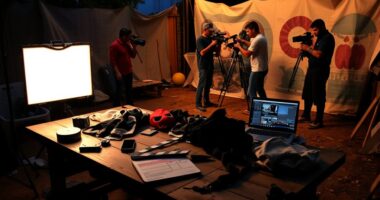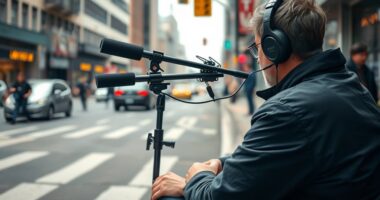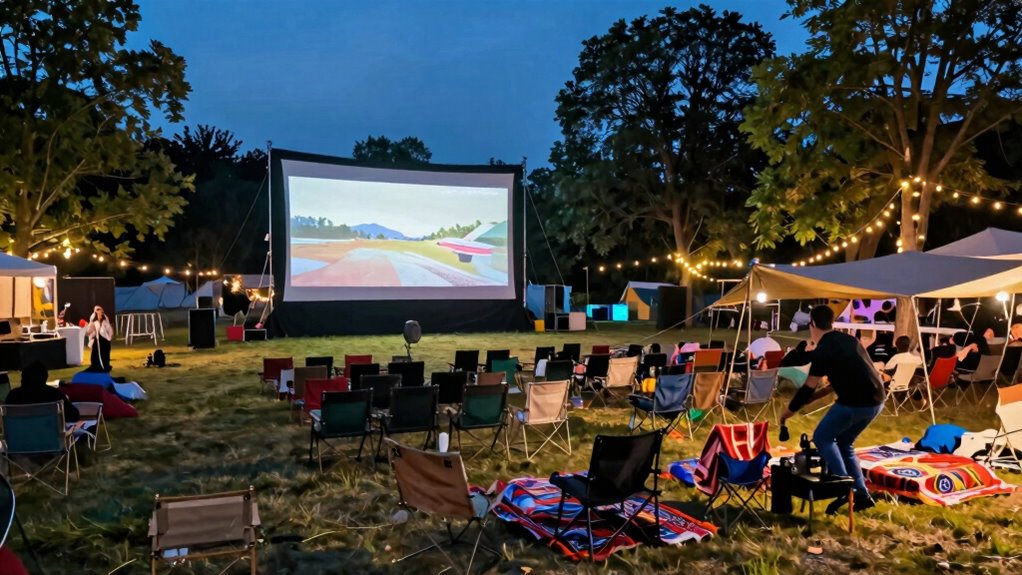

Outdoor and festival screenings need different planning because outdoor environments bring unique challenges like unpredictable weather, dust, wind, and terrain, which indoor venues don’t face. You must coordinate transportation, protect equipment, and manage large crowds safely while ensuring accessibility and inclusivity. You’ll also need to comply with additional safety regulations and prepare contingency plans. If you keep exploring, you’ll discover practical tips to handle these outdoor-specific issues effectively.

Get movie nights delivered free with Prime
- Fast, free delivery on millions of items
- Prime Video, Amazon Music and more included
- Member-only deals all year
Key Takeaways
- Outdoor screenings face unpredictable weather, requiring additional equipment protection and contingency plans not needed indoors.
- Large crowds and open spaces demand specialized crowd flow, safety management, and accessible infrastructure.
- Environmental factors like dust, wind, and terrain influence equipment durability and setup logistics.
- Power supply and technical setup must account for remote locations lacking indoor infrastructure.
- Compliance with outdoor-specific safety regulations and permits involves different planning and coordination.
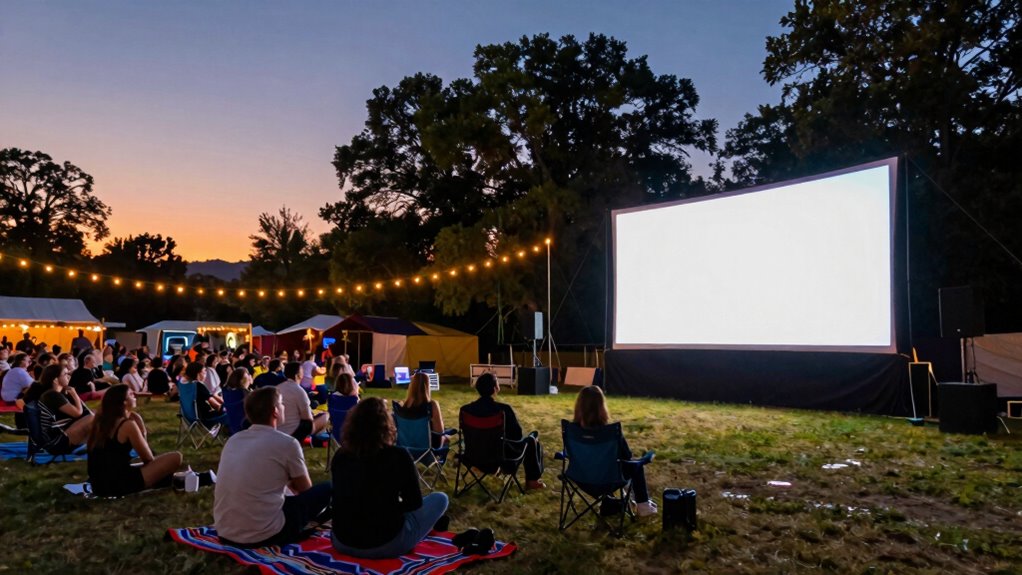
Equipment logistics are equally crucial. You’ll need to plan for the transportation, setup, and power supply for all your gear. Outdoor environments often lack the infrastructure of indoor venues, so you may have to bring in generators, weather-resistant screens, and specialized audio equipment. Confirming your equipment is protected from elements like wind, rain, or dust is essential to avoid disruptions. You also need to verify that your projection and sound systems are powerful enough to reach large crowds, which often means more speakers and larger screens than indoor setups require. Coordinating the placement of this equipment to optimize visibility and acoustics is key to delivering a quality viewing experience. Additionally, considering equipment durability can help ensure that your gear withstands outdoor conditions and functions properly throughout the event. Planning for environmental factors can help mitigate unforeseen issues caused by weather or terrain. Timing and weather are additional factors that differentiate outdoor events from indoor screenings. You need to monitor weather forecasts closely and have contingency plans in place, such as tents or indoor backup venues. This requires flexibility in your planning and a detailed timeline for setup, testing, and breakdown. When it comes to crowd management, you’ll also want to think about access to amenities like restrooms, food vendors, and emergency services, ensuring they’re easily accessible without congesting viewing areas. Incorporating sustainable practices in your logistics can also minimize environmental impact and promote eco-friendly event management. Plus, understanding audience diversity can help tailor your logistical arrangements to better serve the varied needs of festival-goers. Since outdoor and festival screenings often attract diverse audiences, you’ll also need to contemplate accessibility and inclusivity. This could mean providing wheelchair access, sign language interpretation, or other accommodations. Additionally, considering local regulations is important to ensure compliance with permits and safety standards, which can vary significantly between locations. All these elements add layers of complexity that indoor screenings typically don’t encounter. Ultimately, planning for outdoor and festival screenings isn’t just about setting up a screen and projecting a film. It’s about managing the entire environment—people, equipment, and logistics—so that everyone has a safe, enjoyable experience. Proper preparation ensures your event goes off without a hitch, leaving attendees with great memories and a desire to return.
outdoor movie projection screen weatherproof
As an affiliate, we earn on qualifying purchases.
As an affiliate, we earn on qualifying purchases.
Frequently Asked Questions
How Do Weather Conditions Impact Outdoor Screening Logistics?
Weather conditions profoundly affect outdoor screening logistics. You need to prepare for weather adaptation by monitoring forecasts closely and having contingency plans ready. Rain or high humidity can disrupt the event, so you must safeguard equipment from moisture through covers or shelters. Wind can also cause issues, so securing screens and equipment is essential. Proper weather adaptation and equipment protection guarantee your outdoor screening runs smoothly regardless of unexpected weather changes.
What Permits Are Required for Outdoor Festivals?
You need to jump through several hoops to secure permits for outdoor festivals. Start with the permitting processes, which vary by location, and make sure you’re adhering to legal compliance. This might include obtaining a special event permit, noise permits, and possibly a health or alcohol license. Check with local authorities early, as permits can take time to process, and failing to secure them could rain on your parade.
How Is Audience Safety Managed During Outdoor Events?
You manage audience safety during outdoor events by implementing effective crowd management strategies, such as clear signage, designated entry and exit points, and trained staff to oversee movement. You keep attendees engaged through interactive activities and engaging visuals, reducing chaos. Regular monitoring of the crowd helps you identify potential risks early, ensuring swift responses. Prioritizing communication, safety protocols, and engagement keeps everyone safe and enhances the overall experience.
What Technology Differences Are Needed for Outdoor vs. Indoor Screenings?
For outdoor screenings, you need robust technology like high-resolution screens to guarantee clear images in natural light. Sound amplification becomes essential to reach the entire audience, especially in open spaces. Indoor screenings allow for controlled lighting and smaller sound systems. You should also consider weather-resistant equipment for outdoor events, while indoor setups benefit from stable power sources and minimal environmental interference. Adjusting technology ensures a seamless viewing experience in any setting.
How Do You Handle Unexpected Technical Failures Outdoors?
When unexpected technical failures happen outdoors, you should quickly troubleshoot your equipment to identify the issue. Keep a troubleshooting kit handy and guarantee your team is trained to handle common problems. Always have backup power sources, like generators or portable batteries, to keep your equipment running. This way, you minimize disruptions, maintain audience engagement, and ensure a smooth outdoor screening experience despite unforeseen technical setbacks.
As an affiliate, we earn on qualifying purchases.
Conclusion
Planning outdoor and festival screenings is like tending to two different gardens—you need the right tools, timing, and environment for each to flourish. By understanding their unique needs, you guarantee your event blooms into a memorable experience. Don’t treat them as the same; instead, tailor your approach to each. When you do, you’ll see your audience’s excitement grow like a well-watered plant, turning your screenings into unforgettable moments under the open sky.
As an affiliate, we earn on qualifying purchases.
outdoor event lighting equipment
As an affiliate, we earn on qualifying purchases.
As an affiliate, we earn on qualifying purchases.
Columbus Day / Indigenous Peoples' Day Picks
long weekend sales
As an affiliate, we earn on qualifying purchases.