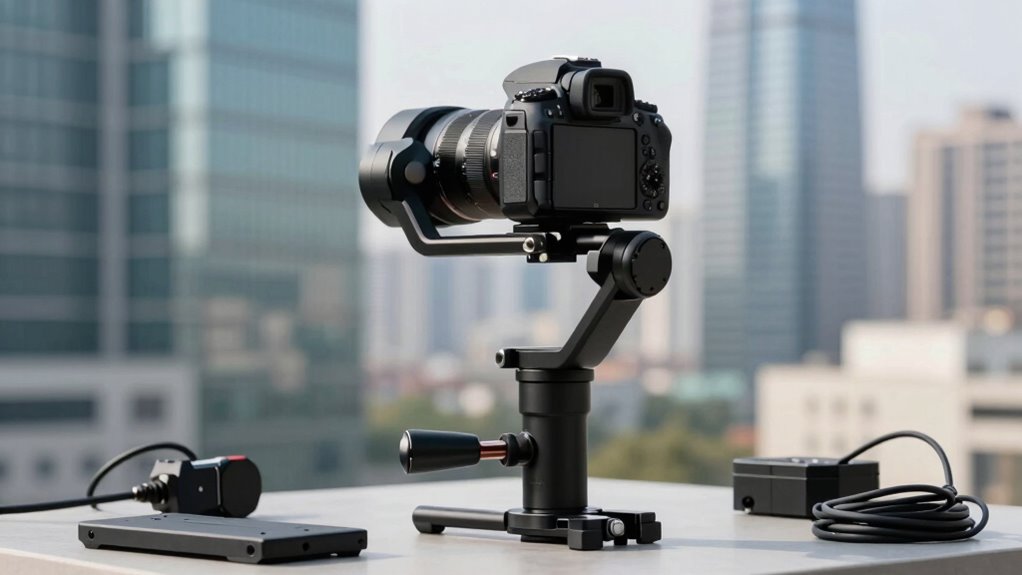

For most DSLR filmmakers, the DJI RS 4 Pro is the best overall pick for its higher-capacity camera support and pro-oriented controls, while the DJI RS 3 Mini suits lighter kits and the Zhiyun Weebill 3S adds a built-in fill light for compact setups. The main tradeoff is between payload headroom and portability: a larger gimbal can better handle a DSLR lens combination, but it adds bulk to handheld shooting and travel. Models with AI tracking can simplify solo filming, though tracking features do not replace checking camera balance and compatibility. The lineup also includes multiple versions of FeiyuTech’s SCORP-C2 and Zhiyun’s Weebill 3E, so model details matter. Read on for a comparison that matches each gimbal to the camera kit and shooting style it best serves.

Get movie nights delivered free with Prime
- Fast, free delivery on millions of items
- Prime Video, Amazon Music and more included
- Member-only deals all year
Key Takeaways
- The DJI RS 4 Pro leads for demanding DSLR kits, while its larger, pro-focused design is harder to justify for a light camera-and-lens setup.
- The DJI RS 3 Mini prioritizes portability; it makes more sense for compatible lightweight kits than for buyers who expect generous payload headroom.
- Payload figures need context: the FeiyuTech SCORP 2 is listed at 2.5 kg and the Weebill 3S at 3 kg, but a DSLR’s lens, accessories, and cable setup all affect practical balance.
- AI tracking is a convenience, not a substitute for fit; FeiyuTech’s SCORP models emphasize tracking, but buyers still need to confirm camera compatibility and balancing range.
- Several entries are closely related or repeated variants, especially the SCORP-C2 and Weebill 3E listings, making exact model specifications more useful than the family name alone.
| ZHIYUN CINEPEER Weebill 3E 3-Axis Camera Gimbal Stabilizer |  | Best for Lightweight DSLR Setups | Type: 3-axis gimbal stabilizer | Compatible cameras: DSLR and mirrorless cameras | Maximum payload: 3 kg (6.6 lbs) | VIEW ON AMAZON | See Our Full Breakdown |
| FeiyuTech SCORP Mini 2 Combo 3-Axis Camera Gimbal with AI Tracking |  | Best for Multi-Device Creators | Stabilization: 3-axis | Compatible devices: Smartphones, mirrorless cameras, DSLRs, and action cameras | Payload capacity: 1.2 kg (2.65 lb) | VIEW ON AMAZON | See Our Full Breakdown |
| DJI RS 4 Pro Gimbal Stabilizer for DSLR and Cinema Cameras | 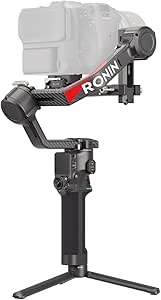 | Best Premium Choice for Heavy Rigs | Compatible cameras: DSLR and cinema cameras | Payload capacity: 4.5 kg (10 lbs) | LiDAR ranging distance: Up to 20 m | VIEW ON AMAZON | See Our Full Breakdown |
| FeiyuTech SCORP-C2 Camera Gimbal Stabilizer with AI Tracking |  | Best for Heavy DSLR Setups with Solo Tracking | Compatible cameras: DSLR and mirrorless cameras | Maximum payload: 7.72 lb | AI tracking range: Up to 59 ft | VIEW ON AMAZON | See Our Full Breakdown |
| FeiyuTech SCORP 2 Gimbal Stabilizer for DSLR and Mirrorless Cameras – Integrated AI Tracking Sensor, 3-Axis, 2.5 kg Payload, Touchscreen, Vertical Shooting |  | Best for Fast Portrait Reframing | Axes: 3 | Payload capacity: 2.5 kg | Touchscreen: 1.3 inches | VIEW ON AMAZON | See Our Full Breakdown |
| FeiyuTech SCORP-C2 Camera Gimbal Stabilizer with AI Tracking, 7.72 lb Payload |  | Best for Heavy DSLR Setups | Payload capacity: 7.72 lb (3500 g) | Battery capacity: 4500 mAh | Fast charging: 18 W Type-C | VIEW ON AMAZON | See Our Full Breakdown |
| DJI RS 3 Mini Camera Gimbal Stabilizer for Canon, Sony, Nikon, Fujifilm |  | Best Lightweight Travel Pick | Weight: 795 g (1.75 lb) | Load capacity: 2 kg (4.4 lb) | Display: 1.4-inch full-color touchscreen | VIEW ON AMAZON | See Our Full Breakdown |
| Zhiyun Weebill S 3-Axis Gimbal Stabilizer for Mirrorless and DSLR Cameras |  | Best for DSLR Shooters on a Simpler Budget | Stabilization: 3-axis | Maximum payload: 2.5 kg | Maximum weight recommendation: 6.6 lb | VIEW ON AMAZON | See Our Full Breakdown |
| FeiyuTech SCORP 3 KIT 3-Axis Camera Gimbal Stabilizer |  | Best Accessory Bundle | Type: 3-axis camera gimbal stabilizer | Maximum payload: 3.5 kg (7.72 lb) | Remote control range: Up to 39 ft | VIEW ON AMAZON | See Our Full Breakdown |
| Zhiyun Weebill 3S 3kg Payload Gimbal Stabilizer with Fill Light |  | Best for Built-In Fill Light | Payload capacity: 3 kg | Fill light brightness: 1000 lux | Color temperature range: 2600K–5500K | VIEW ON AMAZON | See Our Full Breakdown |
| FeiyuTech SCORP-C2 3-Axis Camera Gimbal Stabilizer with AI Tracking |  | Best for Heavier DSLR Setups | Brand: FeiyuTech | Model: SCORP-C2 | Stabilization: 3-axis | VIEW ON AMAZON | See Our Full Breakdown |
| FeiyuTech SCORP-C 3-Axis Camera Gimbal Stabilizer |  | Best for Long Shooting Sessions | Brand: FeiyuTech | Model: SCORP-C | Stabilization: 3-axis | VIEW ON AMAZON | See Our Full Breakdown |
| ZHIYUN CINEPEER WEEBILL 3E Mirrorless Gimbal Stabilizer for Cameras up to 3kg |  | Best Compact Pick for Lighter DSLR Kits | Brand: ZHIYUN | Model: CINEPEER WEEBILL 3E | Stabilization: 3-axis | VIEW ON AMAZON | See Our Full Breakdown |
| gimbals for dslr | Payload capacity |
|---|---|
| ZHIYUN CINEPEER Weebill 3E 3-A | — |
| FeiyuTech SCORP Mini 2 Combo 3 | 1.2 kg (2.65 lb) |
| DJI RS 4 Pro Gimbal Stabilizer | 4.5 kg (10 lbs) |
| FeiyuTech SCORP-C2 Camera Gimb | — |
| FeiyuTech SCORP 2 Gimbal Stabi | 2.5 kg |
| FeiyuTech SCORP-C2 Camera Gimb | 7.72 lb (3500 g) |
| DJI RS 3 Mini Camera Gimbal St | — |
| Zhiyun Weebill S 3-Axis Gimbal | — |
| FeiyuTech SCORP 3 KIT 3-Axis C | — |
| Zhiyun Weebill 3S 3kg Payload | 3 kg |
| FeiyuTech SCORP-C2 3-Axis Came | — |
| FeiyuTech SCORP-C 3-Axis Camer | 5.5 lbs |
| ZHIYUN CINEPEER WEEBILL 3E Mir | 3 kg / 6.6 lbs |
More Details on Our Top Picks
ZHIYUN CINEPEER Weebill 3E 3-Axis Camera Gimbal Stabilizer
The Weebill 3E is a practical match for DSLR shooters who want a relatively light stabilizer without giving up room for a substantial camera setup: its 3 kg payload exceeds the SCORP Mini 2’s 1.2 kg limit. Native vertical shooting also avoids the added hardware that some gimbals need for portrait clips, while Bluetooth shutter control can simplify recording with compatible cameras. Its up to 16-hour battery life is a strong fit for long shooting days and outlasts the SCORP Mini 2’s stated 10 hours. The tradeoff is camera control: the box includes a Panasonic cable, so users of other brands may need to buy one separately. The sling grip and wrist rest are also optional, making this less complete for buyers seeking extra handheld support.
Pros:- Supports native vertical shooting without extra accessories
- 3 kg payload accommodates heavier setups than the SCORP Mini 2
- Up to 16 hours of battery life
- Bluetooth shutter control works with compatible cameras
Cons:- Only a Panasonic control cable is included; other camera brands may require a separate cable
- Sling grip and wrist rest are sold separately
Best for: DSLR owners with compatible setups under 3 kg who want native vertical shooting and long battery life in a lightweight gimbal.
Not ideal for: Shooters who need included camera-control cables for brands other than Panasonic or want a sling grip and wrist rest in the box.
- Type:3-axis gimbal stabilizer
- Compatible cameras:DSLR and mirrorless cameras
- Maximum payload:3 kg (6.6 lbs)
- Weight:1.05 kg
- Dimensions:12 × 8 × 3 in
- Battery life:Up to 16 hours
- Charging:14 W PD fast charging; approximately 2 hours 46 minutes
- Included control cable:Panasonic LN-UCUC-A02
- Warranty:1 year
Our verdict“Choose the Weebill 3E if you want a lightweight DSLR gimbal with a 3 kg payload, native portrait shooting, and extended runtime.”
FeiyuTech SCORP Mini 2 Combo 3-Axis Camera Gimbal with AI Tracking
The SCORP Mini 2 Combo makes the most sense for creators who switch among a phone, action camera, and lighter DSLR rather than building around one heavy rig. Its compatibility across device types and included smartphone holder and GoPro adapter give it broader out-of-box flexibility than the DSLR-focused Weebill 3E. For solo filming, built-in AI tracking and gesture controls can help keep a presenter in frame without a separate operator. The 1.3-inch touchscreen and carbon fiber extension pole add useful control and reach, while landscape-to-portrait switching suits mixed-format publishing. Its main limit is the 1.2 kg payload: that is far below the SCORP-C2’s 7.72 lb capacity, so larger DSLR bodies and lenses are a poor match. Battery life is also shorter than the Weebill 3E’s.
Pros:- Supports smartphones, mirrorless cameras, DSLRs, and action cameras
- Built-in AI tracking and gesture controls assist solo filming
- Switches between landscape and portrait orientation
- Includes a touchscreen, carrying case, and carbon fiber extension pole
Cons:- 1.2 kg payload restricts use with heavier DSLR and lens combinations
- Up to 10 hours of battery life is shorter than the Weebill 3E’s stated runtime
Best for: Solo creators who use a smartphone or action camera alongside a lightweight mirrorless camera or DSLR and want built-in tracking.
Not ideal for: DSLR shooters with heavier camera-and-lens combinations, since its 1.2 kg payload is substantially lower than the SCORP-C2’s.
- Stabilization:3-axis
- Compatible devices:Smartphones, mirrorless cameras, DSLRs, and action cameras
- Payload capacity:1.2 kg (2.65 lb)
- Weight:852 g (1.87 lb)
- Battery life:Up to 10 hours
- Display:1.3-inch OLED touchscreen
- Included accessories:Carrying case, carbon fiber extension pole, tripod, smartphone holder, GoPro adapter, and mounting accessories
- Warranty:1 year
Our verdict“Pick the SCORP Mini 2 Combo if you need one tracking gimbal for several device types and your DSLR setup stays light.”
DJI RS 4 Pro Gimbal Stabilizer for DSLR and Cinema Cameras
For a DSLR build that has outgrown lightweight stabilizers, the DJI RS 4 Pro offers the most headroom in this group: its 4.5 kg payload is well above the Weebill 3E’s 3 kg and the SCORP Mini 2’s 1.2 kg. That makes it a stronger fit for heavier lenses and cinema-style accessories, while joystick control can handle gimbal movement or compatible lens focus and zoom. Its LiDAR focusing support, with ranging up to 20 m, is aimed at more demanding focus workflows rather than basic walk-and-talk footage. This capability comes with added setup demands: changing between horizontal and vertical shooting requires rebalancing. The advertised 29-hour runtime requires the separately sold BG70 grip; the included grip is the BG30. Buyers also need to obtain the DJI Ronin app from DJI’s website rather than Google Play.
Pros:- 4.5 kg payload supports heavier camera and lens combinations than the other reviewed gimbals
- Joystick can control gimbal movement or compatible lens focus and zoom
- LiDAR focusing support ranges up to 20 m
- Supports native vertical shooting
Cons:- The up-to-29-hour runtime requires the separately sold BG70 battery grip
- Rebalancing is needed after switching between horizontal and vertical shooting
- DJI Ronin app must be downloaded from DJI’s website because it is unavailable on Google Play
Best for: DSLR and cinema-camera operators with heavier rigs who need high payload capacity, advanced focus support, and joystick control.
Not ideal for: Travel shooters with light camera kits or anyone seeking a simple setup with long runtime from the included battery grip.
- Compatible cameras:DSLR and cinema cameras
- Payload capacity:4.5 kg (10 lbs)
- LiDAR ranging distance:Up to 20 m
- LiDAR ranging points:76,800
- Battery runtime:Up to 29 hours with separately sold BG70 battery grip
- Included battery grip:BG30
- Included items:Gimbal, BG30 battery grip, quick-release plate, and accessories
Our verdict“Choose the RS 4 Pro for a heavy DSLR or cinema rig that can make use of its higher payload and focus tools, not for a compact everyday setup.”
FeiyuTech SCORP-C2 Camera Gimbal Stabilizer with AI Tracking
The SCORP-C2 pairs a high stated payload with hands-free subject tracking, making it a distinctive choice for DSLR operators who often film themselves or work without a camera assistant. Its 7.72 lb capacity gives it more stated load room than the Weebill 3E’s 3 kg, while built-in AI face tracking works from up to 59 feet and does not require a phone app or extra tracking accessory. One-tap portrait shooting and up to 14 hours of battery life suit creators moving between social clips and longer sessions. Compared with the premium DJI RS 4 Pro, the SCORP-C2 emphasizes accessible tracking and camera control rather than LiDAR ranging and lens-control options through the joystick. Its full recharge takes under three hours, so it still calls for planning between shoots.
Pros:- Supports camera setups up to 7.72 lb
- Built-in AI face tracking works up to 59 feet without an app or extra accessories
- One-tap switching to portrait orientation
- Up to 14 hours of battery life with 18 W fast charging
Cons:- Full recharge takes under three hours, requiring downtime between shoots
- Does not offer the RS 4 Pro’s listed LiDAR ranging and focus capabilities
Best for: Solo DSLR and mirrorless creators with heavier setups who want long-range face tracking and quick portrait shooting without extra tracking gear.
Not ideal for: Operators who need the RS 4 Pro’s LiDAR focus workflow or who cannot schedule charging between extended shoots.
- Compatible cameras:DSLR and mirrorless cameras
- Maximum payload:7.72 lb
- AI tracking range:Up to 59 ft
- Battery life:Up to 14 hours
- Full recharge time:Under 3 hours
- Charging:18 W fast charging
- Orientation:Landscape and portrait
- Connectivity:Bluetooth and control cable
- Included accessories:Lens support screw and bracket, camera mounting screw, hex key, slider, quick release plate, L-bracket base, tripod, USB-C camera control cable, and USB-C charging cable
Our verdict“Pick the SCORP-C2 if your DSLR rig needs more payload headroom than the Weebill 3E and you value built-in solo tracking over advanced LiDAR tools.”
FeiyuTech SCORP 2 Gimbal Stabilizer for DSLR and Mirrorless Cameras – Integrated AI Tracking Sensor, 3-Axis, 2.5 kg Payload, Touchscreen, Vertical Shooting
The SCORP 2 is aimed at DSLR and mirrorless creators who frequently change orientation and want tracking built into the stabilizer. Its L-shaped mounting plates and quick-release slider allow vertical shooting without extra accessories, making portrait reframing more direct than the Weebill 3E’s already capable native vertical setup only insofar as the SCORP 2 also pairs that workflow with its integrated AI sensor and touchscreen. Its 2.5 kg payload sits below the Weebill 3E’s 3 kg and well below the SCORP-C2’s 7.72 lb, so it suits a lighter camera-and-lens combination rather than a heavily accessorized rig. Bluetooth or cable connectivity can support remote focus and zoom, but the supplied information gives no battery-life figure. Its reported bulk also makes it less appealing for travel than the lighter Weebill 3E.
Pros:- Integrated AI tracking sensor does not require external tracking accessories
- L-shaped plates and quick-release slider support vertical shooting
- 1.3-inch touchscreen provides on-gimbal status and adjustments
- Bluetooth and control-cable connectivity support remote focus and zoom
Cons:- 2.5 kg payload is lower than the Weebill 3E’s 3 kg and the SCORP-C2’s 7.72 lb
- Relatively heavy and bulky design can limit portability
Best for: Creators using lighter DSLR or mirrorless kits who frequently shoot portrait content and want built-in tracking with on-gimbal controls.
Not ideal for: Traveling shooters prioritizing compact carry or DSLR operators whose camera, lens, and accessories exceed the 2.5 kg payload.
- Axes:3
- Payload capacity:2.5 kg
- Touchscreen:1.3 inches
- AI tracking:Integrated sensor
- Connectivity:Bluetooth and control cable
- Vertical shooting:L-shaped mounting plates with quick-release slider
Our verdict“Choose the SCORP 2 if quick portrait framing and integrated tracking matter more than compact carry or capacity for a heavy DSLR rig.”
FeiyuTech SCORP-C2 Camera Gimbal Stabilizer with AI Tracking, 7.72 lb Payload
The SCORP-C2 is the strongest fit here for a heavier DSLR rig: its 7.72 lb payload gives more room for a substantial camera-and-lens combination than the DJI RS 3 Mini or Zhiyun Weebill S. That headroom matters when a lighter gimbal would leave little room to balance a larger setup. Built-in AI face and body tracking works without an app, while native vertical mounting makes switching to social video simpler. The ergonomic underslung handle also supports low-angle moves, and the 14-hour rated runtime suits long shooting days. The tradeoff is size: unlike the compact RS 3 Mini, this is a bulkier carry, and its extra controls may take time for newer operators to learn. Check your fully built camera rig’s weight and balance before buying.
Pros:- 7.72 lb payload accommodates heavier DSLR and mirrorless rigs.
- Built-in AI tracking operates without requiring an app.
- Native vertical mounting supports social video without extra accessories.
- Rated for up to 14 hours of runtime with 18 W Type-C fast charging.
Cons:- Its high-capacity design is bulky to carry compared with the DJI RS 3 Mini.
- The multiple controls and shooting features may take time for beginners to learn.
Best for: DSLR shooters using heavier camera-and-lens combinations who want built-in subject tracking and native vertical shooting.
Not ideal for: Travel filmmakers prioritizing a light, compact kit, or beginners who want a simpler control setup.
- Payload capacity:7.72 lb (3500 g)
- Battery capacity:4500 mAh
- Fast charging:18 W Type-C
- AI tracking range:Up to 59 ft
- Compatibility:Sony A7 series, Canon R5/R6, Nikon Z series, and other DSLR/mirrorless cameras
- Control features:Gesture control, landscape/portrait switch, integrated underslung handle, OLED screen
Our verdict“Choose the SCORP-C2 if your DSLR rig is too heavy for lighter options and you can accept a bulkier gimbal.”
DJI RS 3 Mini Camera Gimbal Stabilizer for Canon, Sony, Nikon, Fujifilm
Among these options, the DJI RS 3 Mini is the most travel-oriented choice, with a listed weight of just 795 g and a 2 kg load limit. That makes it easier to pack and carry than the 1.1 kg Zhiyun Weebill 3S, but the Mini’s lower capacity rules it out for many larger DSLR bodies or heavier lens combinations. Its 1.4-inch touchscreen puts adjustments on the gimbal, and native vertical shooting suits creators who alternate between landscape footage and social clips. Bluetooth shutter control adds convenience with compatible cameras. The main caveat for a DSLR roundup is compatibility: this model is described as designed for mirrorless cameras, so buyers with a larger DSLR should not assume it will fit. Full functionality also depends on the DJI Ronin app, which may not suit every phone platform or workflow.
Pros:- At 795 g, it is lighter than the Zhiyun Weebill 3S listed here.
- Native vertical shooting avoids a separate mounting solution for social clips.
- The 1.4-inch touchscreen provides direct access to controls.
- Bluetooth shutter control is available with compatible cameras.
Cons:- The 2 kg load limit excludes many heavier camera-and-lens combinations.
- The product is specified for mirrorless cameras, limiting its fit for DSLR buyers.
- Full functionality requires the DJI Ronin app, which has platform limitations.
Best for: Traveling mirrorless creators with a compact camera setup weighing no more than 2 kg who want native vertical shooting.
Not ideal for: DSLR owners with larger bodies or heavy lenses, and filmmakers who need a higher payload or prefer not to rely on the Ronin app.
- Weight:795 g (1.75 lb)
- Load capacity:2 kg (4.4 lb)
- Display:1.4-inch full-color touchscreen
- Compatibility:Mirrorless cameras including Canon, Sony, Nikon, and Fujifilm
- Vertical shooting:Yes
- Bluetooth control:Yes
Our verdict“Pick the RS 3 Mini for light mirrorless travel kits, not for a full-size DSLR rig.”
Zhiyun Weebill S 3-Axis Gimbal Stabilizer for Mirrorless and DSLR Cameras
The Weebill S earns its place as a practical option for buyers who need a gimbal explicitly compatible with selected DSLR and mirrorless cameras, rather than a mirrorless-only model like the DJI RS 3 Mini. Its 2.5 kg payload also gives it more capacity than the RS 3 Mini, though it falls well short of the FeiyuTech SCORP-C2’s 7.72 lb rating. The defining handling feature is sling mode, which supports underslung shooting when low angles are part of the plan. Up to 14 hours of battery life is useful for extended shoots. The compromise is camera control: a compatible cable is required for full control and is sold separately. Payload can also become limiting with heavier lenses, so check the combined camera and lens weight rather than relying on body weight alone.
Pros:- Supports selected DSLR as well as mirrorless camera setups.
- 2.5 kg payload exceeds the DJI RS 3 Mini’s 2 kg limit.
- Sling mode supports underslung camera angles.
- Rated battery life of up to 14 hours.
Cons:- Full camera control requires a compatible cable sold separately.
- The 2.5 kg payload may be restrictive with heavier DSLR lenses.
Best for: DSLR and mirrorless owners with selected camera models and moderate-weight lenses who want sling-style handling and long battery life.
Not ideal for: Operators with heavy camera-and-lens builds who need the SCORP-C2’s higher payload, or buyers who expect full camera control without purchasing a separate cable.
- Stabilization:3-axis
- Maximum payload:2.5 kg
- Maximum weight recommendation:6.6 lb
- Battery life:Up to 14 hours
- Folded dimensions:19 × 14 × 30 cm
- Item weight:926 g
- Compatibility:Selected mirrorless and DSLR cameras
- Camera-control cable:Required for full camera control; sold separately
Our verdict“Choose the Weebill S for a compatible, moderate-weight DSLR setup if sling handling matters more than high payload headroom.”
FeiyuTech SCORP 3 KIT 3-Axis Camera Gimbal Stabilizer
The SCORP 3 KIT is the most ready-to-build-out option in this group: it pairs a 3.5 kg payload with a carrying case, extension pole, shoulder strap, articulating arm, fill light, tripod, and mounting accessories. That kit breadth gives it more on-the-go shooting support than the Zhiyun Weebill S, whose listed package does not include a comparable accessory set. Built-in AI tracking avoids app or Bluetooth pairing, and the detachable touchscreen handle can act as a wireless remote from up to 39 feet away. It also supports vertical shooting by rotating the camera 90 degrees. The tradeoff is that the many components add setup and packing work, while the payload remains below the SCORP-C2’s 7.72 lb rating. Choose it for a versatile kit, not the heaviest DSLR rigs.
Pros:- 3.5 kg payload supports a range of DSLR and mirrorless setups.
- Built-in AI tracking works without app or Bluetooth pairing.
- Detachable touchscreen handle doubles as a remote up to 39 ft away.
- Kit includes a case, extension pole, shoulder strap, articulating arm, fill light, tripod, and mounting accessories.
Cons:- Payload is lower than the FeiyuTech SCORP-C2’s 7.72 lb capacity.
- The numerous included components take more effort to organize and set up.
Best for: DSLR and mirrorless creators who want tracking, remote operation, vertical framing, and multiple shooting accessories in one kit.
Not ideal for: Shooters with camera-and-lens combinations above 3.5 kg, or minimalists who want fewer pieces to set up and carry.
- Type:3-axis camera gimbal stabilizer
- Maximum payload:3.5 kg (7.72 lb)
- Remote control range:Up to 39 ft
- Tracking:Built-in AI tracking
- Vertical shooting:90° camera rotation
- Included accessories:Carrying case, carbon fiber extension pole, shoulder strap, articulating arm, fill light, tripod, and mounting accessories
- Warranty:1 year
Our verdict“Choose the SCORP 3 KIT if you want a feature-rich accessory package and your rig stays within its 3.5 kg payload.”
Zhiyun Weebill 3S 3kg Payload Gimbal Stabilizer with Fill Light
The Weebill 3S stands apart by putting a 1000-lux adjustable fill light directly on a gimbal rated for 3 kg. That is useful for quick fill in dim or backlit scenes without adding a separate pocket light, and its 2600K–5500K range allows warmer or cooler illumination. Compared with the Zhiyun Weebill S, it offers more payload headroom and a built-in light; compared with the heavier-duty FeiyuTech SCORP-C2, its 3 kg capacity is lower. Native horizontal and vertical shooting supports mixed delivery formats, while Bluetooth shutter control works with compatible cameras. The tradeoff is carry weight: at 1.1 kg, it is heavier than both the Weebill S and DJI RS 3 Mini. Its up-to-11.5-hour battery rating is useful, though shorter than the 14-hour claims of those two alternatives.
Pros:- Built-in 1000-lux fill light supports dim and backlit shooting without a separate light.
- Adjustable color temperature ranges from 2600K to 5500K.
- Native horizontal and vertical shooting supports multiple content formats.
- PD fast charging is specified to recharge the batteries in 2 hours.
Cons:- At 1.1 kg, it weighs more than the DJI RS 3 Mini and Weebill S.
- The 3 kg payload is lower than the FeiyuTech SCORP-C2’s 7.72 lb capacity.
- Rated battery life of up to 11.5 hours is shorter than the 14-hour claims of the Weebill S and SCORP-C2.
Best for: DSLR and mirrorless creators with rigs under 3 kg who regularly film in dim or backlit settings and want an integrated fill light.
Not ideal for: Travel shooters focused on minimizing carry weight, or owners of heavier DSLR rigs that need more than 3 kg of payload capacity.
- Payload capacity:3 kg
- Fill light brightness:1000 lux
- Color temperature range:2600K–5500K
- Battery capacity:2 × 2600 mAh
- Battery life:Up to 11.5 hours
- Charging time:2 hours with PD fast charging
- Weight:1100 g
- Compatibility:Canon, Nikon, Sony, Panasonic, and Fujifilm DSLR/mirrorless cameras
Our verdict“Choose the Weebill 3S if a built-in adjustable fill light is more useful to your work than the lightest carry or highest payload.”
FeiyuTech SCORP-C2 3-Axis Camera Gimbal Stabilizer with AI Tracking
The SCORP-C2 earns this spot for DSLR shooters who need more payload headroom without giving up subject tracking. Its 7.72 lb maximum payload exceeds the SCORP-C’s 5.5 lb limit, which can make the difference when a compatible camera is paired with a substantial lens. Built-in AI face tracking and gesture control can also help solo operators keep themselves in frame, while native vertical shooting suits creators who publish portrait video. The OLED display and integrated handle add useful control and grip options. The tradeoff is that payload alone does not confirm a workable setup: camera-and-lens compatibility still needs checking, and this is a less compelling choice for lightweight kits that do not need its capacity. Compared with the SCORP-C, it puts more emphasis on heavier rigs and tracking features.
Pros:- 7.72 lb maximum payload offers more headroom than the SCORP-C
- Built-in AI face tracking with gesture control supports solo filming
- Native vertical shooting suits portrait-oriented video
- OLED display and integrated handle provide useful control and grip options
Cons:- Compatibility depends on the exact camera-and-lens combination
- Its higher payload capacity may be unnecessary for lighter camera kits
Best for: DSLR and mirrorless shooters with compatible camera-and-lens combinations near the SCORP-C’s payload limit, especially solo creators who want face tracking and portrait video.
Not ideal for: Owners of compact camera kits who do not need the extra payload or tracking, and anyone whose exact camera-and-lens combination has not been confirmed as compatible.
- Brand:FeiyuTech
- Model:SCORP-C2
- Stabilization:3-axis
- Maximum payload:7.72 lbs
- Tracking:Built-in AI face tracking with gesture control
- Display:OLED
- Shooting orientation:Native vertical shooting
- Warranty:1 year
Our verdict“Choose the SCORP-C2 if your compatible DSLR rig needs more payload headroom and you want built-in tracking; otherwise, the SCORP-C may be a better fit.”
FeiyuTech SCORP-C 3-Axis Camera Gimbal Stabilizer
The SCORP-C is the more measured pick for DSLR users whose compatible setup fits within its 5.5 lb payload. Its stated 10–13 hours of runtime makes it appealing for extended shoots where frequent battery changes would interrupt filming, and 18 W fast charging can shorten downtime. An integrated hanging handle and folding stand give it practical flexibility for different angles and storage, while tracking, panorama, time-lapse, and vertical modes cover a broad range of shooting needs. It gives up the SCORP-C2’s higher payload and built-in AI face tracking, so I would choose the newer C2 for heavier rigs or hands-free subject following. The SCORP-C’s own tradeoffs are its lower payload ceiling and unspecified gimbal weight; buyers should also verify camera-and-lens compatibility before committing.
Pros:- Stated runtime of 10–13 hours supports long filming days
- 18 W fast charging can reduce charging downtime
- Integrated hanging handle and folding stand add handling flexibility
- Tracking, panorama, time-lapse, and vertical shooting modes cover varied work
Cons:- 5.5 lb payload is lower than the SCORP-C2’s 7.72 lb limit
- Compatibility depends on the exact camera-and-lens combination
- Product information does not specify gimbal weight
Best for: DSLR and mirrorless operators with a compatible rig under 5.5 lbs who prioritize long stated runtime and varied shooting modes.
Not ideal for: Filmmakers with heavier camera-and-lens combinations, or buyers who need the SCORP-C2’s higher payload and built-in AI face tracking.
- Brand:FeiyuTech
- Model:SCORP-C
- Stabilization:3-axis
- Payload capacity:5.5 lbs
- Battery capacity:2,500 mAh
- Maximum runtime:10–13 hours
- Fast charging:18 W
- Compatibility:Select Sony, Panasonic, Canon, Nikon, and Fujifilm DSLR and mirrorless cameras
- Warranty:One year
Our verdict“Pick the SCORP-C for a compatible, moderate-weight DSLR kit when long stated runtime matters more than the SCORP-C2’s extra payload and AI tracking.”
ZHIYUN CINEPEER WEEBILL 3E Mirrorless Gimbal Stabilizer for Cameras up to 3kg
The WEEBILL 3E is the portability-minded choice in this group, with a stated payload of 3 kg (6.6 lb) and a compact design described as comparable to A4 paper. That makes it a better match for travel and mobile filming than the higher-capacity SCORP-C2, provided your camera-and-lens setup stays within its limit. Native vertical shooting avoids relying on an orientation workaround, while Bluetooth shutter control can let compatible cameras be triggered from the gimbal. Sling Mode 2.0 is intended to improve comfort and stability during handheld shoots. This is a mirrorless-focused option, so DSLR buyers should confirm their specific body and lens fit rather than assume compatibility. Its lower payload than the SCORP-C2 also rules it out for some heavier DSLR rigs, and its features may take time for beginners to learn.
Pros:- Compact design is suited to travel and mobile filming
- 3 kg payload accommodates compatible lighter camera setups
- Native vertical shooting supports portrait video
- Bluetooth shutter control and Sling Mode 2.0 add control and handling options
Cons:- 3 kg payload is below the SCORP-C2’s 7.72 lb capacity
- Designed for mirrorless cameras, so DSLR users should verify exact compatibility
- Feature set may present a learning curve for new gimbal users
Best for: Traveling creators and DSLR or mirrorless owners with a compatible setup under 3 kg who value a compact form and native portrait shooting.
Not ideal for: Operators with heavier DSLR-and-lens combinations, or new gimbal users who want a simpler setup with fewer features to learn.
- Brand:ZHIYUN
- Model:CINEPEER WEEBILL 3E
- Stabilization:3-axis
- Payload capacity:3 kg / 6.6 lbs
- Compatibility:Canon, Sony, Panasonic, and Nikon cameras
- Bluetooth control:Yes
- Shooting orientation:Native vertical shooting
- Portability:Described as compact as an A4 paper
Our verdict“Choose the WEEBILL 3E for a compatible, lighter DSLR kit when compact carry matters more than the SCORP-C2’s additional payload capacity.”

How We Picked
I ranked these DSLR gimbals by the fit between their design and real camera setups, not by feature count alone. The main factors were stated payload capacity, likely usefulness with DSLR-and-lens combinations, handling and setup demands, portability, and the value of features such as AI tracking, vertical shooting, touchscreen controls, or a built-in fill light. I also treated compatibility as a practical priority: a gimbal has limited value if a buyer’s camera, lens, or accessories cannot be mounted, balanced, and controlled as intended.
The ranking favors versatility and usable headroom for the top positions, then gives lighter, simpler, or more specialized models clear places for the buyers they suit. Where the supplied product names describe near-duplicate variants, I distinguish them by their stated features rather than assume they are identical or meaningfully different without further specifications. A strong payload rating cannot compensate for excess size for a travel shooter, and tracking features do not outweigh a poor fit for a heavier DSLR kit.
Factors to Consider When Choosing Gimbals For Dslrs
Choosing a DSLR gimbal is less about finding the biggest spec and more about matching the stabilizer to the camera, lens, accessories, and way you shoot. These checks can prevent common mismatches that are easy to miss when comparing model names alone.
Match Payload to Your Complete Camera Setup
Start with the camera body, then add the lens and anything that will ride on the camera, such as a microphone, quick-release plate, or small monitor. A gimbal’s payload figure describes a limit, not a promise that every setup near that number will balance easily. Leave practical headroom when possible, since a long or front-heavy lens can challenge balance even when the total weight appears acceptable. A common mistake is choosing by camera-body weight alone and discovering that the lens pushes the rig beyond a comfortable range. If your setup changes from shoot to shoot, prioritize flexibility over a close match to one lightweight configuration. Confirm the manufacturer’s supported camera and lens combinations before buying.
Check Balance, Clearance, and Camera Controls
Payload is only one part of compatibility: the camera must also sit in a position where the gimbal arms can move freely. A DSLR with a deep grip, long lens, or unusual screen position may need more clearance than a compact mirrorless camera. Check whether the gimbal can balance your camera in the orientation you plan to use, especially for vertical footage. Then verify which camera controls work through the gimbal, since remote recording or focus adjustments may depend on camera model and connection type. Buyers often assume that a physical fit means full electronic control, but those are separate questions. When control support is limited, plan for manual operation rather than relying on a feature that may not work with your camera.
Choose Portability for the Way You Film
A larger stabilizer can offer more room for a substantial camera setup, but you will feel its size during long handheld takes, travel, and quick location changes. Compact models such as the DJI RS 3 Mini are aimed at lighter kits and easier carrying, not every DSLR configuration. Think about how long you hold the gimbal at a time and whether you usually work alone or with a crew. A heavier unit may be a sensible trade for a rig that needs more support, while a smaller one can make everyday filming less tiring. Do not buy a compact model just because it is easier to pack if your camera sits near its practical payload limit. Match portability to the kit you actually use most often.
Decide Whether Tracking and Extra Features Solve a Real Problem
AI tracking, touchscreens, vertical modes, and built-in lights can save time, but each feature matters only if it fits your workflow. Tracking can help a solo operator keep a subject in frame, while a fill light may be useful for close-range filming in dim settings. Neither feature improves balance or removes the need to manage the camera’s movement. Consider whether you regularly film yourself, follow moving subjects, or switch between horizontal and vertical delivery before paying extra attention to these options. A feature-rich gimbal can add setup choices and controls that a simple operator may rarely use. Prioritize a dependable camera fit first, then choose extras that address a recurring shooting need.
Plan for Batteries, Accessories, and Setup Time
Gimbal ownership involves more than the stabilizer: you may also need compatible plates, cables, a carrying solution, and time to balance the rig. Frequent lens changes can mean rebalancing, so a camera-and-lens combination you can leave assembled may be easier to manage. Check what is included in the exact package, since a kit version can differ from a standalone listing. Also review battery expectations and charging arrangements against the length of your typical shoot. A common buying mistake is judging convenience from a feature list without considering the time spent setting up and packing down. For fast-moving work, a stable routine with a familiar configuration may matter more than another advanced mode.
Know When Paying for More Capacity Makes Sense
Higher capacity is useful when you already own a heavier DSLR rig or expect to add a lens or accessory, but unused capacity can mean carrying a larger stabilizer than you need. The DJI RS 4 Pro is the lineup’s clearest pro-oriented choice, whereas compact options make more sense when your kit stays light. Compare the cost of extra headroom with the everyday burden of the larger unit, not just with a maximum payload number. If your camera setup is likely to grow, some spare capacity can extend the gimbal’s usefulness. If your setup is fixed, a well-matched smaller model may be easier to handle. Pay for capacity when it solves a known setup or growth need, not simply because the specification is larger.
Frequently Asked Questions
Can I use a DSLR gimbal with a heavy zoom lens?
Possibly, but the camera-and-lens combination must stay within the gimbal’s supported payload and balance range. A heavy zoom can make the setup front-heavy even when its total weight looks acceptable on paper. Check clearance around the gimbal arms and confirm that the lens can be balanced throughout the range of motion. If you use a tripod foot or other lens support, check whether it changes the mounting setup. For a lens you use often, verify compatibility before choosing a model based only on its maximum payload.
Is the DJI RS 3 Mini suitable for a DSLR?
It can suit a compatible lightweight DSLR setup, but its compact design makes fit and payload checks especially important. Add the lens and any accessories before comparing your setup with the gimbal’s specifications. A body that balances with a small prime may not work as comfortably with a larger zoom or added monitor. The RS 3 Mini is a better choice when portability is a priority and your kit is modest than when you need room to grow. If you regularly use heavier lenses, compare it with higher-capacity options first.
Do I need AI tracking to film alone?
AI tracking can help keep a moving subject in frame when you are operating the camera by yourself, but it is not required for solo filming. It is most useful when you move around or need the gimbal to follow a person without constant manual reframing. For a locked-off talking shot or a controlled camera move, basic stabilization may be enough. Tracking performance and available controls can vary by model and setup, so check how the feature works with the camera and shooting style you use. Choose tracking for a repeated need, not just because it appears in a feature list.
Should I choose a gimbal with a higher payload than my current camera needs?
Some extra capacity can help if you plan to add a heavier lens or accessories, but a larger gimbal may be less comfortable to carry and operate. Payload alone does not tell you whether your camera will balance well or clear the gimbal arms. If your kit is stable and unlikely to change, a model matched to that setup can be the more practical choice. If you expect to upgrade soon, compare the weight and handling tradeoff against the value of keeping the same stabilizer. Leave a sensible margin, but do not treat the largest capacity as automatically best.
Why are there several FeiyuTech SCORP-C2 and Zhiyun Weebill 3E listings?
Product listings can describe packages or variants with similar family names, and the supplied names do not establish that every version has identical specifications. One SCORP-C2 listing calls out a 7.72 lb payload, while other SCORP-C2 entries do not state that figure in their names. The two Weebill 3E entries also use slightly different naming, with one stating support for cameras up to 3 kg. Before ordering, compare the exact model identifier, included accessories, payload information, and camera compatibility for the specific listing. Do not assume a shared product-family name means the same bundle or feature set.
Conclusion
For the broadest DSLR use, I recommend the DJI RS 4 Pro as best overall, especially for buyers with a substantial kit who want a pro-oriented stabilizer. The DJI RS 3 Mini is my best value-style pick for a lightweight setup, while the Zhiyun Weebill 3S is a strong choice for buyers who want a built-in fill light and a stated 3 kg payload. Beginners should favor a camera-and-lens combination that is easy to balance, rather than choosing by advanced features alone; the lighter RS 3 Mini may suit them if their DSLR kit is compatible. For solo operators who need subject following, compare the FeiyuTech SCORP models for their AI tracking emphasis, and check the exact variant before buying. If your DSLR and lens are heavy, prioritize fit and payload headroom; if you travel or film handheld for long stretches, let portability carry more weight in your decision.