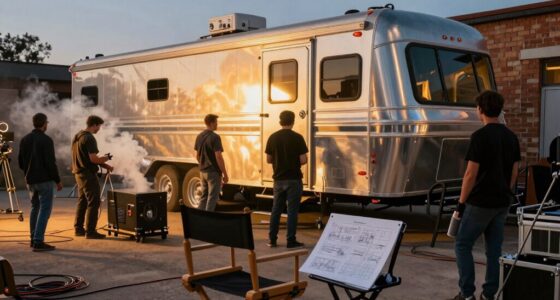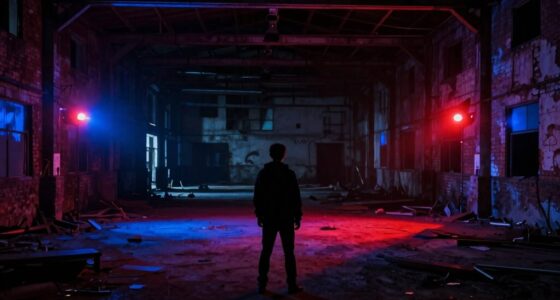
Practical lights instantly upgrade your trailer scene by adding realism, warmth, and depth that make the environment feel real and immersive. They serve as visible sources that guide emotional perception without dialogue, creating a genuine atmosphere. By adjusting color temperature and diffusion, you can craft the perfect mood — cozy or tense. Focusing on practical lighting details elevates your visuals and draws viewers in. Keep exploring to discover how these techniques can truly transform your scenes.
Key Takeaways
- Practical lights add immediate realism and authenticity, making scenes feel more tangible and believable.
- They enhance mood and atmosphere through color temperature adjustments, influencing audience emotion instantly.
- Diffusion of practical lights creates softer, more natural illumination, improving scene visual quality.
- Practical lighting introduces depth and texture, enriching the scene’s visual complexity effortlessly.
- Thoughtful practical lighting choices serve as visual storytelling tools, guiding viewer perception without dialogue.

When it comes to shooting a compelling trailer scene, practical lights can make all the difference by adding realism and depth. These lights aren’t just functional; they’re visual storytelling tools that immediately elevate the scene’s authenticity. One of the key factors worth considering is color temperature. When you choose practical lights with a warm hue, like amber or soft yellow, you create a cozy, intimate atmosphere. Conversely, cooler tones such as bluish or daylight colors can evoke a sterile, tense, or modern feel. Matching the color temperature of your practical lights to the scene’s mood helps your audience connect emotionally without the need for dialogue or narration.
Choosing warm or cool practical lights enhances scene mood and emotional connection effortlessly.
Light diffusion also plays an essential role in how practical lights influence your scene’s look. If your practicals emit harsh, direct light, they can create unflattering shadows or stark contrasts that distract viewers. Using fixtures with built-in diffusion or adding diffusers can soften the glow, resulting in a more natural, inviting appearance. This gentle spread of light mimics how light behaves in real life, making your scene more believable. Proper diffusion prevents the lights from becoming overpowering or glaring, which helps maintain visual harmony.
Incorporating practical lights with attention to color temperature and light diffusion also gives you creative control over the scene’s visual narrative. For instance, using dimmed, warm practical lamps can suggest intimacy or nostalgia, while bright, cool-toned lights can imply clarity or detachment. The subtle interplay of these elements guides your audience’s perception without explicit cues. Additionally, practical lights can serve as natural fallbacks when your setup needs a quick boost, reducing reliance on extensive post-production corrections. They’re tangible sources that add texture, depth, and authenticity, making the scene more immersive.
Furthermore, understanding light temperature helps filmmakers choose the right fixtures to evoke specific moods effectively. Ultimately, practical lighting isn’t just about illumination; it’s about storytelling. When you thoughtfully select fixtures with the right color temperature and incorporate effective diffusion, you craft a scene that feels genuine and visually compelling. These small but powerful details make your trailer stand out, drawing viewers into the story from the first frame. By paying attention to how your practical lights interact with the environment and characters, you create a visually rich scene that resonates long after the trailer ends.
practical film lighting fixtures
As an affiliate, we earn on qualifying purchases.
As an affiliate, we earn on qualifying purchases.
Frequently Asked Questions
How Do I Choose the Right Practical Lights for My Trailer Scene?
To choose the right practical lights for your trailer scene, consider the color temperature to match your desired mood and guarantee consistency. Also, evaluate your power sources—whether you need battery-operated or wired options—to fit your setup. Think about the intensity and size of the lights relative to your scene. By balancing these factors, you’ll create a visually compelling shot that enhances storytelling effortlessly.
Are Practical Lights Suitable for Outdoor Trailer Scenes?
Yes, practical lights work well for outdoor trailer scenes. You can adjust the color temperature to match natural lighting conditions, creating a more authentic look. Plus, they often come with portable power sources, making setup easier in outdoor environments. Just make certain your practical lights are weather-resistant and suit the scene’s mood. Properly chosen practical lights enhance realism and atmosphere, providing flexibility for outdoor shoots.
What Safety Precautions Should I Take When Installing Practical Lights?
When installing practical lights, you should prioritize safety by checking the color temperature to guarantee proper lighting and avoid eye strain. Use lights with appropriate power consumption to prevent electrical overloads, and always turn off power before installation. Wear insulated gloves and use grounded electrical outlets to minimize shock risk. Keep cables organized and away from water or flammable materials, making sure a safe setup for your outdoor trailer scene.
Can Practical Lights Be Used With LED or Battery-Powered Options?
Sure, you can totally use practical lights with LED or battery-powered options—because why not make your trailer scene more flexible? Just think about color temperature and power sources. LEDs and batteries give you control over brightness and warmth, so your set looks perfect without cords trailing everywhere. Whether you want cool, sleek lighting or warm, cozy vibes, these options let you switch things up instantly. Who said lighting can’t be fun and functional?
How Do Practical Lights Affect the Overall Mood of a Trailer Scene?
Practical lights set the mood by creating a warm or cold atmosphere through their color temperature, influencing viewers’ emotions. You can adjust the mood further with light diffusion, softening harsh shadows for a more intimate or dramatic feel. When used effectively, practical lights make scenes feel more authentic and immersive, instantly elevating the trailer’s emotional impact. Their strategic placement and control over color temperature truly help craft the perfect scene ambiance.
As an affiliate, we earn on qualifying purchases.
Conclusion
In the end, practical lights aren’t just illumination—they’re the secret spice that turns a dull trailer scene into a mesmerizing story. They’re like the whispering shadows that breathe life into your visuals, making every moment feel real and immediate. So, don’t underestimate their power. When you harness the right light at the right time, you’re not just illuminating a scene—you’re creating an experience that pulls your audience in, making them forget they’re watching a trailer at all.
warm and cool practical trailer lights
As an affiliate, we earn on qualifying purchases.
As an affiliate, we earn on qualifying purchases.
adjustable color temperature lighting for filmmaking
As an affiliate, we earn on qualifying purchases.
As an affiliate, we earn on qualifying purchases.