To grasp trailer escalation, you focus on building anticipation through deliberate pacing, starting with relaxed scenes that introduce your story and characters. As the trailer progresses, you quicken the rhythm with shorter shots and intense visuals, heightening emotions. Visual symbolism supports this, hinting at deeper themes and heightening tension naturally. Together, pacing and imagery create a seamless rise in excitement. Keep exploring, and you’ll discover how to craft trailers that truly captivate and engage your audience.

Get movie-night favorites delivered free — and shop member deals
- Fast, free delivery on millions of items
- Access to Prime Big Deal Days deals on October 6–7
- Prime Video, Amazon Music and more included
Key Takeaways
- Trailer escalation employs deliberate pacing to gradually increase tension and emotional engagement, making each moment feel earned.
- Visual symbolism is used to evoke specific emotions and hint at larger themes, intensifying as the trailer progresses.
- Combining faster cuts with symbolic imagery creates a natural rise in suspense and anticipation.
- The pacing transitions from relaxed scenes to rapid, intense moments to heighten impact and viewer investment.
- Strategic timing of visual cues and symbolism guides the audience’s emotional journey toward climax.
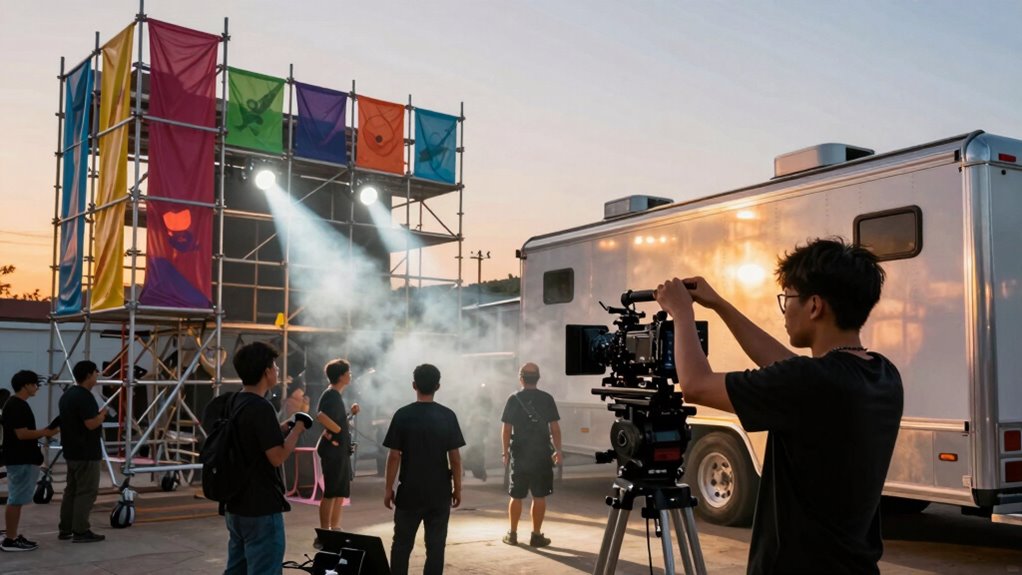
Trailer escalation isn’t just about increasing stakes; it’s a carefully crafted process that capitalizes on viewer anticipation and emotional engagement. When you watch a trailer, the pacing of the scenes plays a pivotal role in guiding your excitement. Narrative pacing determines how quickly or slowly information unfolds, creating a rhythm that keeps you hooked. Early on, the trailer might introduce the setting or characters at a relaxed pace, drawing you in without overwhelming you. As it progresses, the pacing accelerates—shorter scenes, quicker cuts—building a sense of urgency and anticipation. This deliberate rhythm keeps you on the edge of your seat, enthusiastic to see what happens next, without feeling overwhelmed or fatigued. Carefully managing this narrative pacing ensures that each moment feels earned and impactful. Visual symbolism also plays an essential role in trailer escalation. Every shot is carefully chosen to evoke specific emotions or themes, often through symbolic imagery. For instance, a lone figure standing against a stormy sky might symbolize impending chaos or personal struggle. These visual cues aren’t just aesthetic; they serve to deepen your emotional investment, hinting at larger conflicts or themes without explicit exposition. As the trailer advances, the symbolism becomes more intense or layered, reinforcing the narrative’s escalating tension. You start to interpret these visual markers as signs of the story’s rising action, fueling your curiosity and emotional response. The combination of narrative pacing and visual symbolism ensures that each escalation feels natural and compelling. When a trailer shifts from a calm scene to an intense action sequence, you’re primed to feel the impact because the pacing has been carefully managed. Similarly, when a symbolic image appears—like a shattered mirror or a blazing fire—it signals a turning point, heightening your anticipation. This synergy keeps you engaged, making the escalation feel inevitable and earned rather than abrupt or forced. In addition, Visual symbolism can be used strategically to evoke specific emotional responses, further enhancing the overall impact. Ultimately, trailer escalation isn’t just about adding more explosions or louder music; it’s about weaving together timing, imagery, and emotional cues in a way that resonates with you. By controlling narrative pacing and using visual symbolism strategically, filmmakers craft trailers that not only tease the story but also manipulate your emotional journey. You’re pulled deeper into the narrative’s rising action, enthusiastic to see how the story unfolds—an expertly designed dance that amplifies your anticipation and keeps you craving more.
video editing trailer pacing tools
As an affiliate, we earn on qualifying purchases.
As an affiliate, we earn on qualifying purchases.
Frequently Asked Questions
How Do Trailers Influence Audience Expectations Before a Film’s Release?
Trailers shape your expectations through visual storytelling that hints at the film’s tone, genre, and plot. They build audience anticipation by showcasing exciting scenes, memorable characters, and key moments, creating a sense of curiosity and excitement. Clever editing and music amplify emotional impact, making you enthusiastic to see the full movie. Ultimately, trailers influence how you perceive the film before its release, setting the stage for your viewing experience.
What Psychological Factors Drive Escalation in Trailer Storytelling?
You’re drawn in by the thrill of escalation, feeling like you’re on the edge of your seat. Psychological factors like curiosity, fear of missing out, and desire for emotional highs fuel this. Trailers use visual storytelling and suspense techniques—quick cuts, dramatic music, and teasing reveals—to heighten anticipation and escalate tension, making you crave more. This clever manipulation taps into your instincts, amplifying excitement and making the film irresistible.
How Do Cultural Differences Affect Trailer Escalation Techniques Globally?
Cultural nuances deeply influence trailer escalation techniques worldwide. As you craft trailers, you must adapt regional storytelling styles, understanding what resonates locally. In some cultures, subtlety and emotional depth are key, while others favor bold, action-packed scenes. You’ll find that respecting these differences enhances viewer engagement, ensuring your trailer appeals to diverse audiences and effectively builds anticipation across various cultural contexts.
What Role Does Marketing Budget Play in Trailer Escalation Strategies?
Did you know that trailers with bigger marketing spends see up to 30% more audience engagement? Your marketing budget plays a vital role in trailer escalation strategies by determining how much you can invest in creating buzz and anticipation. Proper budget allocation allows you to craft high-quality, impactful trailers, amplifying reach and excitement. Fundamentally, a well-funded campaign enhances escalation, making the trailer more compelling and increasing the film’s overall success.
Can Trailer Escalation Impact the Long-Term Reputation of a Film?
Trailer escalation can considerably impact a film’s long-term reputation. If you rely heavily on genre blending and flashy visual effects to hype the movie, audiences might feel misled if the final product doesn’t meet those expectations. This disconnect can lead to disappointment, damaging trust and word-of-mouth. To avoid this, make sure your trailers accurately represent the film’s tone and content, fostering genuine anticipation and long-term credibility.
visual symbolism for film trailers
As an affiliate, we earn on qualifying purchases.
As an affiliate, we earn on qualifying purchases.
Conclusion
So, next time you watch a trailer that’s bursting with explosions and impossible stunts, remember—you’re just witnessing the artful chaos of trailer escalation. It’s a clever dance, convincing you that more is always better, even if your brain’s crying for a break. Embrace the spectacle, because in the end, it’s all just a carefully crafted recipe of hype and hyperbole. Happy watching, and try not to get too emotionally exhausted—it’s all part of the show!
storyboarding software for trailers
As an affiliate, we earn on qualifying purchases.
As an affiliate, we earn on qualifying purchases.
As an affiliate, we earn on qualifying purchases.
Halloween Picks
halloween
As an affiliate, we earn on qualifying purchases.