

As a trailer editor, you play a key role in boosting your client’s revenue by creating compelling narratives that attract audiences and enhance marketability. Your editing choices directly affect promotional success, ticket sales, and merchandise. Managing budgets, licensing copyrighted material properly, and making cost-effective decisions help maintain a smooth production process. When you understand these elements, you can deliver trailers that increase industry trust and client satisfaction—skills you’ll explore further to maximize your impact and success.
Key Takeaways
- Craft trailers that enhance a film’s marketability to boost client revenue from ticket sales, merchandise, and streaming.
- Effectively manage budgets and licensing to ensure cost-efficiency and legal compliance, safeguarding revenue streams.
- Communicate clearly with clients about scope, costs, and licensing to meet expectations and foster trust.
- Make creative editing choices that positively impact promotional success, increasing overall project profitability.
- Understand broader industry relationships and revenue implications to support strategic client growth and reputation.
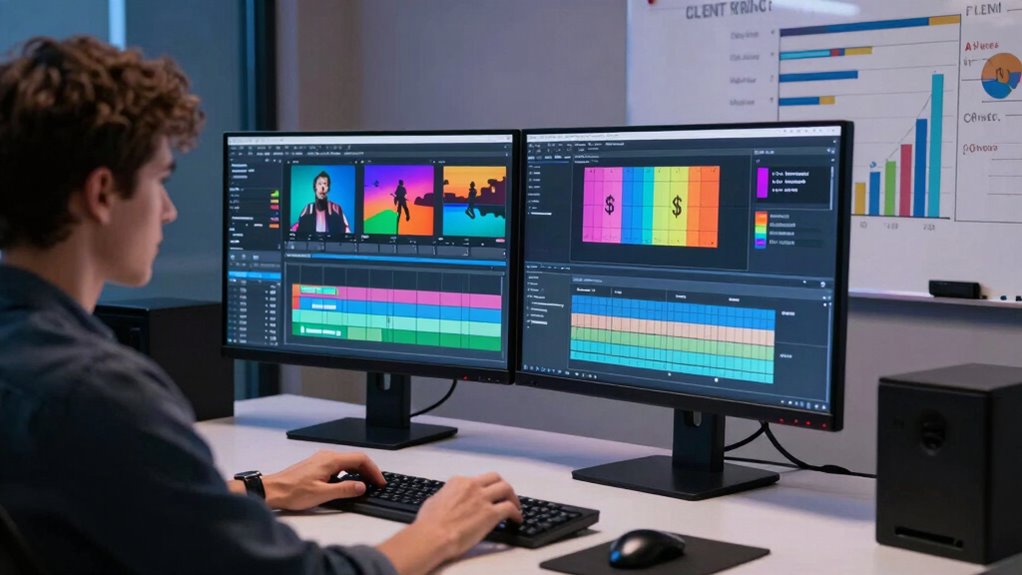
Trailer editors play an essential role in shaping a film’s marketability, directly impacting client revenue. Your work doesn’t just involve cutting scenes and syncing music; it’s about creating a compelling narrative that entices audiences to watch the movie. Because of this, understanding the financial side of trailer production is paramount. You need to be aware of how your edits influence the film’s promotional success and, consequently, the revenue generated from ticket sales, merchandise, and streaming rights.
One fundamental aspect you must grasp is the importance of budget negotiations. When working with clients, whether studios or marketing agencies, you often discuss the scope of the project and the resources available. Clear communication about budget constraints helps you deliver a trailer that meets expectations without overspending. Being aware of how your editing choices impact the overall budget allows you to suggest cost-effective solutions without compromising quality. This may involve selecting footage wisely, optimizing editing time, or choosing licensing options that fit the financial plan. Additionally, understanding project scope helps you manage expectations and deliver a product that aligns with the client’s strategic goals. Recognizing budget constraints early on enables you to make more informed creative decisions, ultimately saving time and resources. Being familiar with affiliate relationships and how they can influence project funding or sponsorships can also be advantageous in aligning your work with broader revenue streams. Having insight into ethical considerations surrounding licensing and client relationships ensures transparency and professionalism in your dealings.
Licensing agreements are another key consideration. As a trailer editor, you frequently work with copyrighted footage, music, and sound effects, all of which require proper licensing. You need to guarantee that all licensed material is secured before finalizing the trailer to prevent legal issues that could lead to costly delays or revenue loss. Understanding licensing agreements helps you navigate the legal landscape efficiently. It also influences your creative decisions—knowing what can be legally used and how much it costs can shape the tone or style of your edit. Incorporating legal considerations ensures a smoother production process and helps avoid potential setbacks related to copyright infringement.
Your ability to manage these elements directly affects client satisfaction and, by extension, revenue streams. When you negotiate budgets effectively and handle licensing agreements properly, you contribute to a smooth production process. This professionalism can lead to repeat business and referrals, expanding your influence in the industry. Plus, a well-produced trailer that respects licensing rules and stays within budget is more likely to receive positive recognition, which can boost your reputation and your clients’ confidence.
professional trailer editing software
As an affiliate, we earn on qualifying purchases.
As an affiliate, we earn on qualifying purchases.
Frequently Asked Questions
How Do I Negotiate Payment Terms With Clients Effectively?
To negotiate payment terms effectively, start with clear communication and establish your pricing strategies upfront. Be confident in discussing your rates and flexible where possible, but hold firm on essential terms. Listen carefully to your client’s needs, and propose solutions that work for both of you. Keep the dialogue open, transparent, and professional to build trust and guarantee timely payments, ultimately strengthening your client relationships.
What Are Common Hidden Costs in Client-Based Trailer Projects?
Did you know that about 30% of trailer editors face hidden fees in projects? Common hidden costs include licensing fees for music or footage, revisions beyond the initial scope, and extra expenses for specialized software or equipment. These additional expenses often catch professionals off guard, so always clarify what’s included upfront. Being transparent with clients about potential hidden fees helps prevent surprises and protects your earnings.
How Can I Ensure Timely Payments From Clients?
To guarantee timely payments, establish clear payment schedules upfront, so clients know when to pay and what to expect. Use effective invoicing strategies, like sending invoices promptly and including detailed information, to avoid delays. Maintain open communication, follow up politely if payments are late, and consider offering incentives for early payments. These steps help create a smooth payment process, reducing the risk of cash flow issues in your trailer editing business.
What Legal Considerations Should I Be Aware of in Client Contracts?
You need to keep your eyes open for legal considerations in client contracts, like safeguarding your intellectual property and including confidentiality agreements. Make certain the contract clearly states ownership rights, usage rights, and confidentiality clauses to protect your work. Don’t let legal jargon be a thorn in your side; instead, get it reviewed by a lawyer to ensure you’re not caught off guard. It’s better to be safe than sorry.
How Do I Handle Scope Changes That Affect Revenue?
You handle scope changes affecting revenue through effective change management. When scope creep occurs, communicate clearly with your client about how additional work impacts costs and timelines. Document all scope changes in writing, including agreed-upon adjustments to fees. Regularly review project scope and keep the client informed, ensuring any modifications are formally approved. This proactive approach prevents misunderstandings, maintains your revenue, and keeps the project on track.
licensed music for video editing
As an affiliate, we earn on qualifying purchases.
As an affiliate, we earn on qualifying purchases.
Conclusion
Understanding client-based revenue isn’t just a piece of the puzzle—it’s the heartbeat of your craft. When you grasp its rhythms, you can dance more confidently around expectations and craft trailers that resonate like a symphony. Remember, each project is a canvas painted with your skill and their vision, blending into a masterpiece of mutual success. Embrace these insights, and watch your career bloom like a well-tended garden, rich with opportunity and growth.
budget management tools for filmmakers
As an affiliate, we earn on qualifying purchases.
As an affiliate, we earn on qualifying purchases.
video licensing and copyright guide
As an affiliate, we earn on qualifying purchases.
As an affiliate, we earn on qualifying purchases.