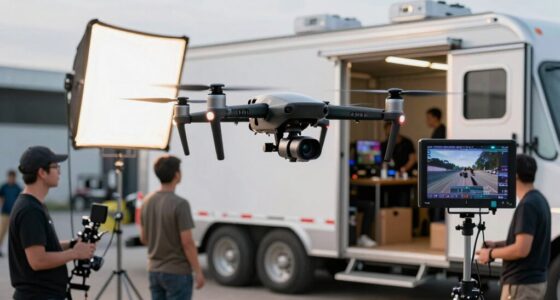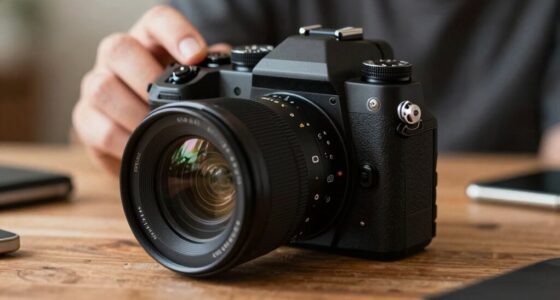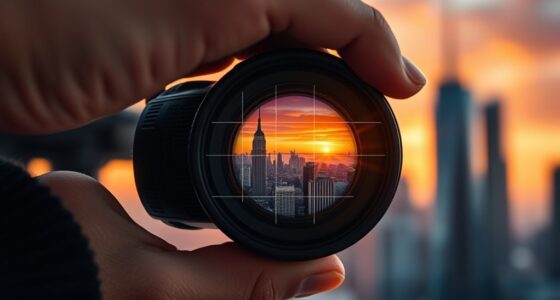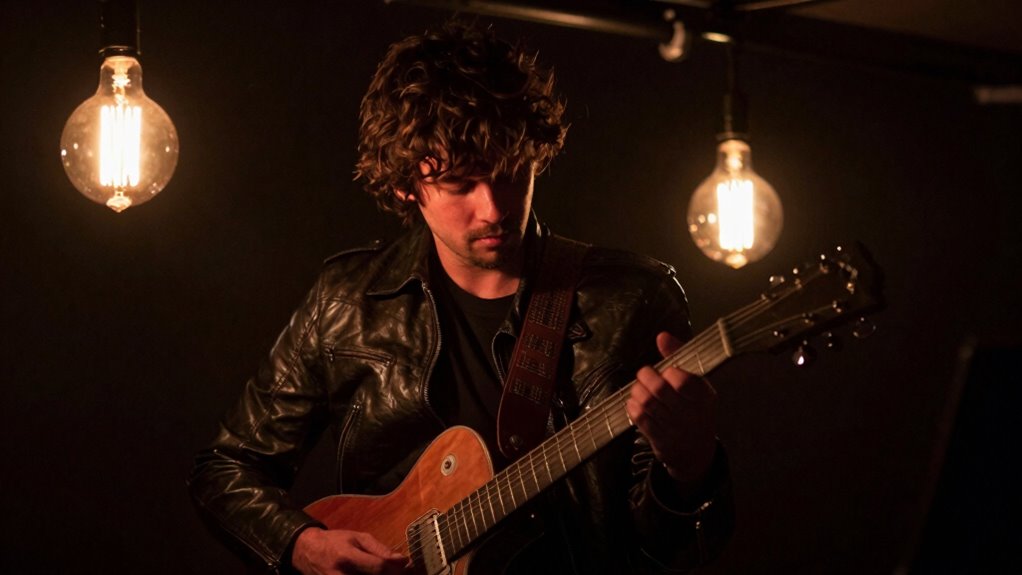

On a real set, low-light lens performance means your gear can gather more light through wider apertures and stay sharp with advanced stabilization. It helps you capture clear, detailed images even when lighting is poor. Good lenses and stabilization work together to prevent blurriness and missed moments. Knowing how your equipment performs in low light can make a big difference. Keep exploring, and you’ll discover how all these elements combine to improve your shots in challenging conditions.
Key Takeaways
- Wide-aperture lenses allow more light to reach the sensor, enabling clearer images in low-light conditions.
- High-quality lenses with good glass minimize distortions and enhance image sharpness during dim shoots.
- Effective low-light lens performance reduces the need for additional lighting setups, speeding up production.
- Lenses with optical image stabilization enable handheld shooting at slower shutter speeds, reducing motion blur.
- Combining a capable lens with a high-quality sensor ensures optimal image clarity and detail in challenging lighting.
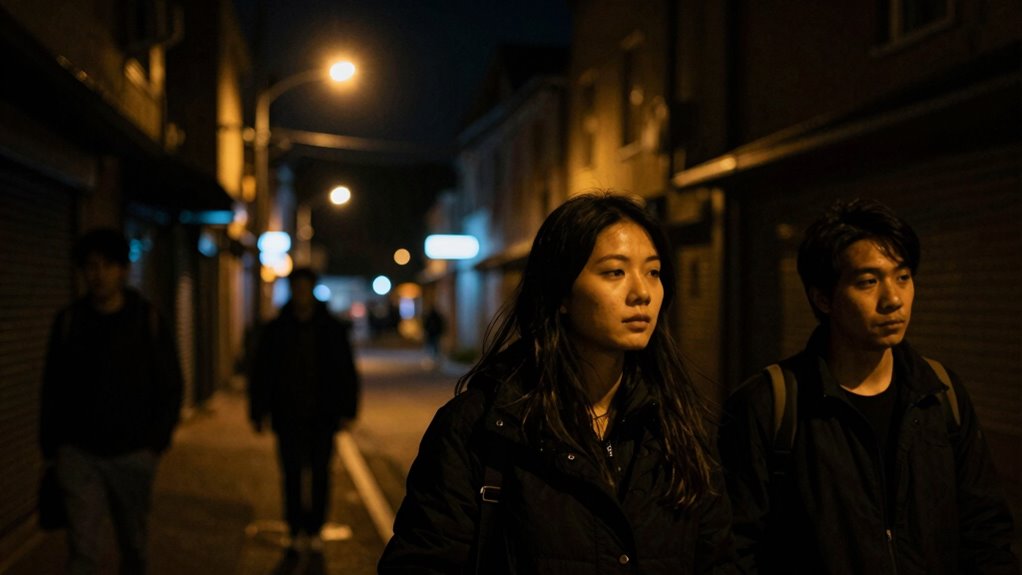
Capturing sharp, clear images in low-light conditions can be challenging, but the right lens makes all the difference. When you’re working on a real set, your camera sensor plays a crucial role. A high-quality sensor can gather more light, which helps produce brighter, more detailed images without excessive noise. But even the best sensor can struggle if your lens isn’t up to the task. That’s where low-light lenses come in, often featuring wider apertures that let in more light, giving you a better chance at capturing crisp shots in dim settings. This combination of a good sensor and a capable lens allows you to push the limits of what’s possible in low-light scenarios. Additionally, sensor technology continually advances, further enhancing low-light performance across different camera models.
A high-quality sensor combined with a wide-aperture lens unlocks stunning low-light photography.
Another key factor that impacts low-light performance is image stabilization. When shooting in low light, you often need to use slower shutter speeds to allow enough light to reach the sensor. However, slower shutter speeds increase the risk of camera shake, resulting in blurry images. That’s where image stabilization technology becomes essential. Whether built into the lens or the camera body, stabilization helps keep your shots steady, compensating for hand movement and reducing blur. On a real set, this stability can make the difference between a usable shot and a missed opportunity, especially when you’re working with longer exposures or handheld setups. Understanding lens stabilization and how it works can help you choose the right equipment for your specific needs. Additionally, employing advanced stabilization techniques can further improve your shot quality in challenging conditions.
Your choice of lens regarding image stabilization directly impacts your workflow. For instance, lenses with optical image stabilization (OIS) allow you to shoot at lower shutter speeds without a tripod, giving you more flexibility and speed during shoots. This is particularly useful in dynamic environments where setting up a tripod isn’t practical. Combining a lens with excellent image stabilization and a camera sensor optimized for low-light conditions gives you a powerful toolkit to handle challenging lighting. You’ll find that your images come out clearer, with less noise and sharper detail, even in the most dimly lit scenes. As technology progresses, sensor efficiency continues to improve, providing even better low-light capabilities. Staying informed about lens design innovations can also help you select gear that enhances your low-light shooting experience.
Ultimately, understanding what low-light lens performance means on a real set involves recognizing how these elements work together. A high-quality sensor, a lens with a wide aperture, and effective image stabilization help you capture moments that would otherwise be missed or poorly rendered. Whether you’re shooting portraits, events, or cinematic scenes, investing in gear designed for low-light conditions ensures you won’t be limited by darkness. Instead, you’ll be able to focus on your creative vision, knowing your equipment supports you in every shot.
As an affiliate, we earn on qualifying purchases.
Frequently Asked Questions
How Do Low-Light Lenses Affect Image Noise in Real-World Scenarios?
Low-light lenses help reduce image noise by improving sensor sensitivity, allowing you to shoot at lower ISO settings. They often feature better glass elements and wider apertures, letting in more light. This minimizes noise and keeps your images clear. Additionally, some lenses come with image stabilization, which compensates for hand-shake in dim conditions, further enhancing image quality. Together, these features give you cleaner, sharper photos in challenging lighting.
What Are the Best Low-Light Lenses for Video Filming?
Looking for the best low-light lenses for video filming? Have you checked their sensor compatibility and autofocus accuracy? Prime lenses like the Sigma 50mm f/1.4 or the Sony 85mm f/1.4 excel in low-light conditions, offering wide apertures for better light intake. These lenses deliver sharp images and reliable autofocus, making them ideal for capturing moments in dim environments. Choose lenses that match your camera system for peak performance.
How Does Lens Aperture Size Impact Low-Light Performance?
Aperture size directly impacts low-light performance because a larger aperture allows in more light, enhancing your ability to shoot in dim conditions. This offers greater aperture versatility, so you can adapt to different lighting scenarios. Additionally, lens coatings help reduce flare and improve light transmission, further boosting low-light capabilities. Combining a wide aperture with quality coatings ensures your footage remains clear, bright, and sharp even in challenging lighting environments.
Are Expensive Low-Light Lenses Worth the Investment?
Investing in expensive low-light lenses can be quite beneficial, especially if you’re aiming for sharp, clear images in challenging conditions. While they often offer superior sensor compatibility and lens durability, consider your specific needs and budget. These lenses can enhance your creativity and reduce post-production work, making them worth it for professional or serious hobbyist use. However, weigh their cost against your shooting environment and long-term goals.
What Are Common Mistakes When Shooting With Low-Light Lenses?
When shooting with low-light lenses, you often make the mistake of relying solely on autofocus, ignoring sensor stabilization, which can lead to blurry images. You might also forget to adjust your camera settings properly, resulting in slow autofocus speed and missed shots. To avoid these errors, make certain your stabilization is active and practice manual focus if needed. This way, you maximize your lens’s low-light capabilities and capture clearer, sharper images.
wide aperture lens for low light
As an affiliate, we earn on qualifying purchases.
As an affiliate, we earn on qualifying purchases.
Conclusion
Just like a lighthouse guiding ships through foggy nights, understanding low-light lens performance guarantees your images shine brightly in the dark. When you grasp how your gear handles shadows and low-light conditions, you reveal the power to create compelling, vivid scenes even when the sun slips below the horizon. Embrace this knowledge, and your photography becomes a journey through shadows and light—an artful dance where every shot echoes the quiet resilience of a midnight star.
optical image stabilization lens
As an affiliate, we earn on qualifying purchases.
As an affiliate, we earn on qualifying purchases.
As an affiliate, we earn on qualifying purchases.