AI tools for automatic trailer cuts and teasers analyze hours of footage quickly to select the most impactful scenes, focusing on emotional resonance. They sync visuals with music by aligning cuts to beats and crescendos, creating dynamic and engaging trailers. These tools also apply automated color grading to match the film’s tone, ensuring visual cohesion. By integrating audience preferences, they produce tailored trailers effortlessly. Continue to explore how these advanced features can streamline your editing process.
Key Takeaways
- AI-powered scene selection rapidly identifies impactful, emotionally resonant moments for concise trailer creation.
- Automated scene cutting and editing reduce manual effort while maintaining narrative flow.
- Music synchronization aligns visuals with beats and emotional peaks for dynamic trailer experiences.
- Advanced color grading enhances visual tone consistency matching genre-specific styles.
- Audience analysis and tone adjustment optimize trailers for targeted viewer engagement.

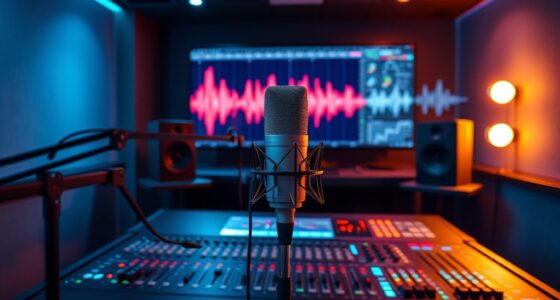
Have you ever wondered how filmmakers create gripping movie trailers so quickly and effectively? It’s a blend of art and technology working seamlessly together, often powered by AI tools that streamline the entire process. These advanced tools can analyze hours of footage, select the most impactful scenes, and assemble them into a compelling teaser in a fraction of the usual time. One critical aspect that often determines a trailer’s success is how well the music syncs with the visuals. AI-driven editing platforms excel at music synchronization, timing cuts to match beats, crescendos, and emotional peaks in the soundtrack. This precision enhances the viewer’s experience, evoking the intended excitement or tension without requiring manual frame-by-frame adjustments. As a result, trailers feel more dynamic and engaging, grabbing attention instantly.
In addition to music synchronization, AI tools leverage sophisticated color grading techniques to give trailers a polished, cinematic look. These tools automatically analyze the footage and apply color corrections, contrast enhancements, and stylistic filters that match the film’s tone. For example, a suspenseful thriller might feature cooler tones and high contrast, while an adventure movie might be brighter and more vibrant. This consistency in color grading not only sets the mood but also guarantees visual cohesion across different scenes, even when they come from various sources or shot at different times. AI-driven color grading saves editors countless hours, providing quick adjustments that traditionally would take days, all while maintaining high-quality standards.
Moreover, these AI tools are designed to learn and adapt. They can identify the most emotionally resonant moments, prioritize scenes that best showcase the film’s essence, and automatically cut the footage to produce a teaser that’s both concise and powerful. In doing so, they reduce the guesswork and manual effort usually involved in trailer editing. You’ll find that the combination of music synchronization and color grading techniques powered by AI results in trailers that feel cohesive, energetic, and precisely tuned to evoke the right response from viewers. Additionally, AI can incorporate Personality Test insights to better align the trailer’s tone with target audience preferences, further enhancing engagement and impact.
AI video trailer editing software
As an affiliate, we earn on qualifying purchases.
As an affiliate, we earn on qualifying purchases.
Frequently Asked Questions
How Accurate Are AI Tools in Capturing the Film’s Essence?
AI tools are quite accurate at capturing a film’s essence, especially when it comes to matching the film genre and emotional resonance. You’ll find they analyze key scenes and tone, helping create trailers that reflect the movie’s core. While they might not fully grasp subtle nuances, they generally deliver trailers that resonate well with audiences, making your promotional efforts more compelling and true to the original film’s spirit.
Can AI Tools Customize Trailers for Different Target Audiences?
Yes, AI tools can customize trailers for different target audiences. You can leverage these tools to analyze viewer preferences and create personalized marketing strategies. By tailoring trailer content to specific demographics, you increase engagement and relevance. This approach helps you connect more effectively with diverse audiences, ensuring your trailers resonate and boost interest in your film or product. AI-driven customization streamlines the process, making targeted marketing more efficient and impactful.
What Are the Common Limitations of Ai-Driven Trailer Editing?
You might find that AI-driven trailer editing struggles with accurately capturing the film genre and visual style, often leading to trailers that feel generic or mismatched. It can overlook nuanced storytelling, resulting in clips that don’t resonate with audiences. Additionally, AI may lack creativity, limiting how well it highlights unique aspects of your film. These limitations mean you may need manual adjustments to guarantee the trailer truly reflects your film’s essence.
How Do AI Tools Handle Copyrighted Content in Trailers?
When it comes to copyrighted content in trailers, AI tools tread carefully to avoid stepping on toes. They typically rely on copyright compliance algorithms, ensuring they don’t misuse protected material. You need to understand content ownership rights, as AI doesn’t automatically differentiate between authorized and unauthorized content. Think of it as walking a tightrope; the tools balance between creative freedom and legal boundaries, but human oversight remains key to prevent any misstep.
Are There Any Ethical Concerns With Ai-Generated Trailers?
You might worry that AI-generated trailers raise ethical concerns, especially regarding privacy and creative authenticity. AI tools often process sensitive data, which could lead to privacy concerns if not managed properly. Additionally, relying on AI might compromise creative authenticity, making trailers feel less genuine or original. It’s important to balance innovation with ethical practices to guarantee that AI supports, rather than undermines, artistic integrity and respects privacy standards.
automatic scene detection and cutting tools
As an affiliate, we earn on qualifying purchases.
As an affiliate, we earn on qualifying purchases.
Conclusion
With AI tools guiding your trailer edits, you’re like a captain steering through a storm of footage, effortlessly finding the brightest stars to shine. These innovations streamline your workflow, turning chaotic clips into mesmerizing teasers with precision and speed. Embrace these technologies, and watch your trailers transform from rough sketches into cinematic gems—illuminating your story like a lighthouse guiding viewers straight to your message. The future of editing is here, ready to elevate your creative journey.
AI color grading for films
As an affiliate, we earn on qualifying purchases.
As an affiliate, we earn on qualifying purchases.
music synchronization video editing tools
As an affiliate, we earn on qualifying purchases.
As an affiliate, we earn on qualifying purchases.