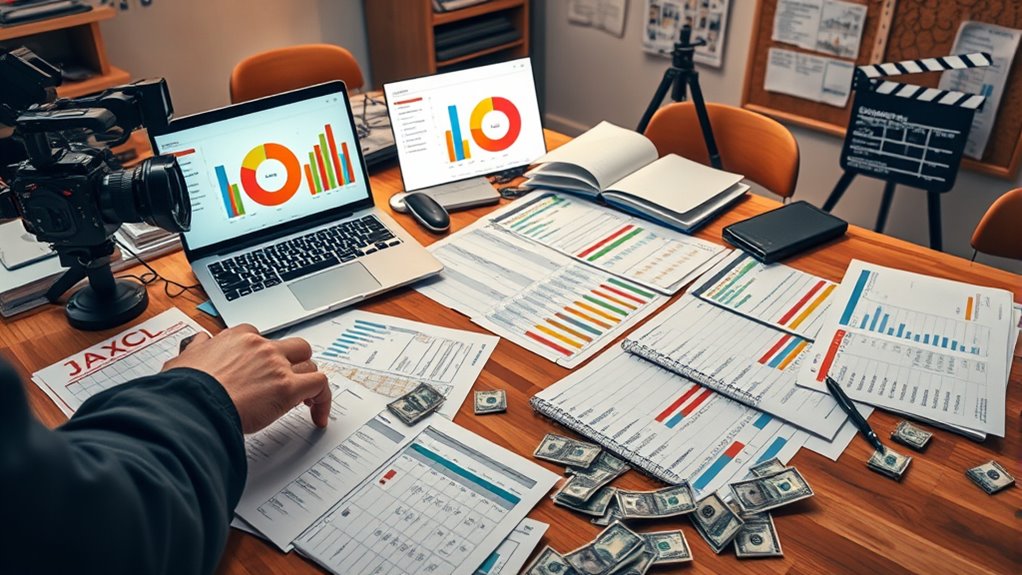

Understanding where money goes in a film production budget helps you see how funds are allocated across stages like pre-production, production, and post-production. You’ll find budgets break down costs for locations, cast, crew, equipment, effects, and marketing. Managing these expenses guarantees the project stays on track without overspending. If you keep exploring, you’ll discover how these allocations work together to keep a film’s financial plan on course.
Key Takeaways
- Film budgets are divided into categories like pre-production, production, and post-production, showing where money is allocated.
- Costs include locations, cast, crew, equipment, and effects, with estimates based on market rates and past projects.
- Budget breakdown helps manage expenses, track spending, and ensure funds are properly allocated across departments.
- Regular adjustments and reallocation of funds prevent overspending and keep the project on schedule financially.
- Clear communication of the budget ensures stakeholders understand spending priorities and allows flexibility for unforeseen costs.

Understanding film production budgets is vital if you want to grasp how movies come together financially. When you’re looking at a film’s budget, you’re fundamentally peering into the detailed plan that shows where every dollar is allocated. One of the first steps in this process is cost estimation, which involves predicting how much each element of production will likely cost. This can include everything from securing locations to hiring cast and crew, purchasing equipment, and post-production needs. This stage relies heavily on cost estimation to help you set a realistic budget by analyzing past projects, current market rates, and specific requirements of the film. Once this stage is complete, the next step is creating a thorough budget breakdown. This breakdown divides the total budget into categories like pre-production, production, and post-production, making it easier to see exactly where the money is going.
A budget breakdown acts as a roadmap for managing expenses and ensuring nothing gets overlooked. It assigns specific dollar amounts to different departments—such as set design, costumes, special effects, and marketing—so you can track spending closely. If costs start to rise unexpectedly, you can refer to your budget breakdown to identify areas where adjustments might be necessary. This detailed approach prevents overspending and keeps the project on track financially.
Understanding the components of a budget breakdown also helps you communicate effectively with stakeholders, investors, and crew members. They want to see clear, organized financial plans that justify the costs and demonstrate how funds are allocated to deliver a quality film. As you develop your budget, you’ll need to be flexible—costs can fluctuate, and unforeseen expenses often arise. By maintaining a detailed budget breakdown, you can quickly identify areas to cut back on or reallocate funds without jeopardizing the overall project.
film production budget planner
As an affiliate, we earn on qualifying purchases.
As an affiliate, we earn on qualifying purchases.
Frequently Asked Questions
How Do Unexpected Costs Impact the Overall Budget?
Unexpected costs cause cost overruns, which can substantially impact your overall budget. When surprises arise, you might need to do budget revisions, reallocating funds from other areas or seeking additional financing. These adjustments can delay the project, increase stress, and reduce profit margins. Staying flexible and having contingency funds helps manage these unexpected expenses, ensuring that your production stays on track despite unforeseen financial challenges.
What Percentage of the Budget Typically Goes to Marketing?
Ever wonder how much of your film’s budget goes to marketing? Typically, marketing spend accounts for about 20-30% of the total budget, depending on the film’s scope and goals. This budget allocation guarantees the movie reaches its target audience effectively. You might ask, why so much? Well, strategic marketing is essential for box office success and long-term profitability, making it a critical investment in your film’s overall success.
How Are Contingency Funds Allocated in Film Budgets?
You allocate contingency funds for unexpected costs like production overheads and equipment costs, typically around 5-10% of your total budget. This reserve helps cover unforeseen expenses, delays, or overruns, ensuring your project stays on track. You set aside this money early, often within the production overheads category, so you’re prepared for surprises without compromising other critical areas of your film’s budget.
What Role Do Tax Incentives Play in Budgeting?
You’ll find that tax incentives can cover up to 30% of your production costs, considerably easing your budget planning. They play a vital role by encouraging filming in specific locations, reducing overall expenses, and making projects more financially viable. By understanding how tax incentives work, you can strategically allocate your funds, maximize savings, and guarantee your film stays within budget while taking advantage of government incentives that boost your production’s success.
How Does Cast Salary Negotiation Affect the Budget?
When you negotiate actor contracts and handle salary negotiations, it directly impacts your film’s budget. Higher salaries for stars increase overall costs, requiring you to reallocate funds from other departments or secure additional financing. You need to balance attracting top talent with budget constraints, often making tough decisions to keep production financially feasible. Effective negotiations can help you control expenses while ensuring you get the talent needed for your project.
film equipment budget kit
As an affiliate, we earn on qualifying purchases.
As an affiliate, we earn on qualifying purchases.
Conclusion
Now that you know where the money goes, you can better appreciate the complexity behind every scene and shot. From securing talent to post-production, each dollar is carefully allocated to bring the story to life. So, next time you watch a film, ask yourself: do you see just the finished product or the intricate web of investments behind it? Recognizing this can deepen your appreciation for the art and effort that go into filmmaking.
film location scouting tools
As an affiliate, we earn on qualifying purchases.
As an affiliate, we earn on qualifying purchases.
film industry financial management books
As an affiliate, we earn on qualifying purchases.
As an affiliate, we earn on qualifying purchases.