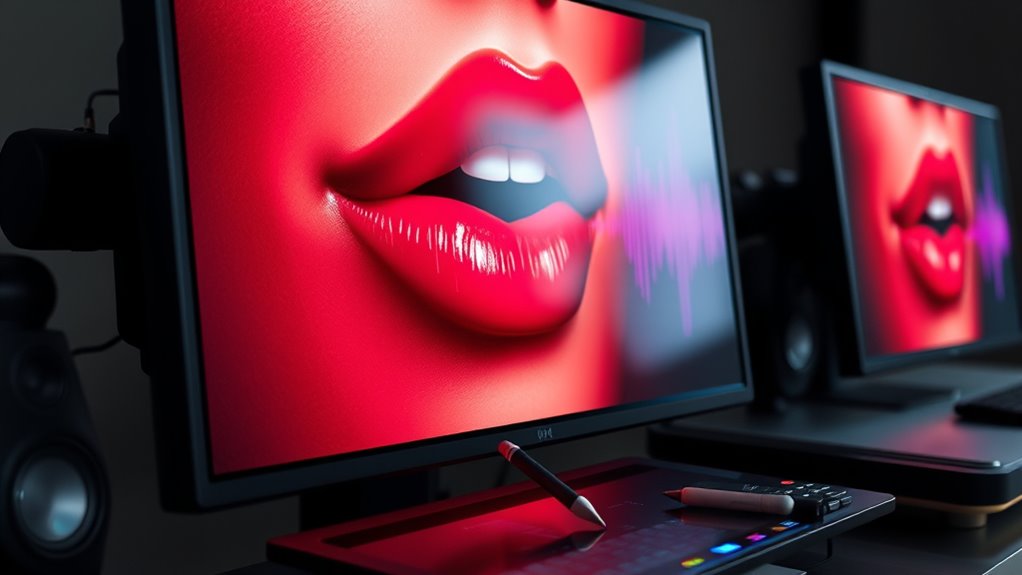

Using AI for realistic lip sync and dubbing lets you automate precise mouth movements that match speech audio perfectly, saving you time and effort. It analyzes voice recordings to guarantee consistent, natural-sounding voices while capturing emotion and tone. With capabilities like cultural adaptation and voice modulation, you can easily localize content for different audiences. Combining AI with high-precision animation, these tools help you produce professional multimedia content quickly and seamlessly. If you explore further, you’ll discover how this technology can transform your projects.

Get movie-night favorites delivered free — and shop member deals
- Fast, free delivery on millions of items
- Access to Prime Big Deal Days deals on October 6–7
- Prime Video, Amazon Music and more included
Key Takeaways
- AI automates precise lip synchronization with speech audio, ensuring natural movements even in fast-paced dialogue.
- It analyzes voice recordings to maintain consistent character voices and capture emotional nuances.
- AI enables quick cultural adaptation by modifying speech patterns, accents, and idioms for different audiences.
- AI-enhanced dubbing adjusts pitch, speed, and pronunciation for authentic regional and emotional voiceovers.
- Combining AI with high-precision animation streamlines production, producing realistic, professional multimedia content efficiently.
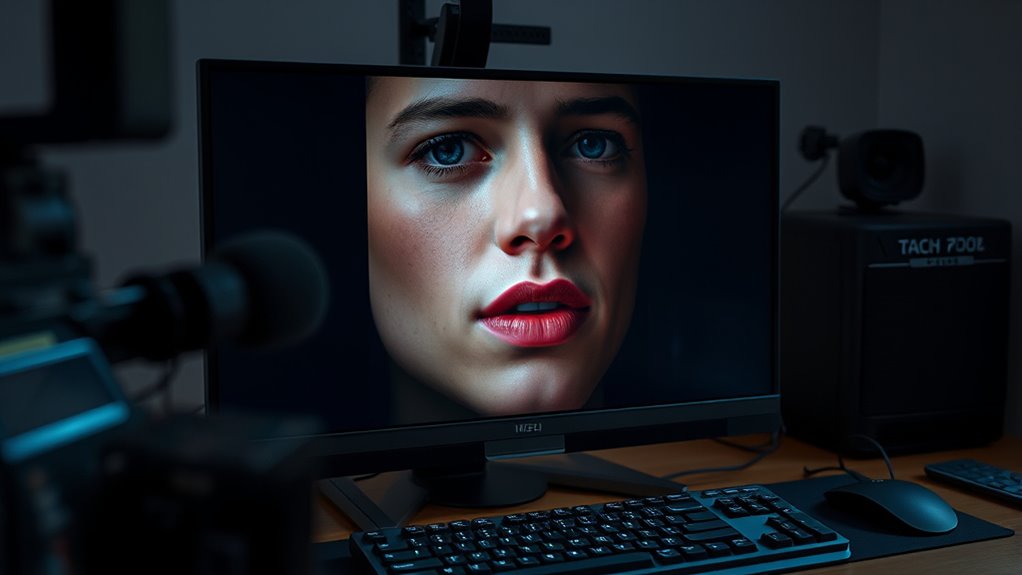
Artificial intelligence is transforming how we create and animate media by enabling precise lip sync and dubbing processes. When you utilize AI-driven tools, you gain the ability to produce highly realistic character animations that align perfectly with spoken dialogue. One key advantage is voicing consistency, where AI algorithms analyze voice recordings to ensure that character voices remain uniform across different scenes or takes. This consistency helps maintain immersion and prevents distractions that might arise from subtle voice discrepancies. Additionally, AI makes it easier to adapt content for diverse audiences through cultural adaptation. Instead of manually re-recording dialogues, AI can quickly modify speech patterns, intonations, and accents to suit various cultural contexts, making your media more relatable and authentic to viewers worldwide.
With AI, you don’t have to worry about the tedious task of manually syncing lip movements to audio. Instead, you can upload your dialogue, and the system calculates the precise mouth movements needed for each frame. This process ensures that characters’ lips move naturally, even when working with complex or fast-paced speech. As a result, your projects benefit from a more polished and professional appearance, saving you time without sacrificing quality. Furthermore, AI’s ability to analyze speech nuances allows for nuanced dubbing, capturing emotion and tone effectively. This creates a more immersive experience for viewers, whether they’re watching animated films, video games, or virtual avatars. The integration of high-precision animation techniques further enhances the realism of digital characters, elevating the overall quality of multimedia productions.
Cultural adaptation is another area where AI shines. Instead of hiring multiple voice actors or re-recording entire scenes, you can leverage AI to generate voiceovers that reflect local dialects, idioms, and cultural references. This not only broadens your reach but also enhances viewer engagement. AI-driven dubbing tools can automatically adjust pitch, speed, and pronunciation to match regional speech patterns, ensuring your content resonates authentically with different audiences. As a creator, you’ll find that incorporating these technologies simplifies the localization process and allows for rapid updates or modifications.
As an affiliate, we earn on qualifying purchases.
Frequently Asked Questions
How Does AI Handle Regional Accents in Dubbing?
AI handles regional accents in dubbing by analyzing large datasets of regional dialects and pronunciation variability. It learns to replicate unique speech patterns, intonations, and pronunciation differences to make the dubbed audio sound authentic. You can expect the AI to adapt to specific regional accents, ensuring the dubbed content feels natural and culturally accurate. This helps maintain the original tone and context while making the dialogue relatable for local audiences.
Can Ai-Generated Lip Sync Match Emotional Expressions Accurately?
AI can match emotional expressions accurately, especially when trained on diverse datasets. For example, a recent project used AI to dub a documentary, and the facial expressions aligned perfectly with the narrator’s tone, enhancing emotional authenticity. You’ll find that AI analyzes subtle cues like eye movement and mouth shape to guarantee emotional accuracy, creating a more immersive experience for viewers. This technology continuously improves, making realistic lip sync and emotional expression seamless.
What Are the Ethical Concerns With AI Dubbing?
You should be aware that AI dubbing raises ethical concerns like deepfake risks, where images or voices can be manipulated deceptively, and copyright issues, since using someone’s voice or likeness without permission is illegal. These technologies can be misused to spread misinformation or infringe on creators’ rights. Always consider the potential for harm and verify proper consent and transparency when using AI dubbing to avoid ethical pitfalls.
How Does AI Ensure Synchronization Across Multiple Languages?
Think of AI as a skilled conductor guiding a multilingual orchestra. It uses advanced algorithms to analyze audio and visual cues, ensuring lip movements match each language perfectly. By addressing synchronization challenges, AI maintains accurate timing across multiple languages, enhancing multilingual accuracy. This synchronization creates a seamless experience, making it seem like the speaker naturally speaks every language fluently, keeping your audience engaged without missing a beat.
What Are the Limitations of AI in Real-Time Lip Syncing?
AI’s real-time lip syncing can struggle with accuracy, especially if it lacks diverse data, leading to cultural bias. It may also face latency issues, making sync appear unnatural, and pose data privacy concerns if sensitive audio is processed insecurely. These limitations mean you might see occasional mismatches or delayed responses, highlighting the need for better training data and privacy safeguards to improve overall performance.
As an affiliate, we earn on qualifying purchases.
Conclusion
By now, you see how AI transforms lip sync and dubbing, making characters more believable and seamless. Embrace these tools to enhance your projects, but remember, “practice makes perfect.” Keep experimenting and refining your techniques, because technology alone isn’t enough—your skill and creativity truly matter. As you continue to explore AI’s potential, stay patient and persistent; mastery comes with time and effort. Ultimately, blending innovation with dedication will lead to the best results.
automatic lip sync animation software
As an affiliate, we earn on qualifying purchases.
As an affiliate, we earn on qualifying purchases.
As an affiliate, we earn on qualifying purchases.
Halloween Picks
halloween
As an affiliate, we earn on qualifying purchases.