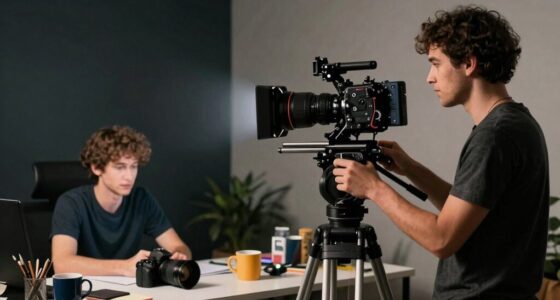

Using shoulder rigs and cages helps you gain better control over your camera, even with a small crew. They offer stability for smooth shots and reduce shakiness, so your footage looks professional. The ergonomic design keeps you comfortable during long shoots, while modular features let you customize your setup for each scene. Lightweight and adjustable materials make handling easier, boosting your confidence on set. Keep going to discover how these tools can transform your filming experience.
Key Takeaways
- Enable smooth, stable shots with minimal crew, enhancing control over camera movements.
- Distribute weight evenly to reduce fatigue, allowing for longer, more precise filming sessions.
- Modular design allows quick customization for different shot requirements, improving operational flexibility.
- Ergonomic features enhance comfort, increasing control during extended shoots.
- Support accessory mounting for better camera handling and stabilization, ensuring consistent shot quality.
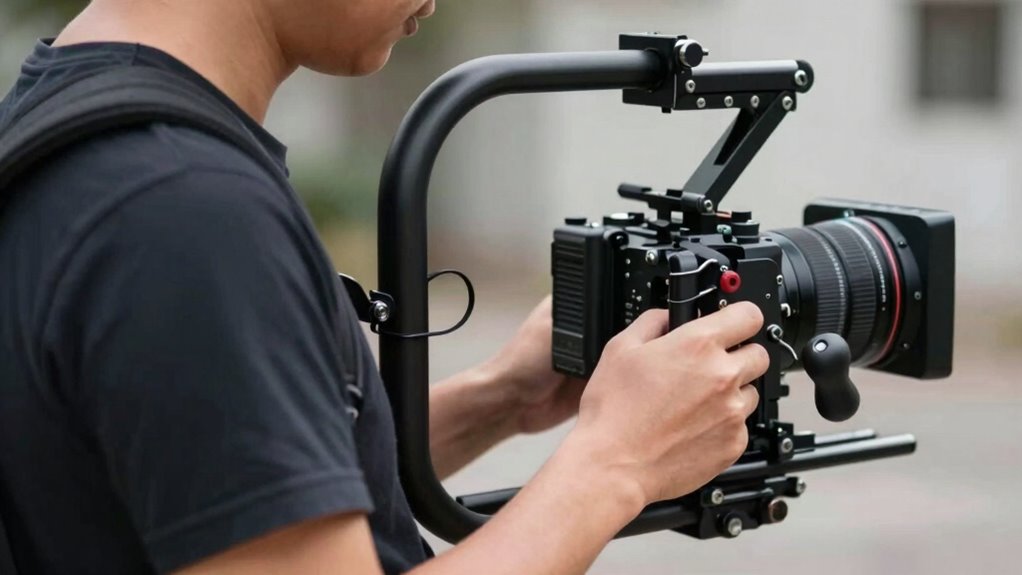
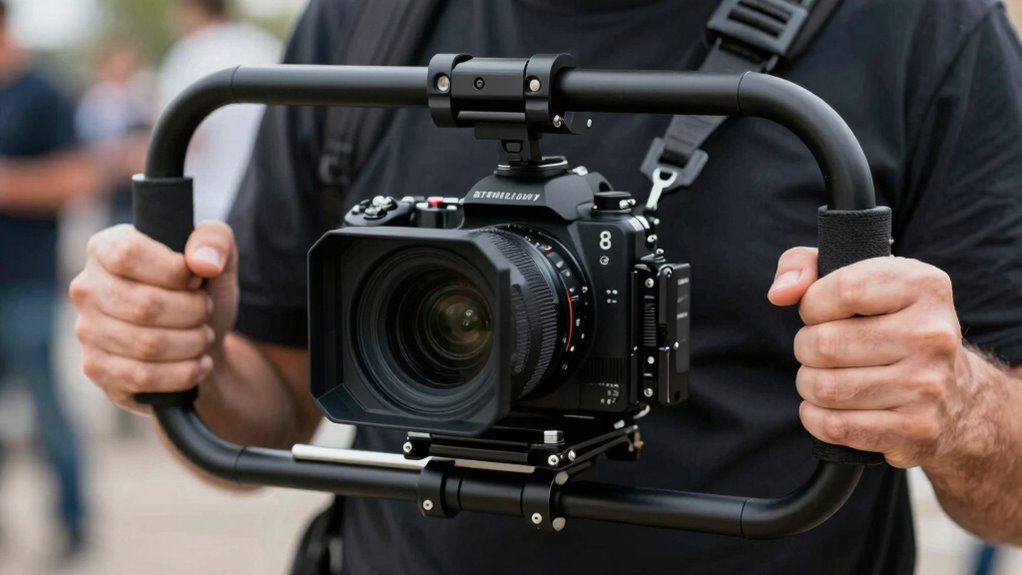
When filming with a small crew, having the right shoulder rigs and cages can make all the difference in achieving smooth, professional shots. These tools are indispensable for maintaining camera stability, especially when you’re maneuvering through tight spaces or capturing dynamic scenes. A well-designed shoulder rig helps distribute the weight evenly across your body, reducing fatigue and allowing you to focus on your shot rather than battling the camera’s heaviness. This improved camera stabilization means your footage stays steady, minimizing shaky movements that can distract viewers or diminish production quality.
An ergonomic design in shoulder rigs and cages is essential because it directly impacts your comfort and control during long shoots. When equipment fits naturally to your body, you’re less likely to experience strain, which helps you stay focused on the creative aspects of filming. Ergonomic features such as adjustable shoulder pads, lightweight materials, and balanced weight distribution enable you to hold the camera steadily for extended periods. This comfort translates into more precise movements, allowing you to execute complex shots with confidence. The right rig adapts to your body, not the other way around, giving you a sense of control that’s often hard to achieve with bulkier, less tailored gear.
Cages, on the other hand, provide a versatile platform for mounting accessories like microphones, lights, or monitors. This modularity means you can customize your setup based on the shot’s requirements without adding unnecessary complexity. When you have a cage, your camera becomes more stable and easier to handle, especially when paired with a shoulder rig. The combination offers a balanced, unified system that enhances camera control and guarantees your footage remains smooth, even in handheld situations. Plus, many cages are designed with ergonomic considerations, making them comfortable and intuitive to use during prolonged shoots. Additionally, shoulder rig ergonomics play a crucial role in reducing fatigue and allowing for longer, more comfortable filming sessions. Incorporating ergonomic design principles into your gear can significantly improve your overall filming experience, especially during extended shoots. Using lightweight materials also contributes to a more comfortable and adaptable setup, making it easier to carry and operate your equipment over long periods. Proper camera stabilization techniques, supported by ergonomic gear, can also help maintain consistent shot quality throughout your shoot. Furthermore, selecting equipment with adjustable features allows you to fine-tune your setup for optimal comfort and control, enhancing your overall efficiency on set.
shoulder rig for DSLR camera
As an affiliate, we earn on qualifying purchases.
As an affiliate, we earn on qualifying purchases.
Frequently Asked Questions
Are Shoulder Rigs Suitable for Outdoor Shooting Environments?
Yes, shoulder rigs are suitable for outdoor shooting environments. They offer outdoor durability, allowing you to withstand various weather conditions and rough handling. Their environmental adaptability means you can use them comfortably in different settings, whether sunny, rainy, or windy. The solid construction and ergonomic design help stabilize your camera, giving you better control and reducing fatigue during long outdoor shoots. This makes them a versatile choice for outdoor filmmaking.
Can Cages Be Customized for Specific Camera Models?
Yes, cages can be customized for specific camera models. You’ll find customization options that guarantee perfect camera compatibility, allowing the cage to fit snugly and securely. These options include adjustable plates, modular accessories, and tailored mounting points. By choosing a cage designed for your camera, you get better control, stability, and ease of access to controls, making your shooting experience more efficient and professional, especially in dynamic shooting environments.
How Do Shoulder Rigs Affect Overall Production Costs?
They say “you get what you pay for,” but shoulder rigs can actually boost your budget considerations by enhancing cost efficiency. While investing in quality rigs might seem costly upfront, they reduce the need for extra crew and equipment, saving money long-term. By improving stability and ease of use, shoulder rigs streamline production, helping you stay within budget and avoid costly errors, making your small crew more effective and economical.
What Is the Ideal Weight Capacity for a Shoulder Rig?
The ideal weight capacity for a shoulder rig is around 10 to 15 pounds, ensuring ergonomic design and comfortable usage. You want a rig that offers proper weight distribution, reducing fatigue during long shoots. If it’s too heavy, it strains your shoulder and back; too light, and it might not support your gear securely. Look for one that balances weight and comfort, enhancing control without sacrificing mobility.
Do Shoulder Rigs Improve Stabilization for Handheld Shots?
They say “a steady hand makes for a steady shot,” and shoulder rigs definitely help with stabilization for handheld shots. By providing ergonomic benefits, they reduce fatigue and allow you to focus on smooth movement. Shoulder rigs enhance stabilization techniques by distributing weight evenly, making your shots steadier and more professional. So, yes, they’re a valuable tool for improving shot stability and achieving more controlled, polished footage.
camera cage with accessory mounts
As an affiliate, we earn on qualifying purchases.
As an affiliate, we earn on qualifying purchases.
Conclusion
So, next time you’re juggling a tiny crew and a mountain of gear, remember—shoulder rigs and cages aren’t just fancy accessories; they’re your secret superpowers. With these tools, you’ll look like a Hollywood pro, even if you’re just one person trying to tame chaos. Who knew that a little metal could turn you into a one-person film crew hero? Now go on, conquer that shoot—cape not included.
ergonomic camera shoulder rig
As an affiliate, we earn on qualifying purchases.
As an affiliate, we earn on qualifying purchases.
lightweight camera stabilizer
As an affiliate, we earn on qualifying purchases.
As an affiliate, we earn on qualifying purchases.