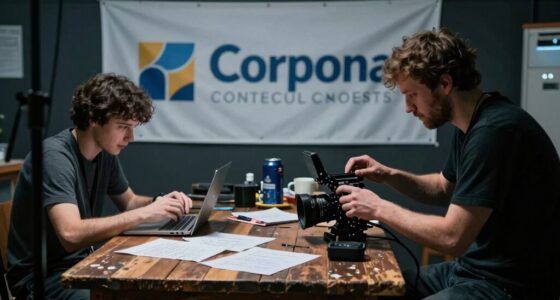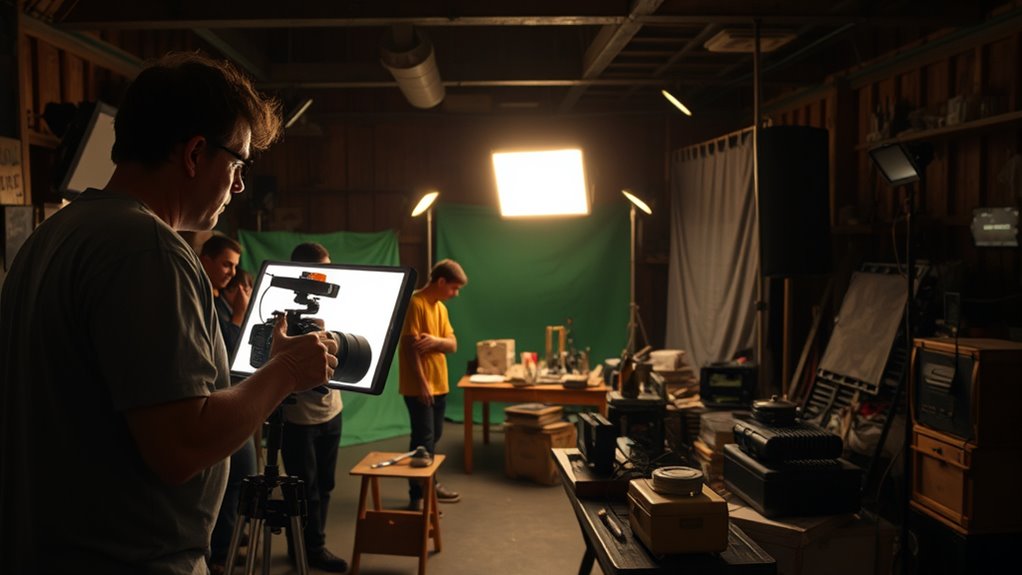

To manage small-budget productions with big ambitions, focus on resourcefulness and strategic planning. Prioritize talented yet affordable cast members from local groups or theater schools, and scout for unique, low-cost locations that add character. Use budget-friendly equipment and emphasize lighting and sound quality. Stay flexible and turn obstacles into creative opportunities, negotiating with community spaces to cut costs. For more practical tips, explore how to stretch every dollar while maintaining high storytelling standards.

Get movie nights delivered free — and shop member deals
- Fast, free delivery on millions of items
- Access to Prime Big Deal Days deals on October 6–7
- Prime Video, Amazon Music and more included
Key Takeaways
- Prioritize talented newcomers and local talent to maximize performance quality within budget constraints.
- Scout affordable, unique locations that add visual interest and support storytelling without high costs.
- Use budget-friendly equipment and focus on lighting, sound, and framing to enhance production value.
- Embrace creativity by turning limitations into storytelling opportunities and adapting plans flexibly.
- Leverage community resources, negotiate costs, and allocate resources strategically for maximum impact.
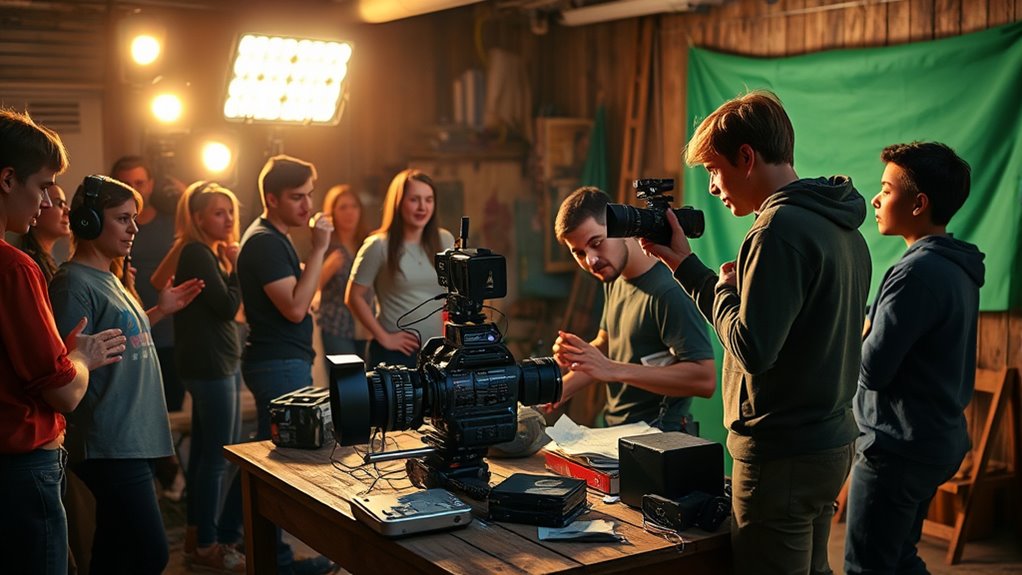
Managing a small-budget production can be challenging, but with careful planning and resourcefulness, you can still create a compelling project. One of the first hurdles you’ll face is casting challenges. Without the luxury of a large budget, you need to be strategic about who you cast. Instead of aiming for well-known actors, consider talented newcomers or local talent who are enthusiastic to build their portfolios. Reach out to theater schools, acting workshops, or local communities—these sources often have fresh faces who can bring authenticity to your story. Remember, a strong performance can compensate for a smaller name on the marquee. You also want to be flexible with casting choices; sometimes, the right person might not fit your initial vision perfectly but can elevate your project in unexpected ways.
Location scouting is another critical aspect that demands your attention and creativity. With limited funds, you can’t afford to shoot in expensive studios or popular, high-profile locations. Instead, look for hidden gems in your community—abandoned buildings, scenic parks, or even residents’ homes willing to lend space. Scout during different times of the day to find the best lighting and atmosphere without extra costs. Be resourceful by leveraging your network; friends, local businesses, and community centers might offer spaces for free or at a reduced rate. Always seek permission and clarify any legal requirements upfront, but don’t be discouraged by the need for negotiations. Your goal is to find authentic, visually interesting settings that support your story without draining your budget. Additionally, utilizing cost-effective equipment and techniques can make a significant difference in the overall quality of your production.
Balancing casting challenges and location scouting requires you to think outside the box. When you encounter obstacles, consider how they can enhance your story instead of hinder it. For example, shooting in a gritty, real location can add depth and realism to your film, making it more impactful. Similarly, casting lesser-known actors can bring a fresh, genuine energy that resonates with audiences. With each challenge, you develop creative problem-solving skills that will serve you well throughout your production. The key is to stay adaptable and open to alternative solutions. Focus on what’s achievable within your resources, and don’t be afraid to make compromises that strengthen your overall vision. With patience and ingenuity, you’ll turn these hurdles into opportunities for unique storytelling.
As an affiliate, we earn on qualifying purchases.
Frequently Asked Questions
How Can I Secure Funding for a Small-Budget Production?
You can secure funding for your small-budget production by launching crowdfunding campaigns to rally support from your community and fans. Additionally, seek sponsorship partnerships with local businesses or brands interested in promoting their products through your project. Make a compelling pitch, highlight your unique vision, and demonstrate how their support benefits both parties. Combining these strategies increases your chances of gathering the necessary funds to bring your big ambitions to life.
What Are the Best Cost-Effective Marketing Strategies?
Think of your marketing as planting a garden; you want it to grow with minimal effort but maximum reach. Focus on viral marketing and social media outreach to spread your message organically. Use engaging content, collaborate with influencers, and encourage sharing. These cost-effective strategies help your project blossom without breaking the bank, ensuring your ambitious vision reaches a wide audience while keeping expenses low and impact high.
How Do I Assemble a Talented Team on a Tight Budget?
You can assemble a talented team on a tight budget by focusing on casting tips like seeking passionate, versatile individuals who are enthusiastic to grow. Use equipment choices wisely, opting for affordable, high-quality gear or rentals instead of costly purchases. Network within local film communities or online platforms to find skilled volunteers or emerging talent. Be clear about your vision and budget constraints to attract dedicated team members willing to collaborate for mutual success.
What Legal Considerations Are Critical for Small Productions?
You need to prioritize legal considerations to protect your project. Make certain you address copyright issues early by securing rights for any music, footage, or images you use. Draft clear contractual agreements with cast, crew, and vendors to define scope, payments, and rights. Ignoring these can lead to costly disputes or legal trouble, so consult a legal professional to navigate the complexities and keep your production legally sound and protected.
How Can I Maximize Production Value With Limited Resources?
You can maximize production value by getting creative with lighting and camera work. Use affordable creative lighting setups to create mood and depth without costly equipment. Experiment with innovative camera techniques like dynamic angles or clever framing to add visual interest. Focus on strong storytelling and shot composition, which can elevate your project without overspending. These strategies help you achieve a polished look, even with limited resources.
affordable lighting kit for filmmaking
As an affiliate, we earn on qualifying purchases.
As an affiliate, we earn on qualifying purchases.
Conclusion
With a budget of under $1 million, small productions often struggle to stand out, yet many find success through creativity and resourcefulness. Did you know that 75% of independent films rely heavily on innovative storytelling rather than big budgets? By focusing on strong scripts, talented cast, and smart planning, you can turn limited resources into big achievements. Remember, it’s not about how much you spend, but how you use it to make your vision come alive.
portable sound recording equipment
As an affiliate, we earn on qualifying purchases.
As an affiliate, we earn on qualifying purchases.
used or refurbished filmmaking equipment
As an affiliate, we earn on qualifying purchases.
As an affiliate, we earn on qualifying purchases.
Fall Picks
fall essentials
As an affiliate, we earn on qualifying purchases.