

“Pop culture themed board games” covers two different kinds of purchase. A trivia game asks players to recall films, music, television or celebrity facts; a story-driven game puts them in a world they already know and asks them to make decisions, solve problems or compete. The real choice is whether your group wants an easy-to-explain test of shared knowledge or a more involved game whose theme shapes the play.

Get movie nights delivered free with Prime
- Fast, free delivery on millions of items
- Prime Video, Amazon Music and more included
- Member-only deals all year
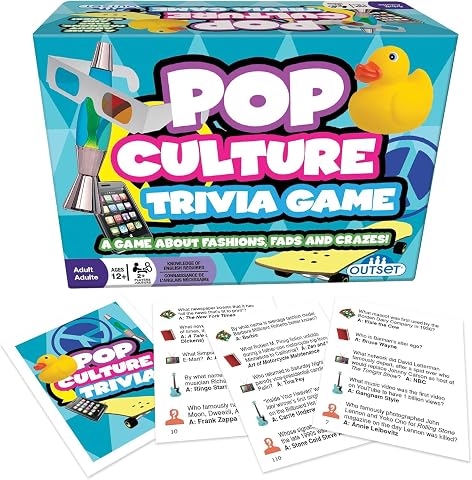
Outset Media Pop Culture Trivia Game
- ✔ Players: 2 or more
- ✔ Recommended age: 12+
- ✔ Question count: 1,200
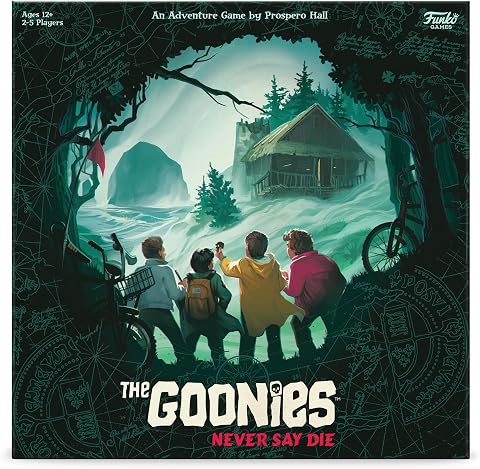
Funko The Goonies: Never Say Die Game
- ✔ Players: 2–5
- ✔ Recommended age: 12+
- ✔ Listed playtime: 50 minutes

Monopoly: KPop Demon Hunters Edition Board Game
- ✔ Players: 2–6
- ✔ Recommended age: 8+
- ✔ Edition: KPop Demon Hunters
Trivia games usually suit mixed groups, casual gatherings and fans who enjoy quoting facts as much as playing. Story-driven titles can give a dedicated fandom more of the world it loves, but they may ask for more time, rules and commitment. The sections below compare these formats as categories: particular games vary in price, player count and quality, so check the box and current edition before buying.
At a Glance
| Criteria | Pop culture trivia games | Story-driven pop culture games | Winner |
|---|---|---|---|
| Ease to learn | Usually simple prompts and scoring | More rules, setup or story context are common | A |
| Fandom knowledge | Often central to success | Theme adds flavor; knowledge may not be required | A |
| Gameplay depth | Usually light and question-led | Often more varied choices and mechanics | B |
| Group accessibility | Works well for casual and mixed groups | Best when players welcome the genre and rules | A |
| Replayability | Depends heavily on question variety | Can benefit from scenarios, strategies or story paths | Depends |
| Session commitment | Often easy to play in short rounds | Often needs a longer session | A |
| Value | Often lower-cost and easier to bring out | Higher cost can pay off for committed fans | Depends |
Outset Media Pop Culture Trivia Game
For a group that wants pop culture itself to be the subject, Outset Media Pop Culture Trivia is the most flexible starting point here. Its 1,200 questions range across people, products, fashions, and trends from different decades, so the theme reaches beyond one franchise. That breadth makes it a better fit for mixed fandoms than either The Goonies: Never Say Die or Monopoly: KPop Demon Hunters Edition, both of which center on a single licensed world.The simple format is a practical advantage: there are no complex rules or game pieces to track, and the compact box can travel in a bag. It is easy to bring out at a gathering or during a wait without committing to a larger board setup. The tradeoff is that this is trivia rather than a tactical board game; the fun depends on players enjoying questions and having overlapping knowledge. Although it is listed for ages 12 and up, references across eras may still favor players familiar with older cultural touchstones. Pick it for accessible, wide-ranging quiz play, and skip it if you want a narrative or strategic game arc.
Pros:
- 1,200 questions cover pop culture across decades.
- Simple format has no complex rules or game pieces to manage.
- Compact dimensions make it convenient for travel and waiting periods.
- For two or more players, so it can suit small groups as well as parties.
Cons:
- Trivia knowledge is the main activity; it offers less strategic variety than the two board games.
- Broad, cross-decade references may suit some age groups better than others.
- The supplied description does not specify a playtime or detailed category breakdown.
Best for: Groups of pop culture fans across different generations who want portable quiz play with minimal setup.
Not ideal for: Players looking for cooperative storytelling, a substantial board-game system, or questions limited to a particular fandom.
Bottom line: Choose this for the widest-ranging and easiest-to-carry pop culture quiz; choose The Goonies or KPop Demon Hunters if you want a themed game world to shape the action.
“Choose this for the widest-ranging and easiest-to-carry pop culture quiz; choose The Goonies or KPop Demon Hunters if you want a themed game world to shape the action.”
Funko The Goonies: Never Say Die Game
The Goonies: Never Say Die gives its source material the biggest role in play. One player becomes the Goondocks Master, controlling threats such as the Fratellis and One-Eyed Willie, while the others take on Goonies characters and work through puzzles and challenges. That opposing role creates a different kind of table dynamic from Outset Media’s everyone-answers-trivia format, and the scenarios offer a more structured adventure than the character-and-venue flavoring in KPop Demon Hunters Monopoly.The game includes nine adventures, eight sculpted miniatures, and a stated playtime of about 50 minutes. That makes it the strongest match for a group that wants to settle in and play through a story, especially if players enjoy the film. It is designed for two to five players and ages 12 and up. Its main limitation is also its point of focus: the Goonies theme is specific, so players unfamiliar with the movie may get less from its characters and references. The one-versus-many setup may also be less appealing to groups seeking fully cooperative play, since one person runs the opposing side. Compared with the portable trivia game, it asks for more time and table space; compared with Monopoly, it offers more adventure framing.
Pros:
- Nine adventures include the film setting and new stories.
- One player controls foes while the other players take Goonies roles.
- Eight character and enemy miniatures support the adventure theme.
- Listed playtime is about 50 minutes, giving groups a clear session scale.
Cons:
- The licensed setting may have less appeal to players unfamiliar with The Goonies.
- A dedicated Goondocks Master role creates an asymmetric group experience.
- At 10.5 inches square and 2.5 inches deep, it is less travel-friendly than the trivia box.
Best for: Goonies fans and groups of two to five who want a scenario-based adventure with puzzles and an adversarial game master.
Not ideal for: Players seeking a quick travel game, a broad pop culture quiz, or a game where every participant has the same cooperative role.
Bottom line: Pick it when you want a Goonies story to drive the session; choose trivia for broader references or Monopoly for a more familiar property-trading structure.
“Pick it when you want a Goonies story to drive the session; choose trivia for broader references or Monopoly for a more familiar property-trading structure.”
Monopoly: KPop Demon Hunters Edition Board Game
This edition makes its film connection visible throughout familiar Monopoly-style play: players choose from six tokens, buy venues, collect fans, and encounter song-themed actions. For fans of KPop Demon Hunters, the names and details give the property-trading format a distinct setting. The theme also informs some play effects, including a die roll to see whether a performance wows the crowd or flops. That is a more direct fit for fans of this specific film than the cross-generational references in Outset Media Trivia.Its broadest advantage is the listed age guidance of 8 and up and a player count of two to six, making it the most accessible on paper for younger families in this lineup. But the theme sits within recognizable Monopoly gameplay, rather than creating the scenario-driven adventure structure of The Goonies: Never Say Die. Fans who want character-driven storytelling or a fully original game system may find that distinction matters. It is also the most fandom-specific recommendation here: players who do not know the film may find the tokens and venue names less meaningful. Choose it when the licensed details are the draw and your group already enjoys Monopoly’s property-trading loop.
Pros:
- Uses characters, venues, songs, and fan-themed currency from the film.
- Six character tokens each have a unique perk.
- Supports two to six players and is listed for ages 8 and up.
- Includes cards, fan chips, a numbered die, and a themed action die.
Cons:
- The licensed appeal is tied to one film and may not resonate with non-fans.
- The core remains Monopoly-style buying and collecting, which may not suit players seeking a different game structure.
- The supplied information does not give a playtime.
Best for: KPop Demon Hunters fans, especially families looking for a themed Monopoly game for ages 8 and up.
Not ideal for: Players who want a broad pop culture theme, cooperative adventure, or a game that departs substantially from classic Monopoly-style property trading.
Bottom line: Choose this for a KPop Demon Hunters fan who wants familiar Monopoly play with film-specific tokens and details; otherwise, the other two offer broader or more story-led appeal.
“Choose this for a KPop Demon Hunters fan who wants familiar Monopoly play with film-specific tokens and details; otherwise, the other two offer broader or more story-led appeal.”
As an Amazon Associate we earn from qualifying purchases.
Key Differences
The strongest distinction is how the theme affects play. In a trivia game, knowing the reference is often the point: a fan who remembers a character, lyric or release date can have an advantage. That creates lively moments when players recognize an answer, but it can leave newcomers out of the running. Story-driven games use the franchise as a setting or source of mechanics. Players may be able to participate without knowing every detail, though fans can get more pleasure from the references.
That difference affects the whole evening. Trivia is easier to teach, pause and fit between other activities. A story-driven title may offer more substantial decisions and greater variation, but setup and rules can take longer, and a short visit may not leave enough time to enjoy it. Neither format is automatically more replayable: trivia needs a good supply of questions, while story games need engaging choices, scenarios or strategies.
Value depends on use, not just the sticker price. A lower-cost trivia box is attractive if it will make occasional gatherings easier. Paying more for a story-driven title makes sense when its world, mechanics and session length match a group that will return to it. For a fandom-focused purchase, look beyond the logo: check whether the game has meaningful play for people who do not know the source material, and whether its core loop sounds enjoyable after the novelty wears off.
Detailed Comparison
Ease to learn (Pop culture trivia games wins — moderate)
Trivia games usually explain themselves quickly: answer a question, score or advance, then pass the turn. That simplicity is a major practical win when guests arrive at different times or nobody wants a rules briefing. Story-driven games more often introduce several actions, exceptions or setup steps. The gap is moderate rather than universal, since some licensed games are complex and some story games are streamlined.
Fandom knowledge (Pop culture trivia games wins — major)
Trivia makes familiarity with the subject a direct asset, so it is the clearer pick when everyone enjoys recalling details and debating answers. This is a major win for a close-knit fandom group, but a drawback if knowledge levels differ. Story-driven games can let players engage through decisions and tactics even if they have not seen every episode or film, though references may land better with fans.
Gameplay depth (Story-driven pop culture games wins — moderate)
Story-driven games generally offer more than recalling facts: they may ask players to plan, cooperate, compete or respond to a developing scenario. That makes them the stronger choice for people who want decisions to matter across a session. The advantage is moderate because thematic licensing alone does not guarantee depth; some games lean mostly on recognition or familiar mechanics.
Group accessibility (Pop culture trivia games wins — moderate)
Trivia typically welcomes a wide range of ages and experience levels, provided the questions are appropriate and not too specialized. Players can join in without mastering a system. Story-driven games are a better fit for groups willing to sit down, learn and stay engaged for longer. Trivia wins by a moderate margin for casual gatherings; for a dedicated gaming group, the distinction matters less.
Replayability (moderate difference)
This depends on the title. A trivia box can stay fresh with a large, varied question pool and rotating teams, but repeated questions can quickly reveal its limits. A story-driven game may offer different strategies or scenarios, yet a fixed narrative can lose surprise after one play. Neither format has a reliable category-wide edge, so inspect content volume and replay options before buying.
Session commitment (Pop culture trivia games wins — moderate)
Trivia is easier to play in short bursts, stop between rounds or bring out as a warm-up. Story-driven titles more often reward a longer uninterrupted session, and setup can add to the time. This is a moderate advantage for trivia if your group has an uncertain schedule. If players plan a full game night, longer play can be part of the appeal.
Value for money (moderate difference)
Trivia often costs less and offers a straightforward social activity, making it better value for occasional use. A pricier story-driven game can justify its cost if the group will replay it and values its mechanics as much as its theme. This is a genuine tie at the category level: pay more only when the additional depth and playtime suit your group, not simply because the box features a beloved franchise.
Pop culture trivia games: Pros and Cons
Pros:
- Quick to teach and start
- Turns shared fandom knowledge into lively conversation
- Often suits short rounds and mixed groups
Cons:
- Knowledge gaps can decide who does well
- Question repetition may reduce replay value
- Usually offers less strategic or narrative depth
Story-driven pop culture games: Pros and Cons
Pros:
- The setting can shape meaningful choices and mechanics
- Often offers more involved play
- Can appeal to fans who want to spend time inside a fictional world
Cons:
- More rules and setup are common
- Longer sessions may not suit casual gatherings
- A license can raise the price without guaranteeing strong gameplay
Who Should Choose What
Choose Pop culture trivia games if:
- Choose A if your group enjoys quizzes, quotes and arguing over pop culture facts.
- Choose A if you need a game that guests can join with little explanation.
- Choose A if you want shorter rounds and a lower-cost option for occasional gatherings.
Choose Story-driven pop culture games if:
- Choose B if players want choices, teamwork, strategy or a developing scenario.
- Choose B if the group is happy to learn rules and set aside a longer session.
- Choose B if the franchise is a shared favorite and the game itself looks replayable.
Skip both if: Skip both if your group does not enjoy the featured franchises or prefers games where theme and trivia knowledge play little role; a nonlicensed party or strategy game may suit better.
Value for Money
Trivia games are often the safer value when you want an inexpensive game for parties, family visits or occasional evenings. Their appeal is immediate, though a small question pool can make the purchase feel short-lived. A higher price for a story-driven game is worth paying only if players will return to its scenarios and enjoy its decisions, not just the franchise artwork. Compare what is in the box, how long a typical session runs and whether the game works for people who are not devoted fans. The best value is the format your group will actually bring to the table.
Final Verdict
For most casual groups, choose a pop culture trivia game: it is quicker to teach, easier to fit into a gathering and makes fandom knowledge part of the fun. Choose a story-driven title when your players actively want a longer, more involved game and the franchise supports mechanics they will enjoy on repeat. The biggest deciding factor is whether the group wants to remember the source material or play through a game shaped by it. Pay more for the latter only when both the rules and replay value earn the extra cost.
Frequently Asked Questions
Do players need to know the franchise to enjoy a pop culture board game?
For trivia, knowledge usually affects how well a player can answer. Story-driven games may be playable without extensive familiarity, but fans often notice more references. Check whether the rules rely on lore or explain what players need to know.
Are pop culture trivia games better for parties?
Often, yes. Short turns and simple rules make trivia easier to bring out with a casual group. It works best when players have roughly comparable knowledge or when teams let fans and newcomers pool what they know.
Is a more expensive story-driven game worth it?
It can be, if your group wants longer sessions and expects to replay the scenarios or explore different strategies. If the main draw is the license and you will play once, the extra cost may not add much.
Which format has better replay value?
Neither format wins automatically. Look for a broad question pool in trivia games, and varied scenarios, choices or strategies in story-driven games. A familiar brand name alone does not predict replayability.