
You should prioritize low-light performance over marketing claims because real-world sensor sensitivity and stabilization directly impact photo quality in dark settings. Features like high ISO and large sensors aren’t enough if the device produces noisy or blurry images. Effective stabilization helps your shots stay sharp without a tripod. If you want clear, detailed pictures in low light, focusing on these practical aspects is essential. Keep exploring to discover what truly makes a camera excel in dim conditions.

Get movie-night favorites delivered free — and shop member deals
- Fast, free delivery on millions of items
- Access to Prime Big Deal Days deals on October 6–7
- Prime Video, Amazon Music and more included
Key Takeaways
- Actual low-light results depend on sensor sensitivity and stabilization, not just marketing specifications.
- High ISO performance in real-world conditions reveals true camera capabilities beyond specs.
- Image stabilization ensures sharp images during handheld shots in darkness, crucial for low-light photography.
- Manufacturers often emphasize size and features, but real low-light performance is better evaluated through testing.
- Combining effective sensor sensitivity with stabilization produces clearer, more detailed images in low-light situations.
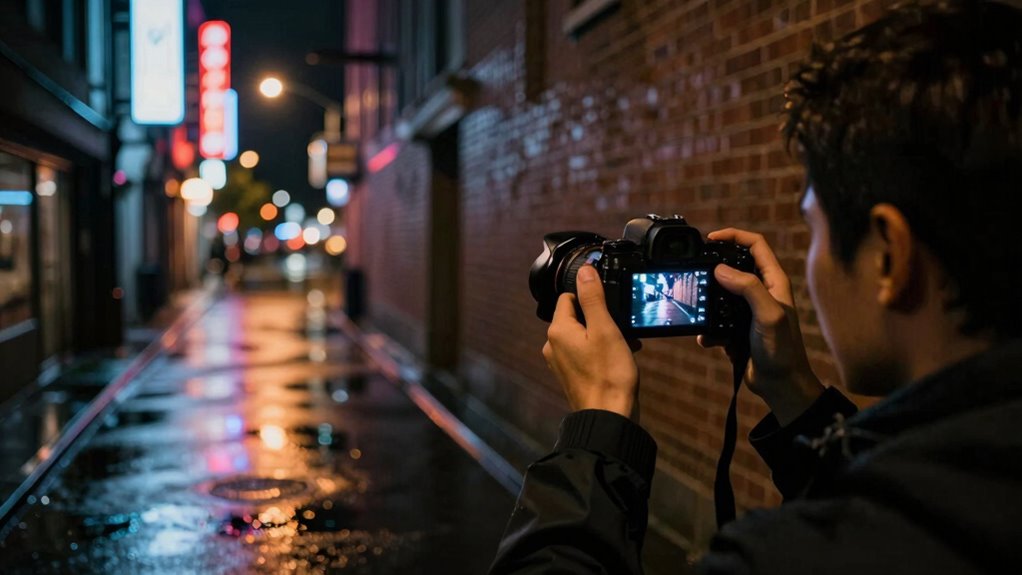
In low-light conditions, your camera’s ability to perform well can make or break your photos. It’s tempting to focus on marketing claims like megapixels or fancy features, but what truly matters is how your camera handles the darkness. Sensor sensitivity plays a crucial role here. When you’re shooting in dim environments, a sensor with high sensitivity—often indicated by a higher ISO setting—can capture more light, revealing details that would otherwise be lost. But be careful; increasing ISO can also introduce noise, which degrades your image quality. The key is finding a balance where the sensor sensitivity is high enough to brighten your shot without making it grainy.
Equally important is image stabilization. When you’re shooting in low light, slower shutter speeds are often necessary to gather enough light, but this increases the chance of motion blur if your camera isn’t steady. Good image stabilization, whether optical or digital, helps counteract hand shake, allowing you to keep the camera still during longer exposures. This means sharper photos without the need for a tripod, especially in situations where setting one isn’t practical. The combination of solid sensor sensitivity and effective image stabilization ensures you can capture clear, well-exposed images even in challenging lighting. Additionally, understanding sensor performance in real-world conditions can help you better evaluate a camera’s low-light capabilities.
It’s worth noting that marketing claims about camera capabilities can be misleading. Manufacturers might boast about impressive sensor sizes or high ISO ranges, but these figures don’t tell the whole story. How your camera’s sensor sensitivity performs in real-world conditions is what truly counts. Similarly, a camera with advanced image stabilization features will outperform one that relies solely on software correction, especially when you’re trying to shoot handheld in low-light environments. Understanding sensor sensitivity and its real-world performance is essential for making informed choices. Furthermore, exploring low-light optimization features can provide additional benefits for challenging shooting scenarios.
When choosing a camera or smartphone for low-light photography, look beyond the flashy specs. Test how it performs at higher ISO settings, and check whether its image stabilization keeps your shots sharp when you can’t use a tripod. Remember, the real value lies in how your device handles the darkness, not just what it claims to have on paper. A camera that balances high sensor sensitivity with reliable stabilization will help you produce crisp, detailed photos that stand out, regardless of the lighting conditions. That’s what makes low-light performance more important than marketing hype.
low light camera with high ISO performance
As an affiliate, we earn on qualifying purchases.
As an affiliate, we earn on qualifying purchases.
Frequently Asked Questions
How Is Low-Light Performance Measured in Cameras?
You measure low-light performance in cameras by checking how well they perform at high ISO sensitivities, which amplifies the sensor’s sensitivity to light. Additionally, sensor size plays a vital role; larger sensors typically gather more light, resulting in better low-light images. When testing, compare images taken at different ISO levels in dim conditions. The camera’s ability to produce clear, noise-free photos at high ISO indicates strong low-light performance.
What Factors Affect a Camera’s Low-Light Capabilities?
Think of your camera as a brave explorer venturing into dark caves. Its low-light capabilities depend on factors like sensor size—bicking larger sensors gather more light—and image stabilization, which keeps images sharp despite shaky hands. These elements work together, allowing your camera to capture clearer shots in dim environments. Without a good sensor and stabilization, your photos risk turning out blurry or grainy, like shadows lost in the darkness.
Can Software Improvements Enhance Low-Light Photography?
Yes, software improvements can enhance your low-light photography. By optimizing sensor sensitivity, software can help your camera better detect faint light, producing clearer images. Additionally, advanced image stabilization reduces blurriness caused by hand movement in low-light conditions. Together, these software enhancements allow you to capture brighter, sharper photos even in challenging lighting, making your camera more effective without needing hardware upgrades.
How Do Lens Quality and Aperture Impact Low-Light Photos?
Think of your camera as a lantern in the dark; a high-quality lens with a wide aperture acts like a sturdy handle, making your light more effective. Lens quality influences sharpness and light transmission, while a wider aperture allows more light to reach the sensor. Combined with sensor sensitivity and image stabilization, these factors help you capture brighter, clearer low-light photos, even in the dimmest settings.
Are There Specific Camera Features Designed for Low-Light Conditions?
Yes, camera features like advanced sensor technology and high ISO performance are designed for low-light conditions. Your camera’s sensor technology determines how well it captures light, while improved ISO performance allows you to increase sensitivity without introducing too much noise. Look for cameras with larger sensors and enhanced ISO capabilities, as these features help you shoot clearer, brighter photos in dim environments without relying solely on additional lighting.
image stabilization camera for low light
As an affiliate, we earn on qualifying purchases.
As an affiliate, we earn on qualifying purchases.
Conclusion
When it comes to choosing a camera, don’t get dazzled by shiny marketing claims. Instead, focus on how it performs in low light—because that’s where true quality shines through, like a lighthouse guiding you safely through darkness. Remember, a camera’s real strength isn’t just in what it promises, but how it captures the world when the lights dim. So, prioritize low-light performance—it’s the heartbeat of great photography in every shadow.
best smartphone for low light photography
As an affiliate, we earn on qualifying purchases.
As an affiliate, we earn on qualifying purchases.
camera with large sensor for night shots
As an affiliate, we earn on qualifying purchases.
As an affiliate, we earn on qualifying purchases.
Halloween Picks
halloween
As an affiliate, we earn on qualifying purchases.