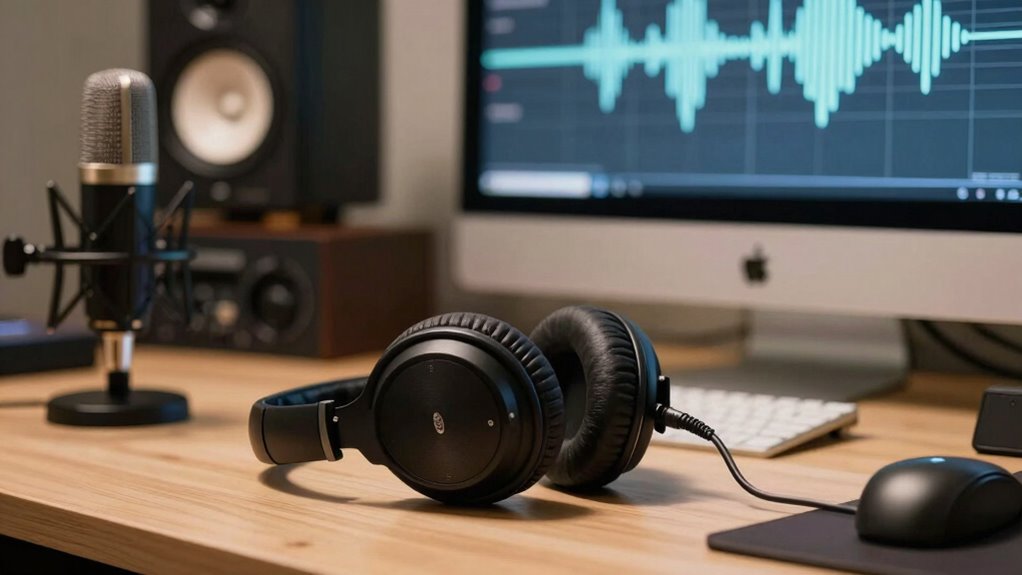

You might think fancy visuals are enough, but clear audio really keeps your audience engaged and helps your message stand out. High-quality sound prevents distractions caused by background noise or static, making your content more professional and authentic. When your audio is crisp and natural, viewers focus on your message rather than being distracted. Good microphone work and AI cleanup tools can do the hard work for you. Keep going to see why sound sometimes matters more than looks.
Key Takeaways
- Clear audio ensures message comprehension and audience engagement, often outweighing the appeal of high-quality visuals.
- AI-driven noise reduction preserves natural sound dynamics, enhancing professionalism without artificial effects.
- High-quality audio eliminates distractions, making content more immersive and easier to understand.
- Simplified workflows allow creators to focus on content, reducing time spent on manual sound editing.
- Superior sound quality boosts content perception and lasting impact, often more critical than visual enhancements.
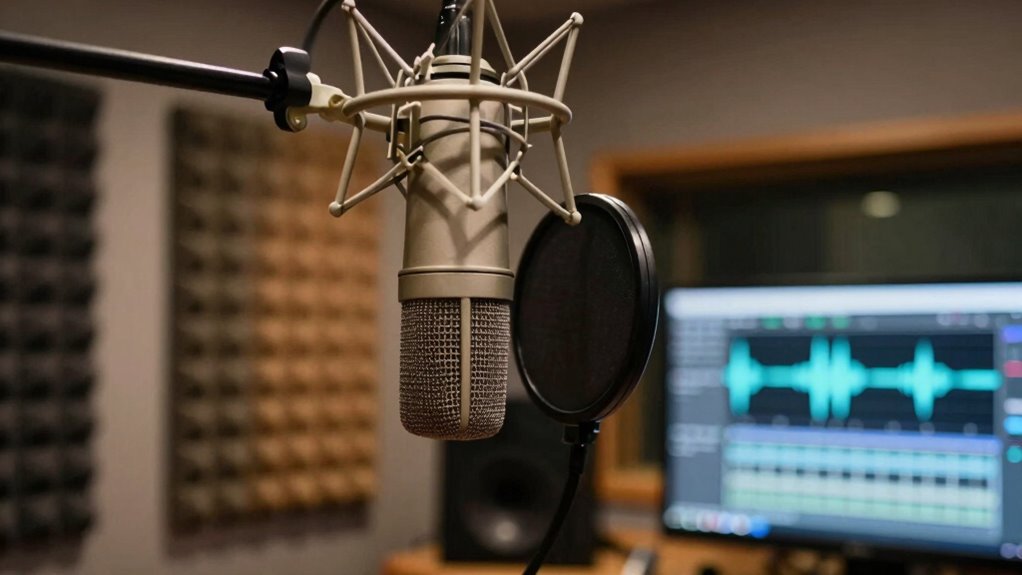
When recording audio, unwanted noise and background disturbances can ruin the clarity of your sound, but thanks to advancements in AI technology, cleaning up audio has never been easier. Whether you’re producing a podcast, recording a video, or capturing a live event, the importance of sound quality can’t be overstated. Clear audio ensures your message is understood and keeps your audience engaged. That’s where AI-driven audio cleanup tools come into play, offering powerful noise reduction capabilities that make your recordings sound professional without the need for complex editing or expensive equipment. These tools analyze your audio in real time, identifying unwanted sounds like hums, hisses, or background chatter, then intelligently suppressing or removing them. This process preserves the natural tone of your voice or instrument while markedly improving overall sound quality.
You might think that fancy visuals grab the most attention, but in many situations, high-quality audio actually matters more. Viewers and listeners tend to tolerate lower-quality visuals if the sound remains crisp and clear. Poor sound quality, on the other hand, can drive audiences away, no matter how stunning your visuals are. Noise reduction through AI ensures that your audio isn’t just passable but is polished and professional. It helps eliminate distractions, making your content more immersive and easier to understand. Whether you’re recording in a noisy environment or dealing with equipment that introduces static, AI-based noise reduction adapts to your specific conditions, providing a cleaner, more refined sound without requiring extensive manual editing. Additionally, integrating sound quality improvements into your workflow can elevate the overall production value of your projects, making them more competitive.
Moreover, AI audio cleanup tools are user-friendly and accessible. You don’t need to be a tech expert to improve your sound quality; many platforms offer simple interfaces that allow you to upload your recordings and get instant results. This efficiency saves you time and resources, letting you focus more on your content rather than troubleshooting audio issues. Advanced noise reduction algorithms also ensure that the natural dynamics of your voice or music are maintained, avoiding the muffled or artificial sound that traditional filters sometimes produce. Effective audio processing can significantly enhance the professionalism of your recordings, making your message more impactful. In the end, investing in AI audio cleanup means prioritizing sound quality—an element that directly influences how your message is perceived—rather than relying solely on flashy visuals that can overshadow poor audio. When your sound is clear and free of distractions, your audience stays engaged, and your content leaves a lasting impression.
AI noise reduction microphone
As an affiliate, we earn on qualifying purchases.
As an affiliate, we earn on qualifying purchases.
Frequently Asked Questions
How Does AI Distinguish Between Background Noise and Speech?
AI distinguishes between background noise and speech through noise suppression and speech enhancement techniques. It analyzes audio patterns, identifying speech frequencies and filtering out non-speech sounds like static or hums. By focusing on the unique characteristics of human voice, AI can effectively suppress unwanted noise while amplifying speech clarity. This process guarantees you get crisp, clear audio, making communication smoother and more professional, especially in noisy environments.
Can AI Audio Cleanup Improve Audio for Live Recordings?
Yes, AI audio cleanup can greatly improve audio for live recordings. You might worry about losing authenticity, but noise reduction tools help clarify speech without compromising the moment’s realness. By removing background noise and enhancing audio quality, your recordings become clearer and more professional. This technology guarantees your live events sound polished, making your message more impactful and engaging for your audience.
What Are Common Limitations of AI Audio Cleanup Tools?
You should know that AI audio cleanup tools, despite their benefits, have limitations. They can sometimes struggle with complex noise suppression, leaving residual background sounds. Audio enhancement may also over-process, causing unnatural audio or loss of detail. Additionally, these tools often work best with clear recordings, so heavily distorted or low-quality audio can still be challenging. Understanding these limitations helps you set realistic expectations for your audio cleanup efforts.
Is AI Audio Cleanup Suitable for All Types of Audio Recordings?
Coincidences often reveal that AI audio cleanup isn’t suitable for all recordings. You might find it excels at enhancing speech clarity through noise reduction, but it struggles with complex audio like music or multi-layered soundscapes. The technology is best for improving audio quality where speech is dominant. If your recordings contain diverse sounds or intricate details, AI might not deliver perfect results, requiring manual adjustments or specialized tools.
How Does AI Handle Different Languages and Accents?
AI handles different languages and accents through multilingual recognition and advanced accent adaptation features. It analyzes speech patterns, phonetics, and vocabulary to accurately transcribe diverse languages and regional accents. You can expect the AI to improve its accuracy over time, learning from new data. This allows you to clean up audio recordings with various linguistic nuances, ensuring clarity regardless of language complexity or accent variations, making your audio more accessible and professional.
audio cleanup software for podcasts
As an affiliate, we earn on qualifying purchases.
As an affiliate, we earn on qualifying purchases.
Conclusion
Just as Mozart’s melodies rely on clarity to truly move us, your audio needs cleanup to resonate. In a world dazzled by visuals, don’t overlook the power of clean sound—it’s the harmony that elevates your message. Like the unseen hand guiding a master’s brush, AI audio cleanup shapes authenticity and impact. Remember, without clear sound, even the most enthralling visuals can fall silent, lost in the noise of the modern age.
professional sound editing tools
As an affiliate, we earn on qualifying purchases.
As an affiliate, we earn on qualifying purchases.
real-time audio noise suppressor
As an affiliate, we earn on qualifying purchases.
As an affiliate, we earn on qualifying purchases.