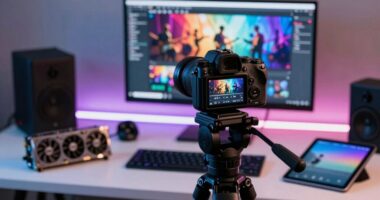
Virtual production combines tools like real-time rendering and LED walls to create immersive environments on set. As you film, digital backgrounds and effects are generated instantly, allowing for immediate adjustments and seamless integration with live action. This technology reduces post-production time and boosts creative control. By manipulating digital scenes in real time, you can achieve realistic lighting, shadows, and reflections. To explore how these innovative techniques can transform filmmaking, keep going to learn more about this exciting field.

Get movie nights delivered free with Prime
- Fast, free delivery on millions of items
- Prime Video, Amazon Music and more included
- Member-only deals all year
Key Takeaways
- Virtual production combines digital technology with filmmaking, enabling real-time creation of lifelike environments.
- Real-time rendering generates instant visual effects, allowing immediate scene adjustments during filming.
- LED walls display dynamic, high-resolution backgrounds that sync with camera movements, replacing green screens.
- These tools facilitate on-set visualization, reducing post-production time and enhancing creative collaboration.
- High-performance hardware and evolving software are essential for seamless virtual production experiences.
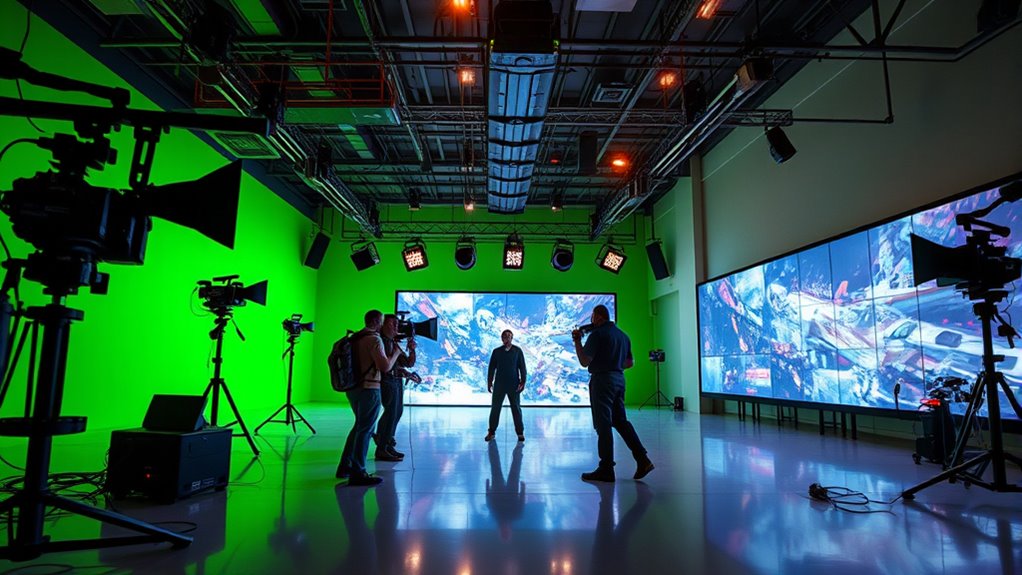
Have you ever wondered how filmmakers create stunning visual effects and immersive worlds without leaving the studio? The secret lies in virtual production, a technique that combines digital technology with traditional filmmaking to craft seamless, lifelike environments in real time. At the core of this process is real-time rendering, which allows visual effects to be generated instantly, giving directors and actors instant feedback. This immediacy accelerates decision-making and reduces post-production time, making the entire process more efficient. By leveraging powerful computers and sophisticated software, creators can manipulate digital scenes on the fly, adjusting lighting, textures, and backgrounds without waiting for hours or days of rendering.
Virtual production uses real-time rendering to create immersive environments instantly, speeding up filmmaking and enhancing creativity.
A key component of virtual production is LED wall integration, which has revolutionized how filmmakers bring digital environments to life. Instead of relying on green screens and compositing, LED walls act as dynamic backgrounds that display high-resolution images and videos. When used in conjunction with real-time rendering, these LED walls create a seamless blend between the virtual world and live action. As actors perform in front of these screens, the digital backgrounds update in real time, perfectly matching the camera’s perspective and movement. This integration enables filmmakers to craft more realistic and immersive scenes, where lighting and reflections naturally interact with the actors and objects on set.
Imagine standing in front of an LED wall that shows a bustling cityscape or alien planet, and knowing that what you see is generated live. You can see how lighting from the digital environment reacts with physical objects, creating shadows and reflections that make the scene believable. This setup also allows for complex camera movements and dynamic scene changes without the need for extensive post-production work. The combination of real-time rendering and LED wall integration means that directors can experiment with different visual ideas instantly, making virtual production a flexible and creative tool.
Furthermore, this technology fosters better collaboration among the crew. Instead of waiting for CGI to be completed, everyone on set can see the final composite in real time, facilitating immediate feedback and adjustments. This interactive process results in more cohesive storytelling and visually stunning scenes that feel authentic and immersive. As virtual production continues to evolve, tools like real-time rendering and LED wall integration are pushing the boundaries of what’s possible, empowering filmmakers to craft worlds that captivate audiences with unprecedented realism and immediacy. Additionally, the use of high-performance graphics hardware is essential to ensure smooth and realistic rendering in real time, enabling the virtual production process to function seamlessly.
As an affiliate, we earn on qualifying purchases.
Frequently Asked Questions
What Are the Main Benefits of Virtual Production Over Traditional Methods?
Virtual production offers you significant benefits over traditional methods, primarily through cost efficiency and creative flexibility. You can save money by reducing location shoots and post-production time, making projects more budget-friendly. Plus, it gives you the freedom to experiment with complex visuals and immersive environments in real-time, enhancing your creative control. This approach empowers you to innovate rapidly, bringing your ideas to life more efficiently than conventional techniques.
How Does Real-Time Rendering Impact Virtual Production Workflows?
Real-time rendering substantially impacts your virtual production workflow by enabling real-time visualization, which allows you to see changes instantly. This speeds up decision-making and reduces the need for lengthy post-production adjustments. It also promotes seamless workflow integration, ensuring that different departments can collaborate more effectively. With real-time visualization, you can identify issues early, improve accuracy, and deliver high-quality results faster, making your entire production process more efficient and responsive.
What Hardware Is Essential for a Virtual Production Setup?
You need essential hardware like high-quality camera equipment and advanced lighting setups to succeed in virtual production. A powerful computer with a robust GPU handles real-time rendering, while multiple cameras capture different angles. Proper lighting setups make certain your virtual environment looks realistic. Don’t forget a reliable tracking system to synchronize camera movements with digital backgrounds. This hardware combination guarantees seamless integration of live-action and virtual elements, making your production smooth and visually stunning.
How Do Virtual Production Techniques Influence Post-Production Processes?
Virtual production techniques are like a bridge that streamlines post-production. You’ll find that real-time compositing lets you see the final shot instantly, reducing the need for extensive editing later. Digital asset management keeps your assets organized and accessible, speeding up workflows. These methods enable you to make adjustments on the fly, saving time and enhancing creative flexibility, ultimately making post-production more efficient and less labor-intensive.
What Are Common Challenges Faced When Implementing Virtual Production?
When implementing virtual production, you often face challenges like budget constraints and technical complexity. Limited funds can restrict equipment and talent, making it harder to achieve high-quality results. The technical complexity requires you to manage sophisticated tools and workflows, which can be overwhelming. You need to plan carefully, invest in training, and collaborate with experts to overcome these hurdles and successfully bring your virtual production projects to life.
real-time rendering software for filmmaking
As an affiliate, we earn on qualifying purchases.
As an affiliate, we earn on qualifying purchases.
Conclusion
Now that you know the tools and techniques behind virtual production, you’re basically wielding a magic wand that transforms imagination into reality. With this technology, you can create worlds so immersive, they’ll make viewers forget they’re watching a film and think they’ve stepped into another universe. So go ahead, plunge in, experiment, and push the boundaries—because virtual production isn’t just the future, it’s the rocket ship propelling your creativity to infinity and beyond!
high-resolution LED backdrop for video production
As an affiliate, we earn on qualifying purchases.
As an affiliate, we earn on qualifying purchases.
virtual production equipment kit
As an affiliate, we earn on qualifying purchases.
As an affiliate, we earn on qualifying purchases.
Fall Picks
fall essentials
As an affiliate, we earn on qualifying purchases.