
Cloud storage and asset management help you organize, secure, and access your film media easily. With scalable options, you can handle large files like footage and sound, while collaboration becomes seamless through real-time sharing and editing. Robust security measures protect your valuable assets from cyber threats. Integration with editing software streamlines workflows, saving you time and reducing errors. Keep exploring to discover how these tools can transform your film production process.
Key Takeaways
- Facilitates scalable, secure storage of large media assets, ensuring easy access and sharing among team members.
- Integrates with editing software for seamless workflows, reducing errors and saving time.
- Implements encryption and access controls to protect sensitive footage and scripts from cyber threats.
- Supports real-time collaboration, version control, and remote access to enhance project efficiency.
- Safeguards intellectual property and streamlines media management throughout the production pipeline.
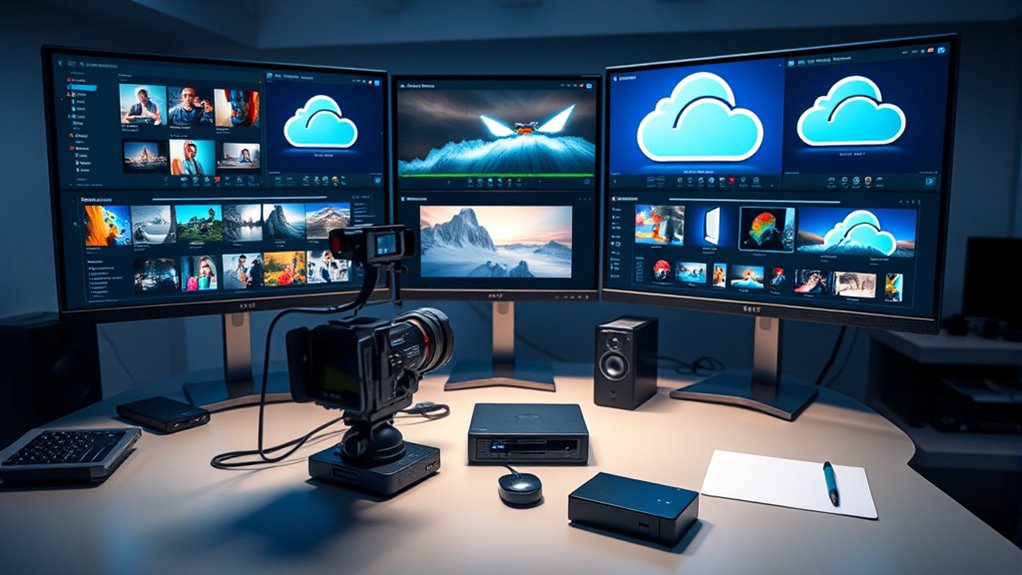
In today’s fast-paced film industry, managing large media assets efficiently can make or break a project’s success. When you’re handling vast amounts of footage, sound files, visual effects, and edits, cloud storage becomes an indispensable tool. Not only does it provide scalable space, but it also guarantees your team can access and share files seamlessly. But with this convenience comes the critical responsibility of maintaining data security. You need a cloud solution that encrypts your assets both during transfer and at rest, protecting your intellectual property from unauthorized access. Implementing multi-factor authentication and access controls ensures that only authorized team members can view or modify sensitive files, reducing the risk of leaks or tampering. This focus on data security is crucial, especially when dealing with confidential scripts, unreleased footage, or proprietary visual effects.
Secure cloud storage with encryption and multi-factor authentication is essential for protecting sensitive media assets in film production.
User collaboration is another major advantage of cloud storage. As a filmmaker or project manager, you want your entire team—editors, VFX artists, sound designers, and producers—to work together without constantly exchanging external drives or emailing large files. Cloud platforms enable real-time collaboration, allowing multiple users to review, comment, and make edits simultaneously. This accelerates decision-making and keeps everyone on the same page, reducing delays and miscommunications. You can assign specific permissions, so each team member accesses only what they need, streamlining workflows and protecting sensitive assets. Plus, version control features keep a record of every change made, so you can easily revert to previous edits if necessary. This transparency and flexibility boost productivity and help maintain a clear, organized project pipeline.
Moreover, cloud storage solutions designed for film projects often integrate with editing and post-production software, creating a seamless workflow. You can directly connect your editing tools to your cloud library, eliminating the need for cumbersome file transfers. This integration ensures that your team works with the most current assets, reducing errors and saving time. Additionally, the ability to access files remotely means your team can collaborate from anywhere—whether on set, in the studio, or during post-production—without sacrificing security or efficiency. With centralized storage, you also reduce the risk of lost or misplaced files, which can be costly and time-consuming to recover. Incorporating specialized cloud security features ensures your valuable media assets are protected against evolving cyber threats.
In essence, choosing the right cloud storage and asset management system for your film project helps you safeguard your valuable media while empowering your team to collaborate effectively. It streamlines workflows, enhances security, and provides the flexibility needed to meet tight deadlines and high standards. As the industry continues to evolve, leveraging these digital tools becomes not just advantageous but indispensable to delivering high-quality films on time and within budget.
Frequently Asked Questions
How Do I Choose the Best Cloud Provider for My Film Project?
To choose the best cloud provider for your film project, focus on cloud provider selection by considering their scalability options, ensuring they can grow with your project’s needs. Look for providers with reliable security, good customer support, and cost-effective plans. Test their performance with your workflow and prioritize those that offer seamless integration with your editing tools. Ultimately, pick a provider that balances scalability, security, and affordability to support your project’s success.
What Security Measures Protect My Assets in Cloud Storage?
Ironically, trusting your assets to cloud storage means relying on robust security. You’ll want encryption protocols that scramble your data, making it unreadable without the right keys. Access control is equally crucial, ensuring only authorized people can view or modify your assets. Combined, these measures create a strong barrier, protecting your valuable film assets from unauthorized access or breaches, so you can focus on creating without worry.
How Does Cost Scale With Project Size and Storage Needs?
As your project size and storage needs grow, costs increase accordingly, but a thorough cost analysis helps you manage expenses. You can optimize storage by choosing tiered options and deleting unused assets, which keeps costs in check. Regularly reviewing your storage usage guarantees you’re not overspending. By focusing on storage optimization, you can balance quality and budget, making sure your investment aligns with your project’s demands without unnecessary costs.
Can Cloud Storage Integrate With Existing Editing Software?
Think of cloud storage like a universal remote—your editing software can seamlessly connect through cloud integration, making collaboration effortless. Most modern editing software offers built-in compatibility, allowing you to access and save assets directly in the cloud. This guarantees editing compatibility, so you don’t have to worry about switching platforms or losing sync. With the right setup, your workflow remains smooth, efficient, and flexible, no matter where you work.
What Are the Best Practices for Backing up Cloud Assets?
To back up cloud assets effectively, you should implement redundant backups to prevent data loss. Use version control to track changes and easily revert to previous versions if needed. Regularly verify your backups to guarantee they’re complete and accessible. Automate backup schedules to maintain consistency, and store copies in different locations for added security. By following these best practices, you safeguard your assets against accidental deletion, corruption, or system failures.
Conclusion
By harnessing cloud storage and asset management, you keep your film projects organized and accessible, no matter where you are. Think of it as having a reliable safety net that catches every shot, edit, and detail—so you can focus on creating your masterpiece. With these tools, you stay connected and in control, like a captain steering a ship through calm and stormy seas alike. Embrace these solutions, and watch your vision come to life effortlessly.