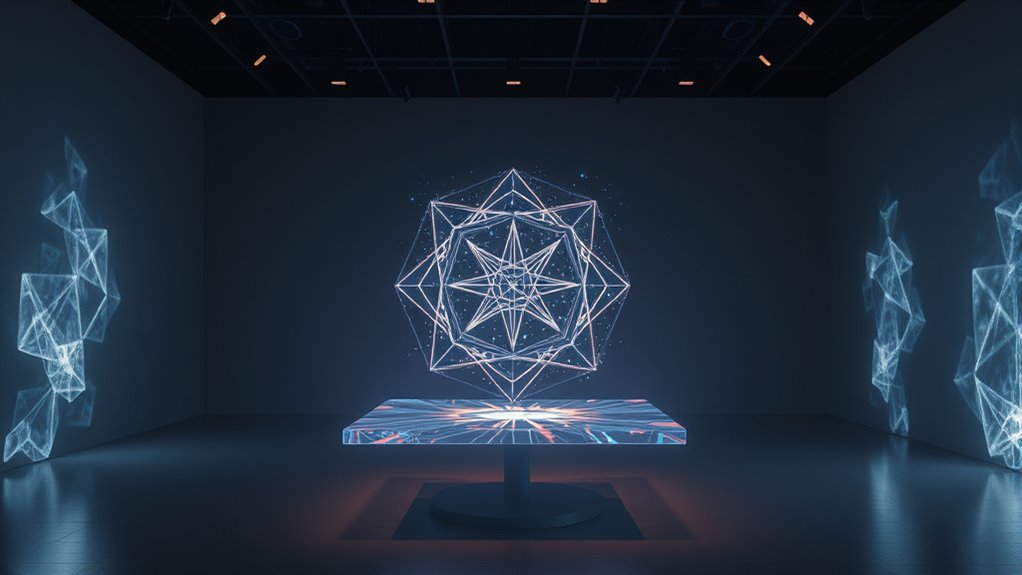

Holograms and volumetric filmmaking transform your experience by creating stunning 3D visuals that seem to float and interact in your physical space. These technologies blend digital content with the real world, offering immersive and interactive environments for entertainment, education, and communication. As advancements make these visuals more realistic and accessible, you’ll discover new ways to engage with content. Keep exploring to learn how these innovations are shaping your digital future.

Get movie nights delivered free — and shop member deals
- Fast, free delivery on millions of items
- Access to Prime Big Deal Days deals on October 6–7
- Prime Video, Amazon Music and more included
Key Takeaways
- Holograms create three-dimensional images that appear to float in real space, enabling immersive visual experiences.
- Volumetric filmmaking captures scenes in three dimensions for viewing from any angle, enhancing realism.
- Advances integrate holograms with augmented reality, blending digital content seamlessly into the physical environment.
- These technologies transform entertainment, education, and communication by enabling interactive and spatial content.
- Future developments aim to improve realism, hardware, and applications across various industries.
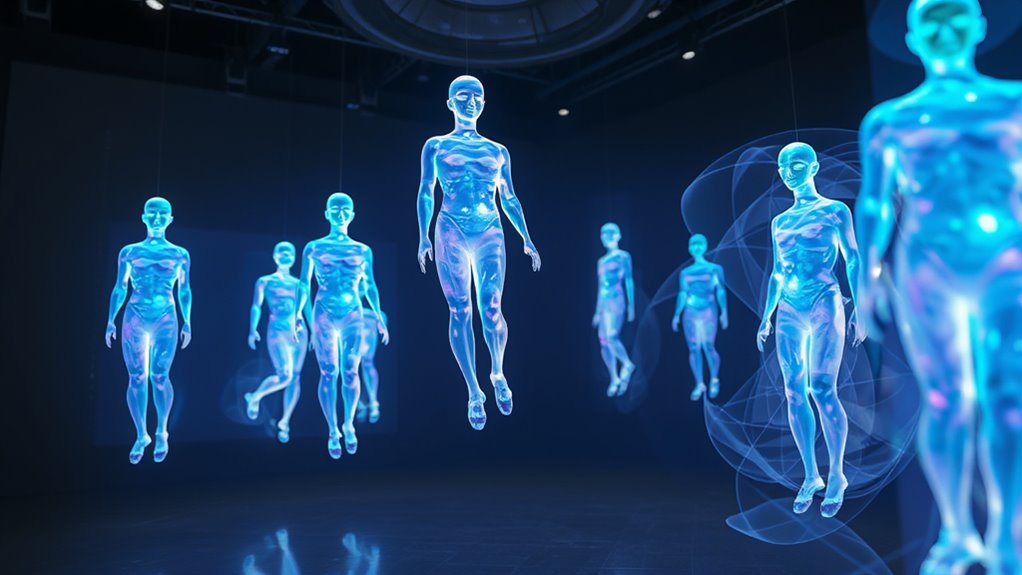
Holograms and volumetric filmmaking are revolutionizing how we experience visual content, making it possible to see and interact with three-dimensional images in real space. This technological leap is transforming entertainment, communication, education, and more by creating immersive experiences that feel almost tangible. Instead of viewing flat screens or static videos, you can now engage with holographic images that float in your environment, blending seamlessly with the real world through augmented reality. This integration allows for a level of interaction and depth that wasn’t achievable before, opening new possibilities for storytelling, training, and social connection.
With augmented reality, holograms become more than just visual spectacles—they serve as interactive tools. For example, you might see a 3D model of a product in your living room, manipulate it with hand gestures, or learn a complex concept by exploring a holographic diagram from every angle. These immersive experiences deepen engagement and understanding because they involve multiple senses and provide spatial context. Unlike traditional media, which confines you to a screen, volumetric filmmaking creates content that surrounds you, making you feel as though you’re part of the scene itself. This shift from passive observation to active participation is a key advantage, especially in education and training, where realistic spatial relationships improve retention and comprehension.
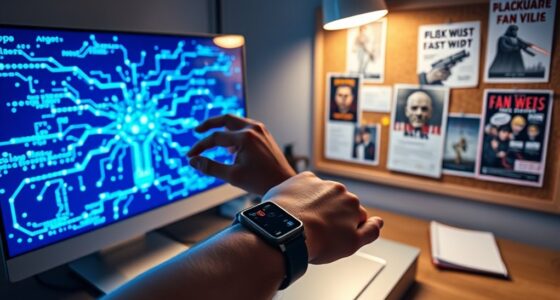
Holograms as interactive tools enhance understanding through immersive, 3D exploration beyond traditional screens.
As the technology advances, you’ll notice that holograms are becoming more detailed and lifelike, thanks to improvements in capture methods and display hardware. Volumetric filmmaking captures real-world scenes in three dimensions, enabling creators to craft environments and characters that can be viewed from any perspective. When combined with augmented reality devices—like AR glasses or headsets—these holograms can be projected directly into your environment, making the experience even more seamless. Whether it’s a virtual concert, a remote meeting with colleagues, or a museum exhibit, these immersive experiences redefine how you consume and interact with digital content.
Ultimately, holograms and volumetric filmmaking push the boundaries of visual storytelling, making it more interactive and engaging than ever before. They bridge the gap between the digital and physical worlds, allowing you to explore content in three dimensions and participate actively. As these technologies continue to evolve, expect increasingly sophisticated applications that will enhance entertainment, education, healthcare, and beyond. You’re stepping into an era where visual content isn’t just seen but experienced—immersively, interactively, and in real space.
As an affiliate, we earn on qualifying purchases.
Frequently Asked Questions
How Do Holograms Differ From Traditional 3D Displays?
Holograms differ from traditional 3D displays by providing true depth perception without needing glasses, thanks to advanced display technology that projects light to create realistic, three-dimensional images in space. Unlike flat screens, holograms appear to float and can be viewed from different angles, offering a more immersive experience. This makes holograms more dynamic and lifelike, enhancing how you interact with digital content in three dimensions.
What Are the Main Challenges in Volumetric Filmmaking?
You face main challenges in volumetric filmmaking, including technical limitations like capturing high-quality, real-time data and ensuring accurate depth information. Data processing is another hurdle, as it requires powerful systems to handle large volumes of captured data efficiently. These issues can slow production and reduce visual fidelity. Overcoming these challenges involves advancing sensor technology and improving data algorithms, making volumetric filmmaking more practical and accessible.
Can Holograms Be Used for Interactive Education?
Yes, holograms can be used for interactive education. Imagine exploring the human body in immersive learning, where augmented reality holograms allow you to see organs in 3D and interact with them. This technology enhances engagement and understanding, making complex concepts easier to grasp. Using holograms in classrooms transforms traditional lessons into dynamic, hands-on experiences, fostering deeper learning and curiosity through immersive and interactive methods.
What Hardware Is Required for Creating Volumetric Videos?
To create volumetric videos, you need depth sensors and multi-camera arrays. Depth sensors capture accurate spatial data, while multi-camera arrays record from multiple angles simultaneously. This combination allows you to generate detailed 3D models. With these tools, you can capture real-world scenes in volumetric form, enabling immersive experiences. Confirm your hardware is compatible and synchronized to produce high-quality volumetric content effectively.
How Scalable Is Hologram Technology for Commercial Use?
Hologram technology is like a rising tide, gradually lifting all ships. You can scale it for commercial use, but cost reduction plays a key role in overcoming adoption barriers. As technology advances and prices drop, more businesses will jump in, making holograms more accessible and widespread. While challenges remain, the potential for mass adoption grows, turning holograms into a staple for marketing, entertainment, and communication.
As an affiliate, we earn on qualifying purchases.
Conclusion
As you explore holograms and volumetric filmmaking, remember they’re more than just cutting-edge tech—they’re like Van Gogh’s Starry Night, transforming how we see and experience stories. With each innovation, you’re stepping into a future where reality blurs with imagination, opening doors to endless possibilities. Embrace this revolution, for like the dawn of cinema, it promises to redefine our connection to art and each other, illuminating new horizons just beyond the horizon.
As an affiliate, we earn on qualifying purchases.
As an affiliate, we earn on qualifying purchases.
Fall Picks
fall essentials
As an affiliate, we earn on qualifying purchases.