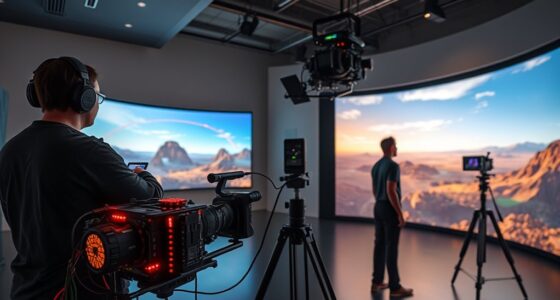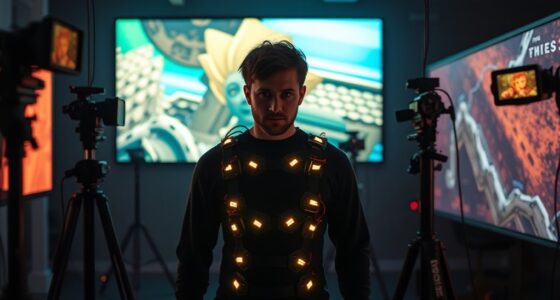

Understanding 8K and High Dynamic Range (HDR) for trailers helps you see films with incredible detail and vibrant colors. 8K resolution provides four times the pixel count of 4K, making images sharper and more lifelike. HDR enhances contrast and color, making scenes look richer and more immersive. Together, these technologies create stunning, vivid trailers that pull you into the story. Keep exploring to discover how these advancements reshape your movie experience.
Key Takeaways
- 8K resolution provides four times the pixel density of 4K, resulting in sharper, more detailed trailers.
- High Dynamic Range (HDR) enhances contrast and color vibrancy, making scenes more vivid and realistic.
- Combining 8K and HDR improves visual clarity, depth, and emotional impact of trailers before film release.
- Advanced production technology ensures precise rendering of high-resolution and HDR effects for cinematic quality.
- Enhanced trailer quality increases viewer engagement and anticipation through richer, more immersive visual experiences.

As technology advances, the quality of movie trailers has skyrocketed, giving viewers a glimpse of what to expect with stunning clarity and vibrant colors. One of the most noticeable improvements is in resolution differences. With 8K resolution, you’re getting four times the pixel count of 4K and sixteen times that of Full HD. This means every detail, from intricate costume textures to sweeping landscapes, appears sharper and more lifelike. When you watch a trailer in 8K, you notice the fine nuances that might be lost in lower resolutions. This level of clarity makes trailers more immersive, allowing you to see details that add depth and realism to the visuals.
Color grading techniques play a crucial role in elevating the visual experience of trailers. High Dynamic Range (HDR) enhances this effect by expanding the contrast between the brightest whites and the darkest blacks. When a trailer is mastered with HDR, you see a broader spectrum of colors, making scenes appear more vibrant and true to life. This process involves color grading techniques that carefully manipulate hues, saturation, and contrast to set the mood and tone of a scene. For example, a tense thriller might feature cooler tones and subdued colors, while an action-packed adventure bursts with rich reds and luminous yellows. These choices aren’t accidental—they’re designed to evoke specific emotions and draw you deeper into the story.
The combination of resolution differences and expert color grading techniques transforms trailers into visually stunning previews. When you watch in 8K with HDR, the experience is more detailed and dynamic. The increased pixel density ensures that even the tiniest elements are crisp, while vibrant color grading makes each scene pop with realism. This synergy creates a more compelling preview, giving you a clearer sense of the film’s style and mood before it hits theaters. You feel more connected to the visuals, which heightens anticipation and excitement. As production technology continues to evolve, the quality of trailers will only improve, immersing you further into the worlds filmmakers want to share. In essence, these advancements make trailers not just a tease but a true showcase of cinematic artistry, offering you a richer, more engaging preview of what’s to come.
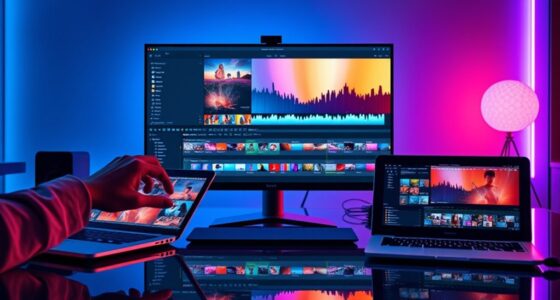
Additionally, professional equipment used in post-production ensures that these high-resolution and HDR effects are achieved with precision, elevating the overall quality of cinematic previews.
Frequently Asked Questions
How Does 8K Impact Streaming Bandwidth Requirements?
Streaming in 8K substantially increases your bandwidth requirements because of the large data size. Advanced compression techniques help reduce the overall data, but you still need a high-speed internet connection for smooth playback. Bandwidth optimization becomes essential, ensuring you get high-quality visuals without buffering. If your connection isn’t fast enough, even efficient compression can’t fully support 8K streaming, so upgrading your bandwidth is often necessary.
Can Current TVS Fully Utilize 8K and HDR Together?
Your current TV can’t fully harness 8K and HDR together if it doesn’t support both features simultaneously. To benefit from the high display resolution and color enhancement, look for a TV with native 8K resolution and HDR compatibility. Many modern models do, but older or budget TVs may only support one. Upgrading ensures you get the full experience of sharp images and vibrant colors.
Are 8K and HDR Content Widely Available Now?
Think of 8K and HDR content like rare gems hidden deep in a cavern. Currently, the supply is limited because production challenges make it tough to create widespread content. While some high-end streaming platforms and new releases offer glimpses of 8K and HDR, they’re not yet widely available. If you’re enthusiastic for these visuals, expect more accessible options as technology advances and producers overcome production hurdles.
What Are the Cost Differences Between 4K and 8K Displays?
The cost comparison between 4K and 8K displays shows that 8K options are considerably pricier, often costing twice as much or more. You’ll also face installation challenges with 8K screens due to their size, power needs, and setup complexity. While 4K displays are more affordable and easier to install, 8K offers higher resolution but requires a bigger budget and more careful planning for seamless integration into your space.
How Do 8K and HDR Affect Gaming Experiences?
You’ll notice that 8K and HDR markedly boost your gaming experience, with 8K offering four times the resolution of 4K, enhancing visual fidelity. HDR adds vibrant colors and better contrast, making your gameplay more immersive. Together, they create stunning visuals that pull you into the game world. While hardware requirements are higher, the result is a more realistic and engaging experience, making every detail pop on your screen.
Conclusion
Now that you see how 8K and High Dynamic Range turn trailers into vivid, lifelike portals, you’re stepping into a world where pixels paint every detail and colors dance with intensity. Think of your screen as a window to another universe, bursting with clarity and depth. Embrace these innovations, and watch your movie experience transform from a simple flicker into a vibrant, cinematic masterpiece that pulls you right into the story’s heart.