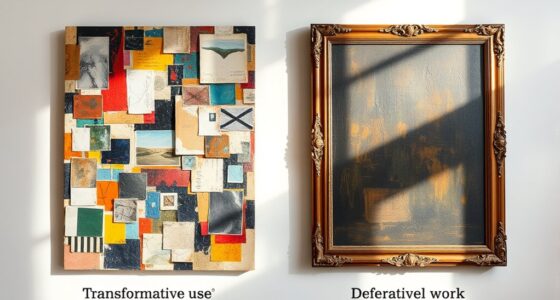
When adapting content, you must obtain rights or permissions to avoid legal issues like copyright infringement. This involves understanding licensing agreements, which specify how you can use the original work, or relying on Fair Use, though it can be unpredictable. Always keep detailed records of permissions and ensure your usage aligns with granted rights. Respect for original creators and proper rights management protect you legally and ethically; keep exploring to learn more about safeguarding your projects.
Key Takeaways
- Obtain explicit permission or licenses from rights holders before using copyrighted content in adaptations.
- Understand the scope, duration, and limitations specified in licensing agreements to ensure legal compliance.
- Keep detailed records of all permissions, licenses, and correspondence as proof of authorized use.
- Use Fair Use cautiously, considering purpose, amount used, and market impact, but prefer formal permissions when possible.
- Respect intellectual property rights to promote ethical content creation and avoid legal disputes.
When you adapt existing content, understanding rights and permissions is essential to avoid legal issues. If you use someone else’s work without proper authorization, you risk copyright infringement, which can lead to lawsuits, fines, or the removal of your content. To navigate this landscape effectively, you need to grasp key concepts like Fair Use and Licensing Agreements. Fair Use allows you to use copyrighted material without permission under specific circumstances, such as commentary, criticism, or educational purposes. However, Fair Use is complex and not a free pass; it depends on factors like the purpose of your use, the amount of content used, and the effect on the market value. Relying solely on Fair Use can be risky because courts interpret it differently, and what qualifies in one case might not in another. Consequently, it’s smarter to obtain explicit permissions whenever possible. Understanding the importance of proper attribution is also vital to respecting intellectual property rights.
Understanding rights and permissions is key to legally and ethically adapting existing content.
Licensing Agreements are formal contracts that grant you legal rights to use someone else’s content. These agreements specify exactly what you can do with the material, how long you can use it, and any limitations or fees involved. When you enter into a licensing agreement, you ensure that your use aligns with the rights holder’s terms, reducing the chance of legal disputes. Licensing can be obtained directly from the copyright owner, or through licensing agencies that manage rights for multiple creators. Always read and understand these agreements thoroughly before using content. They might seem restrictive, but they protect you from potential legal repercussions and give you clear boundaries for your adaptation.
It’s also important to keep detailed records of any permissions or licenses you secure. Save copies of emails, signed contracts, or license certificates. These can serve as proof that you had authorization if questions ever arise later. When dealing with licensing agreements, pay close attention to the scope of rights granted—whether it’s for a specific project, geographic region, or duration—and ensure your intended use fits within those boundaries. If you’re unsure, consult legal experts or intellectual property professionals to clarify the terms. Being aware of content licensing options can help you choose the most appropriate and secure way to use existing materials.
Always remember that even when you think your work falls under Fair Use, it’s better to seek permission or license the content directly. This approach minimizes risk and helps you build positive relationships with rights holders. Respect for original creators’ rights not only keeps you legally safe but also fosters a more ethical and sustainable creative environment. In the end, understanding and properly managing rights and permissions is your best safeguard against legal trouble when adapting existing content.
Frequently Asked Questions
Can I Adapt Copyrighted Content Without Permission Under Fair Use?
You can’t assume you can adapt copyrighted content without permission under fair use. Fair use might allow transformative use, where your adaptation adds new meaning or value, creating derivative works. However, whether your project qualifies depends on factors like purpose, amount used, and effect on the market. To stay safe, you should seek permission or consult legal advice, as fair use isn’t a guaranteed shield for copyright infringement.
What Types of Adaptations Require Explicit Rights Clearance?
Think of adaptations as crossing a bridge—some require a toll, others don’t. When you create derivative works or transformative adaptations, you must clear rights beforehand. These changes alter the original in significant ways, making it essential to obtain explicit permissions. Without proper clearance, your project risks legal trouble. So, if your work transforms or builds on existing content, guarantee you have the rights in hand to keep your creative journey smooth and trouble-free.
How Do Licensing Agreements Vary Between Different Media Formats?
You’ll notice licensing agreements differ between media formats because each has unique rights and distribution needs. For instance, licensing variation means you might need separate permissions for print, digital, or broadcast content. Media format differences influence the scope and fees of licenses, with digital platforms often requiring more flexible rights. Always review each agreement carefully to guarantee proper rights clearance, as what works for one format may not apply to another.
Are There Specific Licenses for Educational Adaptations?
You’ll find that educational licenses and adaptation agreements are tailored specifically for learning contexts. Unlike general licenses, these agreements often include permissions for creating accessible or modified content, ensuring legal use in classrooms and online courses. They emphasize flexibility for adaptations, making sure educators can modify materials without violating copyright. So, when adapting content for education, always check for specific licenses that support these needs, safeguarding your work and enhancing learning experiences.
What Is the Process for Obtaining Permissions for User-Generated Adaptations?
To obtain permissions for user-generated adaptations, you need to follow the adaptation procedures outlined by the copyright owner. Start by identifying the copyright management contact or license terms, then request permission through a formal process, such as submitting a licensing application or email. Clearly specify how you’ll use the adaptation, and wait for approval before proceeding. This guarantees your work respects copyright laws and adheres to licensing requirements.
Conclusion
Remember, your rights and permissions are the keys to unleashing the true potential of adapted content. Like a lighthouse guiding ships safely through stormy seas, understanding these rights illuminates your path, ensuring you respect original creators while inspiring new waves of creativity. Protecting these boundaries isn’t just about rules—it’s about safeguarding the future of innovation. Embrace this knowledge, and let it be the steady anchor that keeps your creative journey afloat and ethically grounded.