

Understanding deepfake regulations in film is essential to avoid legal and ethical pitfalls. Laws vary across jurisdictions and often require you to secure rights before using someone’s likeness. Misuse can lead to lawsuits for defamation, invasion of privacy, or misinformation. Industry standards and emerging legislation aim to set clear boundaries for responsible use. Being aware of these rules helps you stay compliant and ethically sound. Keep exploring to learn how to navigate these evolving regulations confidently.
Key Takeaways
- Legal use of deepfakes requires securing rights and clearances for likenesses to avoid infringement.
- Laws governing deepfake production vary across jurisdictions, affecting compliance strategies.
- Emerging regulations aim to prevent malicious uses like misinformation and unauthorized portrayals.
- Filmmakers must ensure transparency and disclose deepfake usage to maintain ethical standards.
- Industry best practices include staying informed on laws, obtaining proper permissions, and promoting responsible usage.
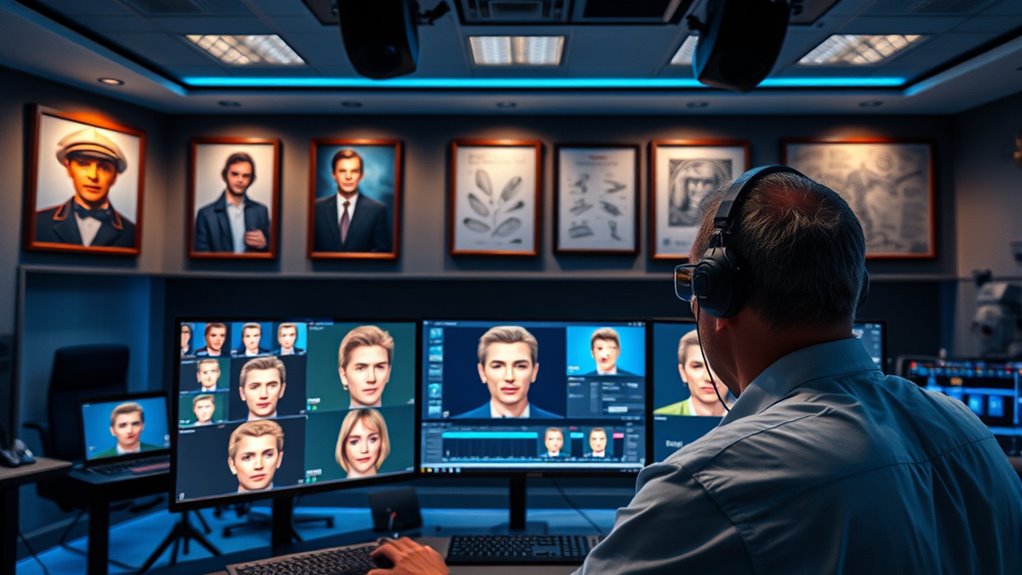
Have you ever wondered how filmmakers are steering the growing use of deepfake technology in movies? As this innovative tool becomes more accessible, the industry faces important questions about legal implications and ethical considerations. You need to understand that deepfakes can create incredibly realistic digital representations of actors, celebrities, or even historical figures, which raises significant concerns about consent, authenticity, and misuse. Studios and creators are now navigating a complex landscape where they must balance creative freedom with legal boundaries and moral responsibilities.
Legal implications are at the forefront of deepfake regulation. When you incorporate AI-generated images or videos of someone without their permission, you risk violating rights like publicity and intellectual property. Laws vary across jurisdictions, but generally, unauthorized use of a person’s likeness can lead to lawsuits for defamation, invasion of privacy, or fraud. For instance, if a deepfake is used to portray someone in a false light or in a compromising situation, the legal consequences could be severe. Filmmakers need to be aware of these potential pitfalls and ensure they have proper rights and clearances before deploying deepfake technology. Additionally, there’s a growing push for legislation that specifically addresses deepfakes, aiming to establish clear rules about their creation and distribution, especially to prevent malicious uses such as misinformation or revenge porn.
Unauthorized use of likenesses can lead to legal issues like defamation and invasion of privacy, making rights clearances essential.
On the ethical front, the considerations become even more complex. You must ask yourself whether it’s right to create a digital replica of someone’s face or voice, even with their consent. Deepfakes can be used to enhance storytelling, bringing back deceased actors or creating performances that would otherwise be impossible. However, they also pose risks of deception—leading viewers to believe in false narratives or manipulating public opinion. The ethical challenge lies in transparency; as a filmmaker, you should clearly disclose when a deepfake is used, so audiences aren’t misled. Moreover, you should consider the potential psychological impact on individuals whose likenesses are being used, especially if the content is controversial or sensitive.
As deepfake technology continues to evolve, the industry is called to develop standards that respect both legal boundaries and moral principles. You’re responsible for staying informed about current laws and ethical best practices to avoid crossing lines that could lead to legal trouble or damage your reputation. Balancing innovation with integrity isn’t easy, but it’s essential to ensure that deepfake usage in film remains a tool for storytelling rather than a source of harm or misinformation. Additionally, understanding the psychological and neurological aspects of dreams can help you recognize the importance of transparency and authenticity in digital media, as viewers respond strongly to perceived reality.
deepfake detection software
As an affiliate, we earn on qualifying purchases.
As an affiliate, we earn on qualifying purchases.
Frequently Asked Questions
How Are Deepfake Regulations Enforced Internationally?
You should know that deepfake regulations are enforced internationally through cross-border enforcement efforts and international treaties. Countries collaborate to create agreements that hold creators accountable across borders, making it harder to evade laws. These treaties establish common standards and cooperation frameworks, ensuring that when deepfake content violates regulations, enforcement agencies can work together efficiently. This global approach helps combat misuse and protect individuals from harmful deepfake content worldwide.
What Rights Do Actors Have Regarding Their Likenesses?
If you think actors have full control over their likenesses, think again. In the world of deepfakes, their rights hinge on actor consent and likeness rights, which are often overlooked or undervalued. You, as an actor, should demand clear agreements that specify how your image can be used. Without proper protections, your digital doppelgänger might be exploited, leaving you powerless—because in the digital age, your face might be everyone’s property but yours.
Are There Penalties for Unauthorized Deepfake Content?
Yes, there are penalties for unauthorized deepfake content. You could face legal action for infringing on intellectual property rights or violating privacy concerns, which are taken seriously by courts. Penalties may include hefty fines or even jail time, depending on the severity. To avoid this, always seek permission before creating or sharing deepfakes, respecting both the rights of individuals and the integrity of original content.
How Do Regulations Impact Creative Freedom in Filmmaking?
Think of regulations as guardrails on a winding road—they shape your creative freedom but keep you safe. They compel you to weigh ethical considerations and implement technological safeguards, which can feel restrictive but ultimately protect your work’s integrity. For example, strict rules prevent misuse of deepfakes, ensuring your creativity isn’t overshadowed by unethical content. While they may limit some ideas, these regulations foster responsible innovation and trust in filmmaking.
What Future Legal Challenges Might Deepfake Regulations Face?
You might face future legal challenges as technological innovation accelerates and public awareness grows. As deepfake technology becomes more sophisticated, regulations could struggle to keep pace, raising questions about privacy, consent, and intellectual property. Courts may grapple with defining legal boundaries, and lawmakers will need to adapt quickly. Staying informed and advocating for clear policies will be vital to address these evolving issues and protect both creators and audiences.
video editing software with deepfake capabilities
As an affiliate, we earn on qualifying purchases.
As an affiliate, we earn on qualifying purchases.
Conclusion
As you navigate the world of deepfake regulations in film, remember that these rules are like shields guarding the future of creativity. They’re not just tiny fences—they’re gigantic walls protecting your imagination from being swallowed by malicious fakes. With strict laws in place, you’re empowered to create films that shine brighter than a thousand suns, ensuring your vision remains pure and unstoppable. Embrace these regulations, and let your storytelling soar beyond the stars!
rights management for digital media
As an affiliate, we earn on qualifying purchases.
As an affiliate, we earn on qualifying purchases.
AI-generated actor face replacement tools
As an affiliate, we earn on qualifying purchases.
As an affiliate, we earn on qualifying purchases.