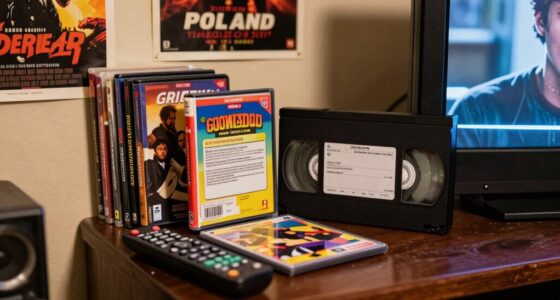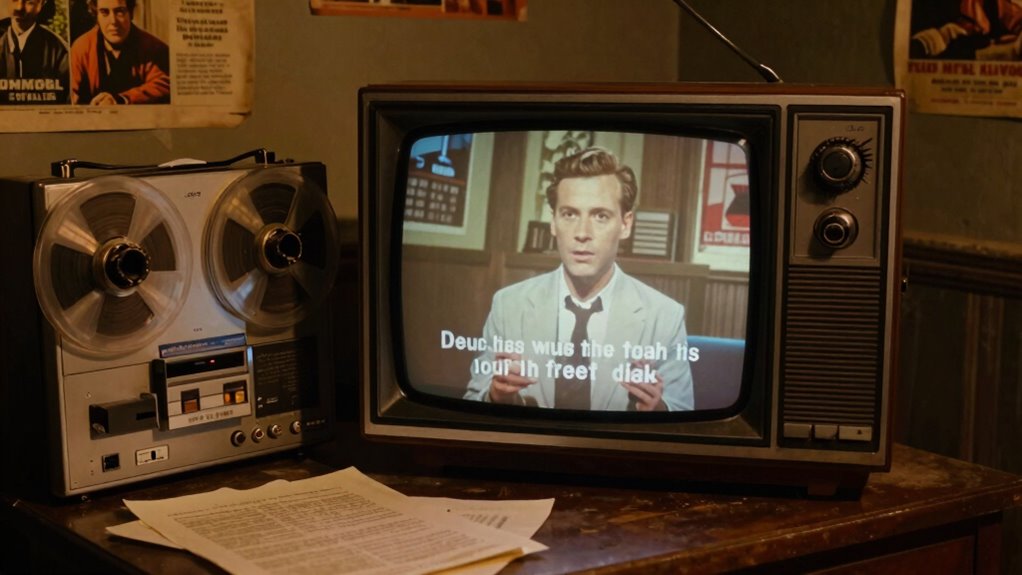

Trailer narration has evolved from simple voiceovers by recognizable voices, guiding viewers through key story moments and building anticipation. During the Golden Era, it became more energetic, matching the film’s tone and creating suspense. Over time, imagery, music, and sound design took over, reducing reliance on narration. Today, narration is more subtle, integrated into visual storytelling and marketing strategies. To understand this shift better, keep exploring how promotional techniques have changed over the years.
Key Takeaways
- Trailer narration originated as a way to introduce story, mood, and interest, often using recognizable voice actors.
- During the Golden Era, narration became more dramatic and genre-specific to build suspense and influence perceptions.
- The shift toward visual storytelling and minimalism reduced reliance on narration, emphasizing imagery and sound.
- Modern trailers incorporate subtle narration within multimedia campaigns, balancing voice overs with visuals and sound design.
- Overall, narration faded as a primary tool, evolving into a strategic, nuanced element aligned with broader advertising trends.
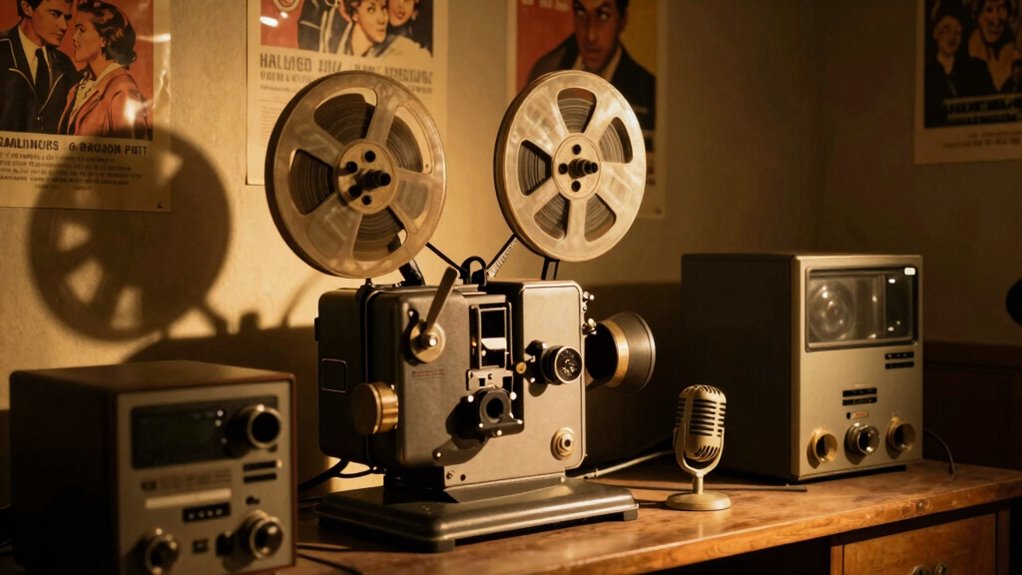
Have you ever wondered how trailer narration developed into the compelling storytelling instrument it is today? It’s a captivating journey that reflects shifts in both promotional tactics and the craft of voice over progression. Early trailers depended heavily on narration to introduce the storyline, establish the mood, and capture your interest. Voice overs were simple, often delivered by recognizable actors or voice specialists who knew how to evoke emotion and anticipation. These narrations functioned as the foundation of trailer storytelling, guiding viewers through the story’s key moments and highlighting important scenes. Over time, marketers realized that narration could be more than just a summary; it could be a tool to generate excitement and emotional involvement.
Trailer narration evolved from simple summaries to powerful tools for building excitement and emotional engagement.
During the golden era of trailers, voice over progression centered on creating a compelling voice that matched the film’s tone. Trailers became more energetic, with narration layering in dramatic pauses and carefully selected words to build suspense. This approach was a direct response to marketing tactics aimed at capturing audiences’ attention swiftly. Narration became an art form, with voice actors employing different tones, pitches, and pacing to align with the genre and ambiance of the film. As a result, trailer narration became highly influential in shaping audience perceptions even before the movie’s debut. It was a direct extension of promotional strategies, designed to maximize appeal and anticipation.
However, as the industry advanced, trailer narration began to diminish in prominence. The focus shifted toward visual storytelling, relying more on imagery, music, and sound design to convey the film’s essence. The rise of minimalist trailers, which often exclude narration entirely, signaled a shift in marketing tactics. Studios found that viewers responded well to quick cuts, striking visuals, and suggestive music—elements that evoke emotion without dialogue. The voice over progression, in this context, took a backseat as trailers became more about establishing mood and atmosphere through visuals rather than explicit narration. This change also reflected a broader trend in advertising, emphasizing show, don’t tell. Additionally, the evolution of visual storytelling techniques has allowed filmmakers and marketers to craft more immersive and evocative promotional content, reducing reliance on narration. Furthermore, the shift toward audience engagement strategies has encouraged a more subtle integration of narration within multimedia campaigns, blending it seamlessly with visual elements. The development of digital media has also played a role in diversifying promotional methods, making narration less central.
Ultimately, the decline of traditional trailer narration doesn’t mean it’s vanished altogether. Instead, it’s transformed into a more subtle and strategic instrument within a wider multimedia approach. Today, voice overs still appear, but more often as part of a nuanced marketing strategy that balances narration with impactful visuals and sound. The history of trailer narration is a story of adaptation—shifting from straightforward storytelling to a refined, emotional, and visual-driven promotional art form. You can see how these changes mirror broader shifts in advertising and audience engagement, shaping the way studios promote films today.
As an affiliate, we earn on qualifying purchases.
Frequently Asked Questions
When Did Trailer Narration First Become Popular?
You might be surprised to learn that trailer narration first became popular during the silent trailer era, around the 1910s and 1920s. Back then, narration styles evolved as voiceovers replaced silent visuals, helping audiences understand the plot. As technology advanced, narration became more dynamic and dramatic, but over time, it faded in popularity, giving way to more visual storytelling techniques. Today, narration is used selectively, often to add excitement or clarity.
Who Were the Most Famous Trailer Narrators?
Think of trailer narrators as the voiceover evolution’s guiding stars. You’d recognize names like Don LaFontaine, whose deep, compelling narration style set the gold standard, and Hal Douglas, known for his authoritative tone. These masters shaped narration styles, making them more engaging and memorable. Their voices became the heartbeat of trailers, transforming simple summaries into cinematic invitations that still influence voiceovers today.
How Did Advancements in Technology Impact Trailer Narration?
Advancements in technology transformed trailer narration by enhancing audio branding and voiceover techniques. You notice clearer, more dynamic sound quality thanks to digital recording, allowing narrators to craft more compelling and immersive experiences. These innovations also enable the use of varied vocal effects and editing, making trailers more engaging. As a result, narration became more polished and integrated, but this shift eventually led to a decline in traditional, narratorial storytelling styles.
Are There Modern Examples of Trailer Narration?
Imagine a vintage radio host, voice-over nostalgia echoing in modern trailers, even if less common. Today, some filmmakers still use trailer narration, blending old-school charm with modern trailer techniques. These voice-overs add a storytelling layer, guiding viewers through the visuals. While less frequent, examples like certain superhero or horror trailers feature narration, offering a nostalgic touch and emphasizing key themes, keeping the art alive in new ways.
Why Did Studios Stop Using Narration in Trailers?
Studios stopped using narration in trailers mainly because sound design and visual storytelling became more effective marketing strategies. Narration often distracted viewers from the visuals and music, reducing emotional impact. By focusing on compelling imagery, music, and sound effects, trailers now engage audiences directly, creating a more immersive experience. This shift aims to generate buzz and anticipation without the need for a voice-over, making trailers more dynamic and memorable.
voice acting microphone for narration
As an affiliate, we earn on qualifying purchases.
As an affiliate, we earn on qualifying purchases.
Conclusion
Some believe that trailer narration faded because studios thought it distracted viewers from the movie’s visuals. But maybe it was also a clever ploy—an era when voiceovers added a personal touch, making trailers feel like stories shared just for you. Could it be that the absence of narration now actually makes trailers more mysterious and enticing, encouraging viewers to seek out the film themselves? Perhaps, in stripping away narration, we’ve gained a new kind of curiosity.
sound editing software for trailers
As an affiliate, we earn on qualifying purchases.
As an affiliate, we earn on qualifying purchases.
professional voiceover equipment
As an affiliate, we earn on qualifying purchases.
As an affiliate, we earn on qualifying purchases.