
Fan trailers started on VHS, where you could cut, splice, and share tapes with friends, nurturing a strong community. As technology advanced, digital editing tools made creating polished trailers easier and more creative, with online platforms fostering sharing and feedback. Now, with VR and interactive tech, you can explore immersive, dynamic trailers that respond to your input. To see how this evolution continues shaping fan art, keep exploring these exciting developments.

Get movie nights delivered free — and shop member deals
- Fast, free delivery on millions of items
- Access to Prime Big Deal Days deals on October 6–7
- Prime Video, Amazon Music and more included
Key Takeaways
- Fan trailers originated on VHS, utilizing basic editing techniques like cuts, overlays, and splicing to create emotional and nostalgic content.
- Community sharing and early digital tools expanded fan collaboration, enabling higher-quality, more creative trailers.
- Digital editing software introduced advanced effects, sound design, and professional polish, broadening creative possibilities.
- Emerging technologies like VR and AR are transforming trailers into immersive, interactive experiences that deepen fan engagement.
- Social media platforms facilitate instant global sharing, collaboration, and the evolution of fan content from VHS to cutting-edge VR experiences.
As an affiliate, we earn on qualifying purchases.
The Humble Beginnings: Fan Trailers on VHS
In the early days of fan-made content, VHS tapes became the primary medium for creating and sharing fan trailers. You quickly realize how these tapes fostered a tight-knit fan community, united by VHS nostalgia. Fans would cut and splice footage, often borrowing scenes from movies or TV shows, to craft their own trailers. These homemade projects weren’t polished, but they reflected genuine passion and creativity. Sharing was simple: friends or local fan groups would exchange tapes, sparking conversations and camaraderie. The tactile nature of VHS made the experience personal—you could hold your work in your hands. This era marked the humble beginnings of fan trailers, laying a foundation built on enthusiasm, resourcefulness, and a shared love for fandom culture. Additionally, the DIY nature of VHS editing encouraged innovation and experimentation, setting the stage for future technological advancements in trailer creation. The limitations of VHS also pushed creators to develop creative editing techniques and think outside the box.
digital video editing software for fans
As an affiliate, we earn on qualifying purchases.
As an affiliate, we earn on qualifying purchases.
Early Techniques and Community Sharing

You probably remember how fans used VHS tapes to compile clips and share their favorite moments. Creative editing techniques like splicing and timing set the foundation for more dynamic trailers. Enthusiasts also exchanged their work through community platforms, fostering collaboration and inspiration. Additionally, the rise of online platforms has helped fans develop more engaging and impactful content over time. The early days also saw fans experimenting with video editing techniques, which further advanced the quality and creativity of fan trailers. As technology evolved, the incorporation of privacy and cookie management practices became essential for maintaining user trust and improving the browsing experience.
VHS Tape Compilation
Before digital editing tools became widespread, fans relied on VHS tape compilation as a primary method to create and share fan trailers. You would carefully select scenes from various movies, often seeking that nostalgic nostalgia that evoked a sense of familiarity and excitement. Using a VCR, you’d cut and splice tapes, creating a seamless flow of vintage visuals that captured your favorite moments. Sharing involved trading tapes with friends or submitting copies to fan clubs, fostering a tight-knit community. This hands-on approach gave you a tangible, personal connection to your creations. The process demanded patience and creativity, as every clip had to be manually edited and timed. VHS compilation became a cherished tradition, celebrating shared passion through tangible, vintage media that still sparks nostalgia today. Additionally, the community aspect often involved celebrity relationships, where fans bonded over their favorite stars and shared their own edits, further enriching the hobby. This era also emphasized the importance of community sharing, which strengthened the sense of belonging among enthusiasts.
Creative Editing Methods
Creative editing methods in the early days of fan trailers often involved inventive techniques that pushed the limits of available technology. You relied on basic editing tools to craft compelling narratives, often using film analysis to identify key scenes and themes. By carefully selecting and reordering footage, you enhanced audience engagement, creating trailers that resonated emotionally. These early techniques included simple cuts, overlays, and timing adjustments that emphasized suspense or humor. Sharing your work within fan communities fostered collaboration and feedback, inspiring others to improve their editing skills. Without advanced software, your creativity was essential to convey story and tone effectively. Additionally, understanding the importance of color accuracy and visual coherence helped improve the overall quality of your trailers. For example, using community sharing to exchange ideas and techniques further fueled your innovation and motivation. This experimentation laid the foundation for more sophisticated editing practices later, demonstrating how community sharing fueled innovation and deepened your connection with fellow fans. Furthermore, experimenting with visual effects allowed for more dynamic storytelling despite technological limitations.
Community Exchange Platforms
Community exchange platforms played a pivotal role in shaping early fan trailer practices by enabling fans to share their work, exchange ideas, and seek feedback. These platforms fostered a vibrant fan community where content sharing was central. You could upload your trailers, comment on others’ creations, and learn new editing techniques through shared tips and tutorials. This collaborative environment encouraged experimentation and innovation, helping fans develop their skills outside formal channels. By connecting with like-minded enthusiasts, you gained valuable insights and inspiration, fueling the growth of fan trailers. These early platforms laid the groundwork for more sophisticated sharing methods, emphasizing community-driven content creation. Additionally, the emphasis on user-generated content fostered a sense of ownership and pride within the community, further motivating fans to refine their craft. The sense of community engagement helped sustain enthusiasm and support among members, driving continuous improvement and creativity. Overall, they transformed individual efforts into collective creativity, making fan trailers a shared cultural phenomenon. Moreover, the rise of digital media tools allowed for higher quality productions and more complex editing techniques, broadening the scope of fan creativity. This evolution was further supported by the development of online forums and social media groups, which expanded opportunities for collaboration and exposure.
As an affiliate, we earn on qualifying purchases.
The Rise of Digital Editing Tools

Digital editing tools have made creating fan trailers more accessible than ever, allowing more enthusiasts to get involved. With user-friendly interfaces and affordable options, your creative freedom expands considerably. This shift empowers fans to produce higher-quality content and experiment with new storytelling techniques. Additionally, AI content clustering can help organize and optimize your trailer concepts for better audience engagement. Furthermore, the availability of affordable editing software enables a broader range of creators to develop professional-looking trailers without extensive budgets. As a result, the support hours provided by various platforms ensure that creators can receive assistance when needed, further democratizing content creation.
Accessibility of Editing Software
As editing software has become more accessible, anyone with a computer or smartphone can create professional-looking fan trailers. This democratization drives filmmaking innovations and boosts audience participation. Now, you don’t need expensive equipment or advanced skills to craft compelling content. User-friendly tools and tutorials make it easy to learn editing basics quickly. This shift encourages more fans to contribute creatively, transforming viewers into active participants. Here’s a quick look at some popular editing options: Yoga techniques, Software Type Features Free Tools Easy to learn, great for beginners Paid Software Advanced editing, professional results Mobile Apps On-the-go editing, quick sharing Online Platforms Collaborative projects, community feedback. The widespread accessibility of editing software also contributes to the creative evolution of fan trailers, making it easier for enthusiasts to experiment and develop their unique styles. This increased accessibility is also rooted in the digital age, which has reduced barriers to entry for aspiring creators across diverse communities.
Creative Freedom Expansion
The rise of advanced editing tools has dramatically expanded your creative freedom when making fan trailers. With powerful software, you can explore a wider range of fan trailer genres, from dramatic reimaginations to comedic mashups, without technical barriers. These tools let you experiment with effects, pacing, and sound design, giving your trailer a polished, professional look. As your skills grow, you can push creative boundaries while respecting fan editing ethics—ensuring your work honors original content and community guidelines. This increased flexibility encourages innovation, helping your fan trailers stand out and resonate with audiences. Ultimately, digital editing tools put more control in your hands, allowing you to craft compelling stories that reflect your unique vision.
As an affiliate, we earn on qualifying purchases.
Enhancing Creativity With Software Innovations

Software innovations have revolutionized the way fans create and enhance their trailers, offering tools that boost creativity and streamline workflows. With advanced editing software, you can easily experiment with effects, sequences and soundtracks, making your vision come alive. These tools also foster analog nostalgia by mimicking vintage VHS effects or film grain, adding a retro touch to your projects. Additionally, software enables creative collaboration, allowing you to work with others regardless of location. You can share timelines, leave feedback, and co-edit in real-time, which accelerates the creative process. This synergy sparks new ideas and elevates fan trailers from simple edits to cinematic experiences. Overall, these technological advances empower you to push boundaries and craft more compelling, polished fan content than ever before.
The Emergence of Online Platforms for Fan Content

Online platforms have transformed how fans share and discover trailers, making it easier than ever to showcase your work to a global audience. These platforms foster vibrant fan community dynamics, allowing creators to connect, collaborate, and receive immediate feedback. They democratize content creation, giving everyone a chance to contribute regardless of skill level. However, this accessibility also brings copyright controversies, as fan trailers often blur the lines between homage and infringement. Despite legal tensions, online platforms continue to thrive, serving as hubs for passionate fans to express their creativity. You can now reach viewers worldwide, gain recognition, and participate in ongoing conversations around popular franchises—all within a digital space that’s constantly evolving. This shift has fundamentally reshaped fan engagement and the way fan content circulates.
Transitioning From 2D to 3D and CGI Effects

As fan trailers evolve, creators increasingly shift from basic 2D footage to sophisticated 3D models and CGI effects, elevating the visual impact of their work. You now see more seamless CGI integration, making scenes look more realistic and immersive. 3D modeling allows you to craft detailed characters and environments that weren’t possible before, giving your trailers a professional edge. This progression enhances storytelling by adding depth and dynamic movement, enthralling viewers instantly.
- Use of advanced CGI effects to create explosive action scenes
- Incorporation of realistic lighting and textures through CGI integration
- Enhanced character animation with 3D modeling techniques
- Greater freedom to visualize scenes that were once impossible with 2D alone
The Advent of Virtual Reality in Fan Engagement
Virtual reality has revolutionized how fans engage with their favorite franchises, offering immersive experiences that go far beyond traditional trailers. You can now explore holographic displays that bring characters and scenes to life in your own space, creating a sense of presence like never before. Augmented reality enhances this engagement by overlaying digital elements onto real-world environments, allowing you to interact with your favorite universes in real time. These technologies make fan experiences more personalized, interactive, and memorable. Instead of passively watching, you become part of the story, stepping into worlds that feel startlingly real. Virtual reality, holographic displays, and augmented reality are transforming fan engagement from simple viewing to active participation, shaping how fans connect with franchises in exciting, innovative ways.
Producing Interactive and Immersive Fan Trailers
To create truly engaging fan trailers, you can incorporate interactive design techniques that let viewers shape their experience. Utilizing VR environments allows fans to explore scenes and characters in a more immersive way. This approach transforms passive viewing into an active, memorable event.
Interactive Design Techniques
Interactive design techniques play a crucial role in creating fan trailers that captivate and engage viewers on a deeper level. By integrating augmented storytelling and digital storytelling, you can craft experiences that feel personalized and immersive. These techniques invite viewers to influence the narrative, making them active participants rather than passive observers. Using interactive elements like clickable hotspots, branching storylines, or embedded polls enhances engagement and deepens emotional investment. This approach pushes the boundaries of traditional trailers, transforming them into dynamic experiences. You can leverage these methods to build anticipation, foster community involvement, and create memorable moments. As technology advances, your ability to produce innovative, interactive fan trailers will set your work apart and redefine how fans connect with their favorite stories.
Utilizing VR Environments
By harnessing VR environments, you can craft fan trailers that fully immerse viewers in the story world, transforming passive watching into active exploration. Virtual environments enable you to build immersive storytelling experiences where fans can navigate scenes, interact with characters, and uncover plot details firsthand. This creates a dynamic connection, making the trailer a memorable adventure rather than just a preview.
| Feature | Benefit | Example |
|---|---|---|
| 3D Environments | Enhances realism | Explore a cityscape scene |
| Interactive Elements | Engages viewers actively | Pick up objects, make choices |
| Spatial Audio | Boosts immersion | Hear footsteps, dialogue |
| Custom Avatars | Personalizes experience | Use your own avatar |
| Multi-User Access | Facilitates shared exploration | Watch with friends |
The Impact of Social Media on Fandom Creativity

Social media has revolutionized how fans express their creativity, making it easier than ever to share and collaborate on fan trailers. You can now reach a global audience instantly, gaining feedback and inspiration from others. This connectivity fuels new ideas, like designing unique merchandise or creating content for fan conventions. Fans use platforms like TikTok, Twitter, and Reddit to showcase their work and build communities. Engagement often leads to collaborations that push creative boundaries. You might even see your fan trailer inspire merchandise design or become a highlight at a fan convention. Social media also helps spread trends quickly, encouraging more ambitious projects. Whether it’s crafting a viral trailer or participating in fan-driven events, your creativity thrives with the power of online platforms.
Future Trends: Merging Technology and Fan Art
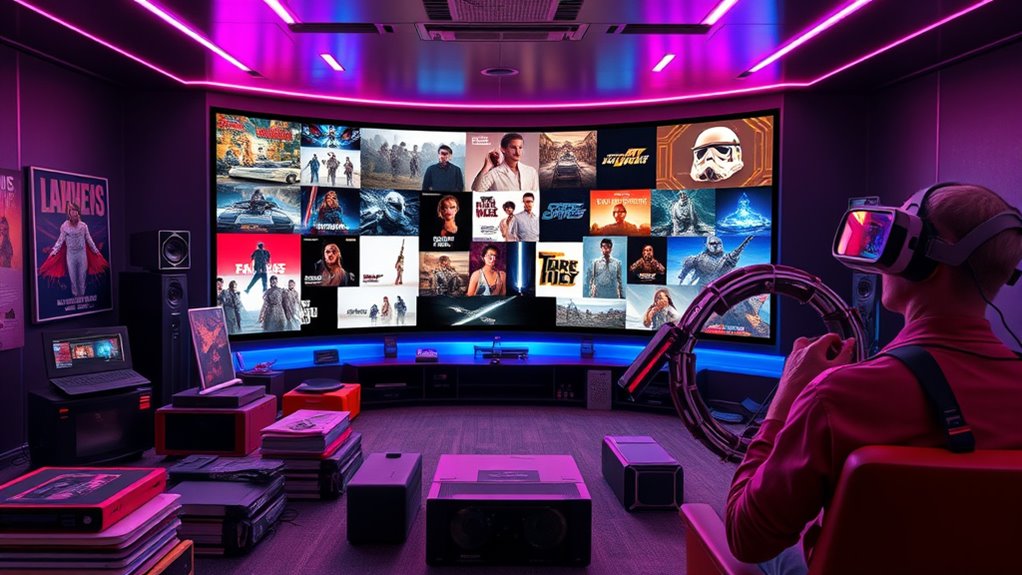
As technology continues to advance, the line between fan art and professional creation becomes increasingly blurred, opening new possibilities for innovative expression. You’ll see fan culture embrace immersive tools like augmented reality and AI-generated visuals, making fan trailers more dynamic and interactive. These advancements allow you to craft more realistic and compelling stories, pushing creative boundaries. However, copyright challenges remain a concern, as creators navigate licensing issues and intellectual property rights. You might find yourself pushing the limits of fair use, but it’s essential to respect original works. Future trends point toward more collaborative efforts, where technology empowers fans to produce high-quality content while fostering community engagement. Ultimately, merging technology with fan art will continue to redefine how fans express their passion and influence mainstream media.
Frequently Asked Questions
How Did Early VHS Fan Trailers Influence Modern Fan Content?
Early VHS fan trailers shaped modern fan content by showcasing your creativity through home video and amateur editing skills. You learned to manipulate footage, add effects, and craft compelling stories on a budget. These homemade trailers inspired you and others to experiment with storytelling, paving the way for today’s digital fan videos. Your passion and resourcefulness from those early days continue to influence how fans create and share content now.
What Are the Technical Challenges of Creating VR Fan Trailers?
When creating VR fan trailers, you face technical challenges like ensuring accurate motion tracking, so your movements sync naturally with the virtual environment. You also need to incorporate immersive spatial audio, which requires precise placement of sounds to match the scene’s depth and direction. These elements demand advanced hardware and software, making the process complex but rewarding, as they considerably enhance the viewer’s immersive experience.
How Do Fan Trailers Impact Official Movie Marketing Strategies?
Fan trailers notably influence official movie marketing strategies by boosting viral marketing and increasing audience engagement. When you create or share compelling fan trailers, you help generate buzz and excitement around a film, encouraging word-of-mouth promotion. Studios often monitor these fan efforts, sometimes integrating them into their campaigns. Your participation can shape the film’s perception, making fan trailers a powerful tool for amplifying marketing reach and connecting deeply with audiences.
What Role Do Copyright Laws Play in Fan Trailer Production?
Copyright laws, especially regarding intellectual property, substantially influence your fan trailer production. You need to navigate fair use carefully, as using copyrighted clips without permission can lead to legal issues. While fair use may allow some creative work, it’s risky without proper attribution or transformative content. Always consider these laws to avoid infringement and potential lawsuits, ensuring your fan trailers respect the rights of original creators.
Will Future Technology Fully Automate Fan Trailer Creation?
You wonder if future technology will fully automate fan trailer creation. AI integration could streamline editing and content generation, making the process faster and more accessible. However, it might challenge creative authenticity, as human touch and personal style are crucial. While automation will handle technical tasks, your creativity will still be essential to craft trailers that resonate emotionally and maintain originality. So, expect a blend of AI efficiency and human artistry.
Conclusion
Just like a river flowing through time, fan trailers have evolved from simple VHS tapes to immersive VR experiences. Each wave of technological innovation has shaped your ability to create, share, and connect with others. As you continue to ride this current of creativity, remember that your passion fuels this endless stream. Embrace the future’s twists and turns, and keep pushing boundaries—your imagination is the boat that carries fan art into uncharted waters.
Fall Picks
fall essentials
As an affiliate, we earn on qualifying purchases.