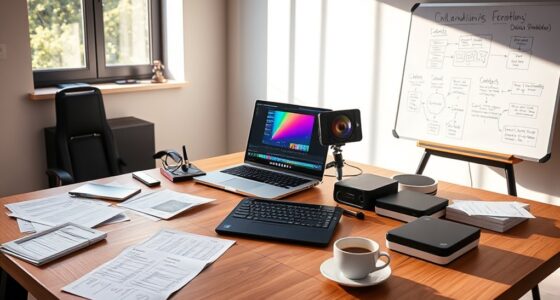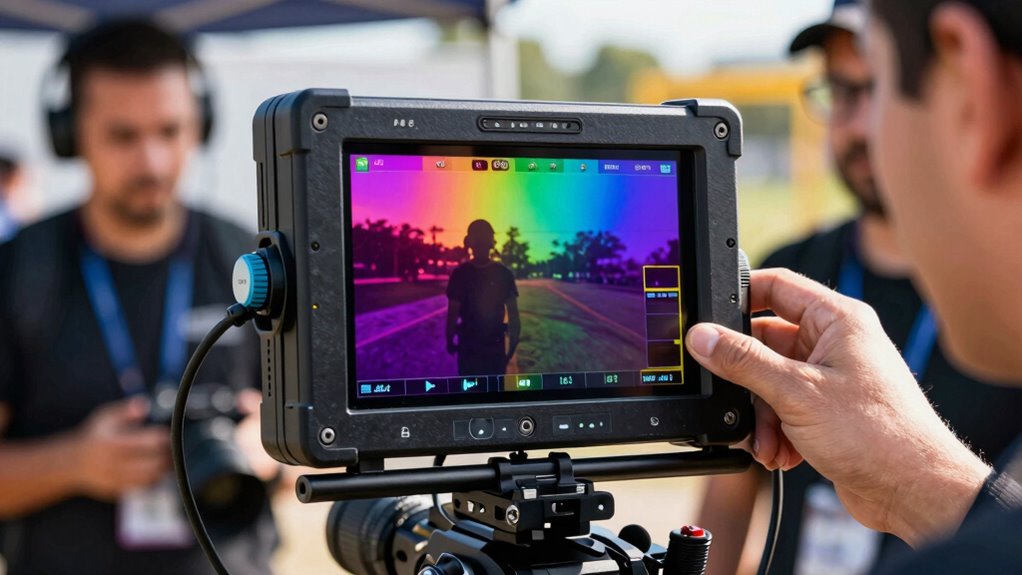

A field monitor acts as your digital eye on set, showing you the camera’s view in real time. It helps you quickly adjust framing, focus, and exposure to match your creative vision, reducing surprises and costly reshoots. With features like focus peaking and color checks, you get instant feedback to guarantee consistency and quality. Keep exploring, and you’ll learn how proper calibration and ergonomic design make your filming smoother and more efficient.

Get movie nights delivered free — and shop member deals
- Fast, free delivery on millions of items
- Access to Prime Big Deal Days deals on October 6–7
- Prime Video, Amazon Music and more included
Key Takeaways
- Display the camera’s live feed to assist in framing, focus, and exposure adjustments in real time.
- Enable quick visual assessments to ensure footage matches the creative vision and maintains consistency.
- Provide tools like focus peaking and magnification for precise focus and exposure control during filming.
- Help identify and troubleshoot technical issues immediately, reducing the need for reshoots.
- Support ergonomic operation with features like tilting screens for comfortable viewing during extended use.
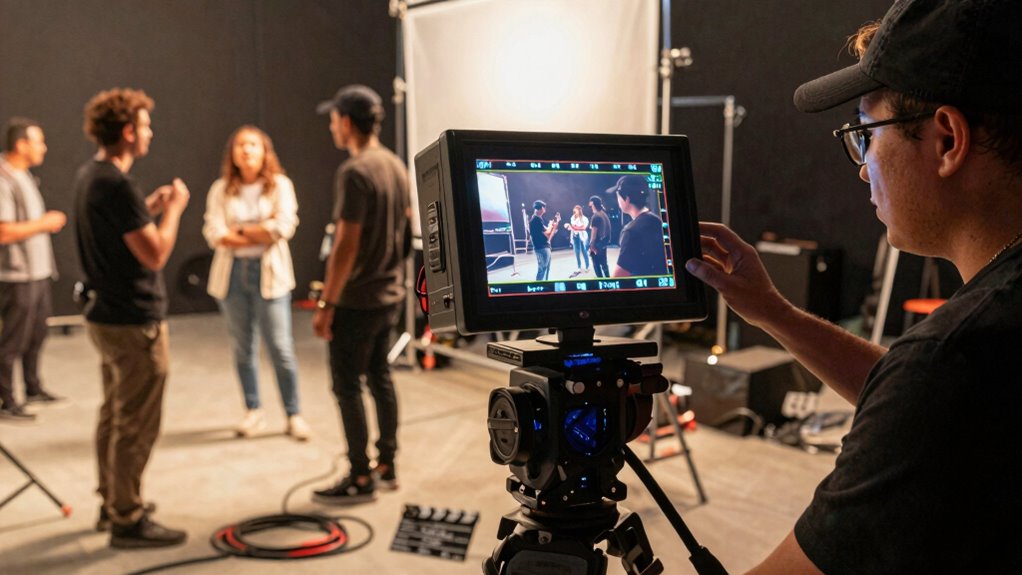
When you’re on set, having a reliable field monitor can make all the difference in ensuring your footage meets your vision. A good monitor doesn’t just display what your camera sees; it acts as your digital eye, helping you make real-time decisions about framing, focus, and exposure. One of the key features to consider is camera calibration. Proper calibration ensures that the colors, contrast, and brightness you see on the monitor accurately reflect what’s captured by your camera sensor. Without it, you might think your shot is perfectly exposed or color-graded, only to discover discrepancies later during editing. Regular calibration of your monitor guarantees that what you see is true to life, making your on-set adjustments more precise and reducing the need for costly reshoots. Additionally, monitor calibration is essential for maintaining color consistency across different scenes and cameras. Ensuring your monitor is properly calibrated can also help prevent color discrepancies, which can be costly and time-consuming to fix in post-production.
Calibration ensures your monitor displays true-to-life colors, minimizing post-production surprises and costly reshoots.
Monitor ergonomics also play a critical role in how effectively you can work during a shoot. A well-designed monitor should be easy to mount, adjust, and operate, even in the dynamic environment of a set. It needs to be lightweight enough to carry around without fatigue but sturdy enough to withstand the rigors of production. The placement and angle of your monitor influence how comfortably you can view the footage for extended periods. Good ergonomics minimize neck strain and eye fatigue, allowing you to stay focused and make quick, confident decisions. Features like tilting screens, adjustable stands, and lightweight frames contribute to a more comfortable and efficient workflow. Proper ergonomics can also help prevent long-term discomfort that might hinder your productivity on set. Investing in an ergonomically sound monitor setup can improve your efficiency and reduce physical strain over long shooting days.
Beyond calibration and ergonomics, a field monitor offers you critical tools that help you troubleshoot issues on set before they become problems. You can check your focus with magnification features or focus peaking, ensuring sharpness in every shot. You also get real-time feedback on exposure and color balance, avoiding surprises during post-production. When you’re adjusting camera settings, having a monitor that displays accurate, calibrated images helps you fine-tune your setup. This reduces guesswork and guarantees consistency across shots, especially when working with multiple cameras. Keeping an eye on real-time feedback ensures your footage remains aligned with your creative vision without unnecessary delays. Properly utilizing these tools can significantly improve the quality and consistency of your footage.
field monitor with focus peaking
As an affiliate, we earn on qualifying purchases.
As an affiliate, we earn on qualifying purchases.
Frequently Asked Questions
How Do Field Monitors Differ From Director’s Monitors?
Field monitors differ from director’s monitors mainly in their focus on practicality and precision. You’ll notice that they emphasize color accuracy, ensuring you see true-to-life images, and feature ergonomic design, so you can use them comfortably during long shoots. While director’s monitors might prioritize advanced features or larger screens, field monitors are built for durability, portability, and delivering accurate visuals under various lighting conditions, making them essential on set.
What Are the Different Types of Field Monitors Used on Set?
You choose from a variety of field monitors, from portable, budget-friendly models to professional-grade units. Wireless connectivity is vital for seamless, screen-sharing flexibility, while color accuracy ensures true-to-life visuals. Small, lightweight monitors are perfect for quick setups, whereas larger, high-resolution monitors provide detailed displays for critical shots. Regardless of type, these monitors help you verify focus, framing, and color, making your on-set work more precise and efficient.
How Do Monitors Affect the Director’s Workflow During Filming?
Monitors considerably streamline your workflow during filming by enabling quick visual assessments, which improve director-crew communication. You can spot issues instantly, reducing the need for extensive post-production adjustments later. This real-time feedback helps you make immediate decisions, ensuring shots meet your vision. In turn, it saves time and resources, keeping everyone on the same page and allowing for more efficient filming, ultimately enhancing the overall quality of your project.
What Are the Key Features to Consider When Choosing a Field Monitor?
While clarity and precision matter, choosing a field monitor isn’t just about size or resolution. You need to prioritize color accuracy, ensuring your footage looks true to life, and battery life, so your shoot doesn’t stall unexpectedly. These features work together like a reliable crew, keeping your visuals vibrant and your workflow smooth. In the chaos of filming, a monitor that balances these qualities becomes your steady anchor.
How Do Field Monitors Handle Various Lighting Conditions on Set?
You’ll find that field monitors handle various lighting conditions well by offering high color accuracy, ensuring you see true colors even in challenging light. They also feature glare reduction techniques, such as matte screens or anti-reflective coatings, which help you view the screen clearly outdoors or under bright lights. This combination allows you to make precise adjustments on set, regardless of lighting, improving overall shot quality.
camera field monitor with tilting screen
As an affiliate, we earn on qualifying purchases.
As an affiliate, we earn on qualifying purchases.
Conclusion
So, next time you’re on set, remember that the field monitor isn’t just a little screen — it’s your lifeline, your eye in the storm. It’s the difference between capturing perfection and missing the shot that could make or break the entire project. Without it, you’re flying blind in a sea of chaos. Trust me, overlooking this tiny device is like trying to find a needle in a haystack—impossible and reckless. Keep your monitor close; it’s your secret weapon.
4K portable field monitor for videography
As an affiliate, we earn on qualifying purchases.
As an affiliate, we earn on qualifying purchases.
calibrated video monitor for filmmaking
As an affiliate, we earn on qualifying purchases.
As an affiliate, we earn on qualifying purchases.
Evergreen bestsellers Picks
bestsellers
As an affiliate, we earn on qualifying purchases.