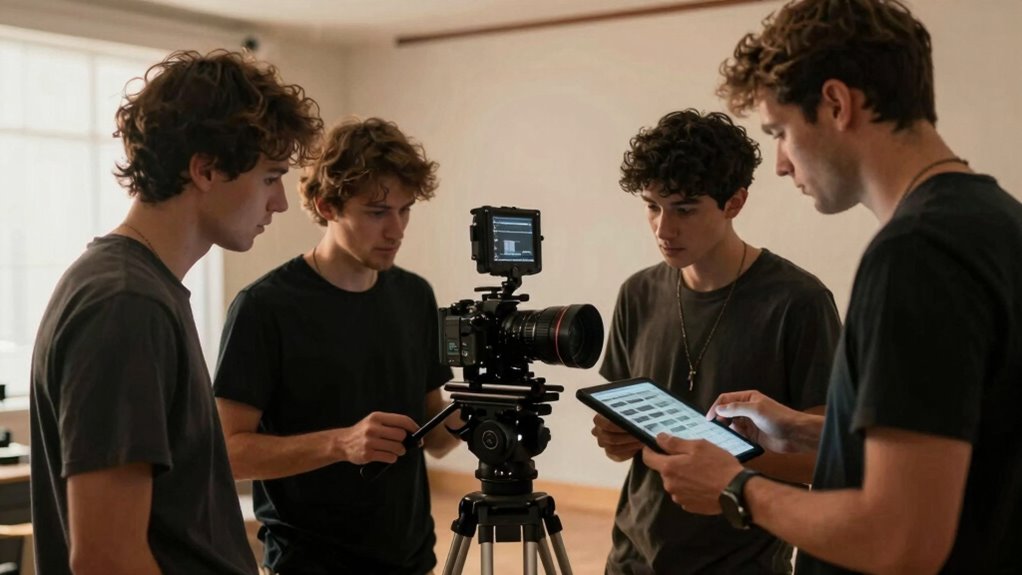

In small crew productions, adaptability is your most valuable skill. It allows you to make swift adjustments, creatively solve problems, and maximize limited resources. Your ability to stay flexible and proactive helps turn challenges into opportunities, keeping the project on track. Versatility and resourcefulness further boost your effectiveness, enabling you to wear multiple hats and quickly learn new skills. Developing this mindset guarantees your team can overcome setbacks smoothly—keep exploring to discover how to strengthen this essential trait even more.

Get movie nights delivered free with Prime
- Fast, free delivery on millions of items
- Prime Video, Amazon Music and more included
- Member-only deals all year
Key Takeaways
- Adaptability enables quick adjustments and problem-solving with limited resources.
- Resourcefulness allows creative solutions to equipment failures and obstacles.
- Versatility helps team members switch roles and acquire new skills rapidly.
- A proactive mindset turns setbacks into opportunities, maintaining project momentum.
- Flexibility fosters team resilience, collaboration, and overall project success.

In small crew productions, where every team member wears multiple hats, the most vital skill you can develop is adaptability. When resources are limited and roles overlap, your ability to adjust quickly and efficiently can make or break a project. Resourcefulness becomes your greatest asset, allowing you to creatively solve problems on the fly and make the most of what’s available. Instead of waiting for the perfect equipment or ideal conditions, you learn to leverage your environment, tools, and knowledge to keep things moving forward.
Adaptability and resourcefulness are key in small crew productions, turning challenges into opportunities for creative problem-solving.
Versatility is equally crucial. You might start the day assigned to lighting, only to find yourself needing to step into sound or set design when circumstances demand. Being versatile means you’re comfortable switching gears, acquiring new skills rapidly, and contributing wherever you’re needed most. This flexibility not only keeps the project on schedule but also boosts team morale, as everyone recognizes the importance of each member’s ability to wear multiple hats.
Your resourcefulness isn’t just about technical know-how; it’s also about mindset. When faced with setbacks, you see opportunities rather than obstacles. For example, if a piece of equipment breaks down, you don’t panic—you think creatively about alternative solutions to keep things moving. Maybe you repurpose existing gear or find a workaround that achieves the same effect. This proactive attitude minimizes delays and demonstrates your commitment to the project’s success. Understanding how contrast ratio affects image quality can help you adapt your setup to optimize visuals even when conditions aren’t ideal. Developing a problem-solving mindset enhances your ability to handle unforeseen challenges effectively, especially when you learn to recognize and utilize available resources creatively.
Being versatile requires a learning attitude. You actively seek out new skills or knowledge, even if they’re outside your comfort zone. For instance, a cinematographer might learn some basic editing or grip work, knowing that during tight schedules, helping out in different areas can save the day. The more skills you develop, the more you can step into different roles seamlessly, reducing dependencies and creating a more resilient team. Embracing a mindset of continuous improvement allows you to stay adaptable in the ever-changing landscape of production.
Furthermore, understanding the benefits of airless paint sprayers can serve as an example of how resourcefulness and adaptability in using specialized tools can dramatically improve project efficiency. Ultimately, adaptability, resourcefulness, and versatility go hand in hand in small crew productions. When you can think creatively, pivot quickly, and contribute across multiple disciplines, you become indispensable. Your ability to adapt ensures that projects stay on track, even when faced with unexpected challenges or limited resources. As a result, you help foster a collaborative environment where everyone’s strengths are maximized, and the production thrives against all odds. Developing these qualities isn’t just about improving your own skill set; it’s about elevating the entire team and ensuring the success of every project you undertake.
As an affiliate, we earn on qualifying purchases.
Frequently Asked Questions
How Do Small Crews Manage Multiple Roles Efficiently?
You manage multiple roles efficiently by embracing role flexibility and optimizing your resources. You adapt quickly to different tasks, ensuring no time is wasted switching gears. Prioritize your responsibilities to maximize productivity, and make the most of limited equipment by sharing and multitasking. Staying organized and communicating clearly helps your small crew stay on track, so everyone can contribute their skills without bottlenecks.
What Equipment Is Essential for Small Crew Productions?
Did you know that 70% of small productions find having versatile equipment vital? You need essential lighting equipment like LED panels and portable lights, which are easy to set up and adjust. Don’t forget reliable audio gear, such as handheld microphones and portable recorders, to guarantee clear sound. Having these essentials on hand allows your small crew to handle diverse scenarios efficiently, guaranteeing professional results without heavy or complicated gear.
How Do Small Crews Secure Funding or Sponsorships?
You can secure funding or sponsorships by developing strong sponsorship strategies that highlight your project’s unique value. Reach out to potential funding sources such as local businesses, community organizations, and industry partners, emphasizing mutual benefits. Create a compelling pitch and professional proposal to showcase your project’s potential. Building relationships and demonstrating your team’s passion and professionalism will increase your chances of gaining the support you need for your small crew production.
What Are Common Challenges Faced by Small Crew Teams?
Ever wondered what hurdles small crew teams face? You’ll likely encounter limited resources, tight schedules, and balancing multiple roles. Creative storytelling becomes essential, but maintaining audience engagement under these constraints can be tough. You must adapt quickly, prioritize tasks, and stay innovative to produce compelling content. Challenges push you to think outside the box, ensuring your project stands out despite the inherent obstacles of working with a small team.
How Can Small Crews Effectively Coordinate Remote Collaboration?
You can effectively coordinate remote collaboration by using clear communication tools like Slack or Zoom, ensuring everyone stays connected. Set shared goals for creative storytelling and encourage regular check-ins to track progress. Leverage collaborative platforms like Google Drive to organize scripts and assets. This approach boosts audience engagement, making your small crew’s work cohesive and dynamic, even from afar. Clear, consistent communication keeps everyone aligned and inspired.
portable lighting kit for video production
As an affiliate, we earn on qualifying purchases.
As an affiliate, we earn on qualifying purchases.
Conclusion
So, if you want your small crew production to actually see the light of day (and not just the dark corners of your editing software), mastering adaptability is key. Forget about having every gadget or fancy skill. Just roll with the punches, wear multiple hats, and keep that sense of humor intact. After all, when chaos becomes your daily routine, it’s your ability to adapt that’ll turn your chaotic masterpiece into something actually watchable—and maybe even good!
multi-function camera accessories
As an affiliate, we earn on qualifying purchases.
As an affiliate, we earn on qualifying purchases.
creative problem-solving tools for filmmakers
As an affiliate, we earn on qualifying purchases.
As an affiliate, we earn on qualifying purchases.
Columbus Day / Indigenous Peoples' Day Picks
long weekend sales
As an affiliate, we earn on qualifying purchases.