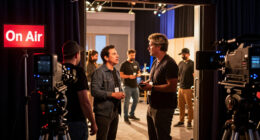
Before a shoot, your team should rehearse the lighting setup, camera angles, and sound checks to guarantee everything works smoothly. Walk through the scene, adjust lighting for shadows or glare, and test all equipment for functionality. Clear communication about the plan helps avoid surprises. Rehearsing these steps saves time and improves the final quality. Keep going to discover more essential preparation tips that will help your small team succeed.

Get movie nights delivered free with Prime
- Fast, free delivery on millions of items
- Prime Video, Amazon Music and more included
- Member-only deals all year
Key Takeaways
- Review and practice the lighting setup, including angles, intensities, and color temperatures, to ensure consistency and desired mood.
- Conduct a technical run-through of all equipment, verifying functionality, battery life, and storage readiness.
- Walk through the shot list and scene sequences to ensure team familiarity and timing.
- Practice camera and microphone operation to minimize errors during actual filming.
- Coordinate and review the lighting plan and diagrams with the team to facilitate smooth execution.

When working with small teams, thorough rehearsals can make all the difference in guaranteeing a smooth shoot. One of the first things you should focus on is the lighting setup. Proper lighting can transform your footage, so it’s vital to test how your lights will work in the actual environment. Before the shoot, walk through the space to identify potential shadows, glare, or uneven lighting. Experiment with different angles, intensities, and color temperatures to see what looks best on camera. Don’t assume your initial plan will be perfect; small adjustments during rehearsals can save you time during filming. Make sure everyone involved understands the lighting plan so they can respond quickly if changes are needed. This preparation minimizes surprises and guarantees your visuals stay consistent throughout the shoot. Additionally, understanding the impact of color temperature adjustments can help optimize your scene’s mood and clarity under different lighting conditions. It’s also helpful to review digital concepts related to lighting to ensure your setup aligns with current industry standards. Incorporating lighting diagrams into your rehearsals can further clarify setup details and improve team coordination.
Alongside lighting, an equipment check is critical. You should verify all your gear is in working order before the day of the shoot. Test your cameras, lenses, microphones, batteries, and storage media. Confirm that all equipment is functioning properly and that you have backups for essential items. It’s easy to overlook small details, but a quick run-through of each piece can prevent technical issues that might derail your shoot. Make sure your batteries are fully charged, and you have enough memory cards or external drives ready to store footage. Double-check your lighting equipment, stands, and any power sources to avoid interruptions. If you’re using special gear like filters, rigs, or drones, ensure they’re operational and properly set up. An exhaustive equipment check keeps your team focused on creative work rather than troubleshooting technical problems. Ultimately, this level of preparation can be the difference between a successful shoot and one hampered by unforeseen technical difficulties.
professional camera lighting kit
As an affiliate, we earn on qualifying purchases.
As an affiliate, we earn on qualifying purchases.
Frequently Asked Questions
How Long Should a Rehearsal Session Typically Last?
A rehearsal session should typically last about 1 to 2 hours. During this time, you can focus on lighting adjustments and camera angles, ensuring everything flows smoothly. Keep the session efficient by prioritizing key scenes and shifts. If needed, extend slightly for complex shots. Remember, the goal is to optimize time while ironing out technical details, so stay focused and keep breaks brief to maintain momentum.
Who Should Be Involved in the Rehearsal Process?
Imagine a well-oiled machine, where every cog moves in harmony. You should involve the director, camera operator, lighting technician, and sound engineer in the rehearsal process. They’ll fine-tune lighting setups and conduct sound checks, ensuring everything clicks into place. Your team’s collaboration guarantees smooth shifts, clear visuals, and crisp audio, transforming your shoot into a seamless performance. Everyone’s input strengthens the foundation for success.
What Equipment Should Be Tested During Rehearsals?
You should test your lighting setup and perform a sound check during rehearsals. Make sure the lighting is even, well-positioned, and suits your scene’s mood. Check all microphones and audio equipment to identify any issues with sound quality or interference. Doing these tests beforehand helps you troubleshoot problems early, ensuring smooth filming. It also saves time on set, allowing your team to focus on capturing great footage.
How Do You Coordinate Timing Across Team Members?
Coordinate timing by establishing clear communication and routines. You should synchronize lighting and sound check procedures early, ensuring everyone’s cues align perfectly. Use walkie-talkies or headsets for real-time updates and confirm everyone’s understanding of timing cues. Practice scene runs to refine the rhythm, making sure lighting adjustments match sound cues. By consistently rehearsing these elements, your team stays in sync, delivering a seamless, professional shoot.
What Common Mistakes Should Be Avoided During Rehearsals?
You should avoid rushing through rehearsals without practicing acting cues and camera angles thoroughly. Don’t skip testing different shots or neglecting to clarify actors’ cues, as mistakes here cause delays. Also, steer clear of ignoring team feedback or assuming everyone’s on the same page. Instead, focus on detailed rehearsals, ensuring everyone understands cues and camera setups. This prep minimizes errors and boosts confidence during the actual shoot.
As an affiliate, we earn on qualifying purchases.
Conclusion
By nailing these rehearsals, you’re setting yourself up for a smooth shoot, turning potential chaos into a well-oiled machine. Remember, a little prep goes a long way—don’t leave things to chance. When everyone’s on the same page, even surprises won’t throw you off course. So, take the time to rehearse, tighten your plan, and watch your shoot come together seamlessly. After all, it’s better to be safe than sorry when the camera’s rolling.
camera and sound equipment check tools
As an affiliate, we earn on qualifying purchases.
As an affiliate, we earn on qualifying purchases.
lighting diagram software for filmmakers
As an affiliate, we earn on qualifying purchases.
As an affiliate, we earn on qualifying purchases.
Fall Picks
fall essentials
As an affiliate, we earn on qualifying purchases.