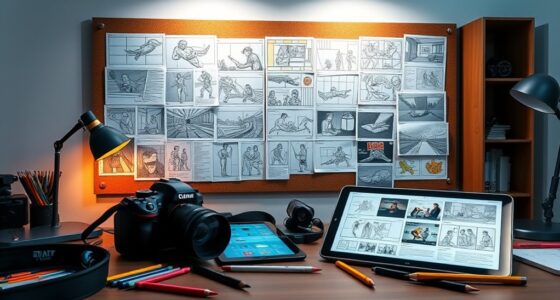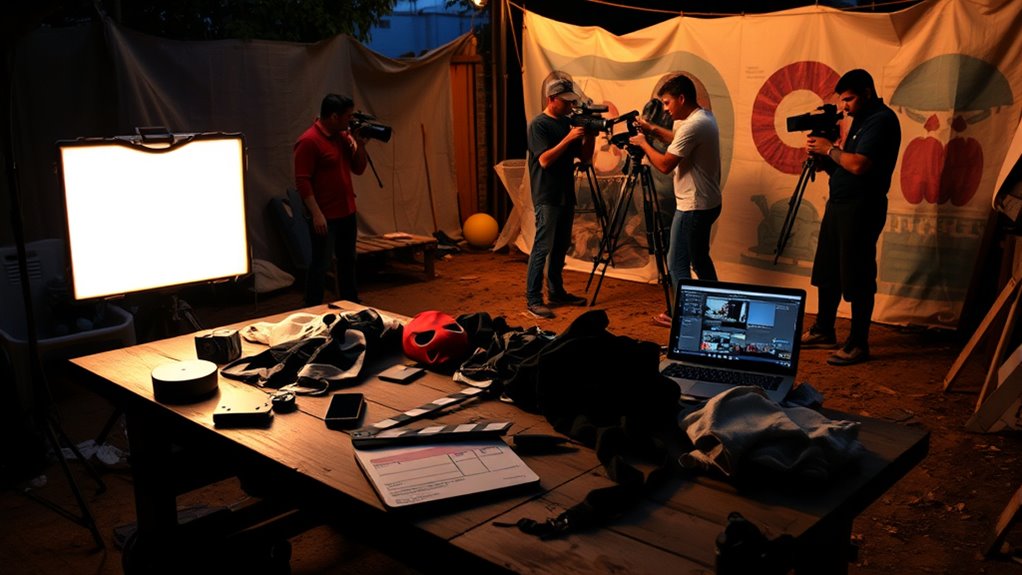

To plan a micro-budget trailer shoot, focus on using talented local actors, friends, or volunteers, and choose accessible locations like parks or streets to save costs. Be creative with your resources by leveraging personal spaces, clever camera angles, and inexpensive props. Schedule efficiently and prepare thoroughly to avoid surprises, and stay flexible in adjusting scenes or locations to match your resources. If you want more tips on stretching your budget further, keep exploring how to maximize every aspect.
Key Takeaways
- Select accessible, low-cost locations and obtain necessary permits early to avoid delays.
- Cast talented local performers or volunteers who can bring authenticity without high fees.
- Utilize personal or community spaces, and creatively dress sets to enhance production value.
- Plan meticulously with detailed shot lists and schedules to maximize efficiency and resource use.
- Maintain flexibility to adapt scenes, locations, or talent to fit budget constraints and available resources.
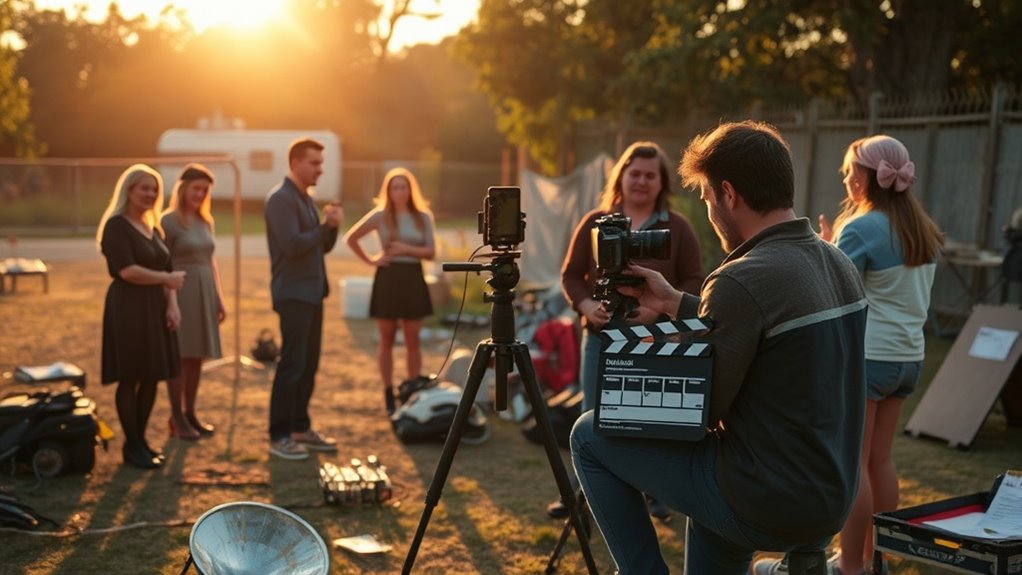
Planning a micro-budget trailer shoot might seem intimidating, but with the right approach, you can create a compelling preview without breaking the bank. One of the biggest hurdles you’ll face is handling casting challenges. Since your budget is tight, you can’t afford high-profile actors or extensive casting calls. Instead, focus on finding talented local performers, friends, or volunteers who are enthusiastic about the project. Be clear about your expectations from the start, and look for individuals who can bring authenticity and energy without demanding big paychecks. Hosting informal auditions or casting through local community groups can help you discover hidden gems who fit your vision and budget.
Location scouting is another critical aspect that requires strategic planning. Instead of renting expensive studios or shooting in popular, costly areas, seek out accessible, free, or low-cost locations. Think about using public parks, residential streets, or local businesses willing to lend space in exchange for promotion. When scouting, visit potential sites at the same time of day you plan to shoot to assess lighting and noise levels. Always get permission beforehand—many public locations require permits, but some might be free or inexpensive. If you’re shooting indoors, consider your own space or that of friends and family, which can add a personal touch and eliminate location fees altogether. Additionally, understanding the power requirements for your equipment ensures safety and efficiency during your shoot.
As you navigate casting challenges and location scouting, remember that flexibility is your best tool. Be prepared to adapt your story or scenes to fit available talent and locations. For instance, if you can’t find the perfect actor for a specific role, consider adjusting the character to better match your cast’s strengths. Similarly, if your chosen location isn’t ideal, brainstorm ways to make it work creatively—perhaps through clever camera angles or set dressing. Planning ahead is vital; make detailed lists of what you need and research every option thoroughly to avoid surprises on shoot day.
budget film production equipment
As an affiliate, we earn on qualifying purchases.
As an affiliate, we earn on qualifying purchases.
Frequently Asked Questions
How Do I Secure Permits for a Micro-Budget Shoot?
You need to research permit requirements for your chosen location, which often involves contacting local city or county offices. Start with location scouting early, and ask about specific permits needed for filming. Submit your applications well in advance, providing detailed plans and filming schedules. Keep all documentation handy, and follow up if necessary. This guarantees your micro-budget shoot stays legal and runs smoothly without unexpected delays.
What Are Cost-Effective Locations for Filming?
You should consider urban parks, public streets, and community spaces—they’re cost-effective and often free or inexpensive. Urban parks provide scenic backgrounds without extra fees, public streets offer dynamic settings with minimal permits, and community spaces are accessible and budget-friendly. By choosing these locations, you maximize your resources while adding authentic flavor to your trailer. Stay flexible, scout early, and always check local regulations to avoid surprises.
How Can I Find Affordable or Free Film Equipment?
You can find affordable or free film equipment by exploring online marketplaces like Facebook Marketplace, Freecycle, and local rental groups. Look for budget-friendly lighting options such as practical lights or DIY solutions, and consider building your own camera gear using tutorials from YouTube. Borrow equipment from friends or local film communities, and always check for free or low-cost rental programs at nearby colleges or community centers.
What Are Tips for Casting on a Tight Budget?
To cast on a tight budget, focus on reaching out to local community groups, acting schools, or online platforms where aspiring actors seek exposure. Prioritize diversity to boost audience engagement and reflect real-world stories. Offer shared credits or small roles to attract talent willing to work for experience or exposure. Keep auditions simple, and be transparent about budget limitations to build trust and foster enthusiasm among diverse actors.
How Do I Create a Compelling Trailer With Limited Resources?
You can craft a compelling trailer on a tight budget by using clever storyboarding techniques to highlight your story’s core and avoid wasted shots. Focus on strong visuals and sharp sound design strategies—think creative sound effects and music— to evoke emotion without expensive equipment. Keep it simple, emphasize your unique angle, and let your story shine through authentic, well-planned scenes that captivate viewers without breaking the bank.
portable LED lighting kit for videos
As an affiliate, we earn on qualifying purchases.
As an affiliate, we earn on qualifying purchases.
Conclusion
With careful planning and resourcefulness, you can create a compelling trailer without breaking the bank. Focus on key shots, utilize available locations, and be creative with your approach. Remember, great storytelling matters more than expensive equipment. Are you ready to turn your vision into reality on a micro-budget? If you believe in your project and stay adaptable, you’ll find that limitations can spark your most innovative ideas. Now, go make something unforgettable.
cinema camera accessories for low budget
As an affiliate, we earn on qualifying purchases.
As an affiliate, we earn on qualifying purchases.
film production props and set dressing
As an affiliate, we earn on qualifying purchases.
As an affiliate, we earn on qualifying purchases.