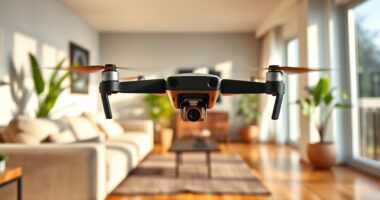
In your trailer production workflow, drone gear plays a crucial role by capturing stunning aerial shots that add scale and drama. You’ll plan these scenes carefully, considering shot angles, locations, and safety protocols, ensuring they fit seamlessly with set design and lighting. Regular equipment checks and calibration help prevent delays and technical issues, keeping production efficient. Keep exploring how integrating drone technology enhances your storytelling and streamlines your overall process.

Get movie nights delivered free with Prime
- Fast, free delivery on millions of items
- Prime Video, Amazon Music and more included
- Member-only deals all year
Key Takeaways
- Drone gear is integrated during aerial shot planning to ensure seamless scene coverage and optimal storytelling.
- Equipment calibration is scheduled within the workflow to guarantee stable, high-quality footage during filming.
- Safety protocols and regulatory compliance are prioritized to prevent accidents and legal issues throughout drone operations.
- Regular equipment checks and troubleshooting improve overall production efficiency and reduce delays.
- Environmental considerations are incorporated into drone planning to promote sustainable and responsible filming practices.

In modern trailer production, drone gear has become a vital tool for capturing stunning aerial shots that enhance the overall visual storytelling. When you incorporate drone footage into your workflow, the first step is aerial shot planning. This involves carefully considering what scenes will benefit from aerial perspectives and mapping out how those shots fit into the narrative. You’ll need to determine the best angles, altitudes, and movements to convey the mood or emphasize specific locations. Proper planning ensures you get the shots you need without wasting time during filming. It also helps you coordinate with other departments, like set design and lighting, so that your aerial shots integrate seamlessly into the final product.
Once you’ve mapped out your aerial shot plan, equipment calibration becomes a crucial step. Before you take the drone into the field, you must ensure all gear is functioning correctly. Equipment calibration involves checking the drone’s sensors, camera settings, and flight controls to guarantee stability and image quality. Accurate calibration minimizes the risk of technical issues and helps you achieve smooth, professional footage. This step is particularly important when working under tight schedules or in challenging environments, where even minor errors can cause costly delays or subpar shots. Regular calibration routines should be embedded into your workflow, especially if you’re switching between different drones or camera configurations. Additionally, understanding the technology behind drone gear can help troubleshoot potential issues more effectively, ensuring a smoother production process. Familiarity with drone safety protocols is also vital to prevent accidents and ensure compliance with regulations. Developing a comprehensive understanding of aerial shot techniques can further elevate the quality of your footage and enhance storytelling. Incorporating environmental considerations into your planning can also help in achieving more sustainable and responsible drone operations.
Popular right now

Ninja Foodi 10-Qt DualZone Air Fryer, 6-in-1, Black (DZ302)

Dyson W1 PencilWash Wet and Dry Cleaner with Dok Cordless Wet Floor Cleaner

Philips 2200 Series Fully Automatic Espresso Machine with Classic Milk Frother, 2 Coffee Varieties, Intuitive Touch Display, Ceramic Grinder
As an affiliate, we earn on qualifying purchases.
Frequently Asked Questions
What Are the Legal Requirements for Drone Filming?
To film with a drone, you need to follow legal requirements like respecting drone airspace regulations and obtaining necessary permits. You should also carry liability insurance to cover potential damages or accidents. Make certain you’re aware of no-fly zones and restricted areas. By adhering to these rules, you guarantee safe, legal drone filming that aligns with local regulations and minimizes risks during your production.
How Is Drone Footage Integrated Into Editing Software?
You import your drone footage into your editing software, where you begin post-processing techniques like stabilizing shaky shots and adjusting exposure. Then, you apply color grading to enhance the visuals, ensuring consistency and mood. You can also trim clips, add effects, and synchronize audio, seamlessly integrating the drone footage into your trailer. This process makes your aerial shots look polished and visually compelling within the overall edit.
What Safety Precautions Are Necessary During Drone Shoots?
Did you know that over 60% of drone accidents happen due to human error? During drone shoots, you must wear safety gear like helmets and eye protection. Always double-check your drone’s emergency protocols, such as return-to-home functions. Keep a safe distance from people and obstacles, and make certain everyone involved is briefed on safety procedures. These precautions help prevent accidents and keep your shoot running smoothly.
How Do Weather Conditions Affect Drone Filming Schedules?
Weather conditions greatly impact your drone filming schedule. Wind hazards can make flying unsafe, causing you to delay or cancel shoots to avoid accidents. Rain delays are also common, as moisture can damage your drone’s electronics and reduce visibility. Always check the forecast beforehand, plan for possible delays, and have backup dates ready. Prioritize safety and equipment protection to guarantee smooth, successful drone shoots despite changing weather conditions.
What Training Is Needed for Drone Operators in Production?
You need specialized training to become a drone operator in production, including obtaining operator certification that covers safety regulations and flying techniques. Additionally, you should learn drone maintenance to keep your gear in top condition and avoid mishaps during shoots. This training guarantees you can safely handle the drone, respond to emergencies, and produce high-quality footage, making you a valuable part of the production team.
Conclusion
In the grand symphony of trailer production, drone gear acts like a skilled conductor, guiding each element into harmony. When you integrate aerial shots seamlessly into your workflow, it’s like adding a vibrant brushstroke to a masterpiece. Embrace this technology, and you’ll transform your project from a simple sketch into a breathtaking panorama—where every shot, like a star in the night sky, shines brighter because of the elevation drone gear brings to your creative horizon.