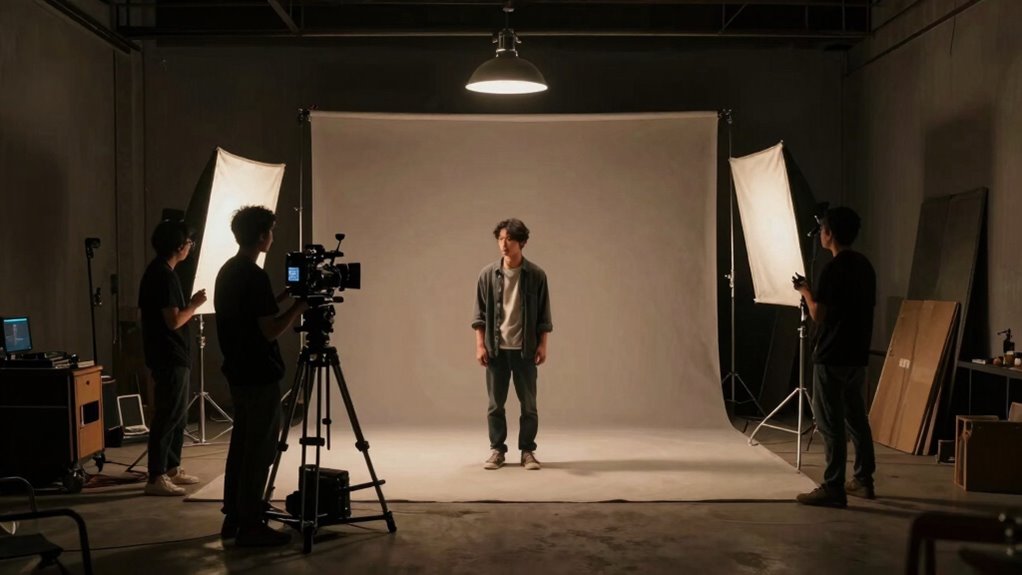

Blocking is your secret weapon in low-budget filmmaking because it transforms simple scenes into powerful visuals using actor placement, movement, and camera angles. It helps control focus, highlight relationships, and build emotional depth without extra costs. Well-planned blocking makes scenes look more professional and dynamic, saving time and money. Mastering this skill allows you to make the most of limited resources and craft engaging stories. Keep exploring to discover how blocking can elevate your films even further.

Get movie-night favorites delivered free — and shop member deals
- Fast, free delivery on millions of items
- Access to Prime Big Deal Days deals on October 6–7
- Prime Video, Amazon Music and more included
Key Takeaways
- Strategic actor placement and movement create dynamic scenes without costly effects or multiple locations.
- Effective blocking guides audience focus, enhancing storytelling on a limited budget.
- Clever use of camera angles and actor positioning adds emotional depth and visual interest affordably.
- Well-planned blocking reduces filming time and retakes, saving money and resources.
- Mastering blocking elevates scene quality, making simple setups appear more professional and polished.

If you’re working with a limited budget, mastering blocking can be your secret weapon to creating visually compelling scenes without breaking the bank. Blocking involves planning the movement of actors and the placement of the camera to tell a story effectively within your constraints. By thoughtfully choreographing actor movement and choosing strategic camera angles, you can add depth, emotion, and visual interest without expensive set designs or special effects. It’s about making every shot count, turning simple locations into dynamic storytelling tools through clever blocking.
Effective blocking transforms simple scenes into powerful storytelling tools on a limited budget.
When you understand how to position actors and how they move within a scene, you control the audience’s focus. For example, using deliberate actor movement can highlight relationships, emotional shifts, or tension, all while guiding viewers’ eyes to key details. Combining this with well-chosen camera angles amplifies the effect. Low-angle shots can make a character seem powerful, while high angles can evoke vulnerability. Over-the-shoulder shots or close-ups can intensify intimacy or confrontation. Through strategic placement of the camera and actor movement, you create a visual rhythm that draws viewers into the story without needing costly effects or elaborate sets.
Effective blocking also allows you to maximize the potential of limited locations. Instead of moving to new places, you can reposition actors within the same space to suggest different environments or emotional states. For instance, shifting actors closer together during an intimate scene or creating distance during conflict can be achieved with simple adjustments in actor movement and camera angles. This flexibility not only saves money but also adds variety and visual interest, making scenes feel richer and more polished. A good understanding of lighting techniques can further enhance these effects by adding depth and mood without additional costs.
Furthermore, good blocking makes your scenes more efficient to shoot. When actors know their marks and movements, filming becomes smoother and quicker. This saves time and reduces costs associated with multiple takes, which is critical when working within a tight budget. Plus, well-blocked scenes naturally look more professional because the composition feels deliberate and balanced. You don’t need fancy equipment to create compelling images—just a keen eye for positioning and movement.
Additionally, understanding how contrast ratio and lighting influence image quality can help you make the most of your limited resources by controlling shadows and highlights to enhance mood and clarity. Ultimately, mastering blocking is about thinking creatively within your means. It’s a skill that transforms basic footage into engaging storytelling by leveraging camera angles and actor movement. With practice, you’ll discover how to craft scenes that are visually dynamic and emotionally resonant, all without overspending. When you get blocking right, you’ll see how it elevates your film, proving that sometimes, less truly is more.
As an affiliate, we earn on qualifying purchases.
Frequently Asked Questions
How Does Blocking Influence the Storytelling Tone?
Blocking considerably influences your storytelling tone by guiding camera angles and positioning actors to evoke specific emotions. When you carefully plan blocking, you shape how the audience engages with each scene, emphasizing tension, intimacy, or humor. Your choices in actor movement and placement create a visual rhythm that amplifies the story’s mood, making every shot more impactful and ensuring your audience feels connected and engaged throughout the film.
Can Blocking Improve Actor Performances on a Budget?
Blocking can turn your actors into movie magic machines, transforming simple performances into mesmerizing scenes. By carefully arranging characters to enhance character chemistry and optimize visual composition, you make performances pop without extra takes or fancy effects. It’s like giving your actors a stage to shine, making every gesture count. With strategic blocking, even on a tight budget, you elevate performances, creating a powerful emotional impact that feels big and professional.
What Are Common Mistakes to Avoid in Blocking?
Avoid common blocking mistakes like neglecting camera angles and scene pacing. Don’t overlook how actors’ movements impact shot composition; it can cause awkward framing or confusion. Keep scene pacing in mind—rushing or dragging scenes can lose audience engagement. Make sure actors have clear marks and natural movement cues. By planning carefully around camera angles and scene flow, you’ll create more dynamic shots and improve overall storytelling, even on a tight budget.
How Does Blocking Affect Post-Production Editing?
Blocking directly impacts post-production editing by guiding camera movement and scene composition, making editing smoother and more efficient. When you plan your blocking well, it guarantees shots are consistent and transitions are seamless, reducing the need for extensive corrections. Good blocking helps editors easily follow the story’s flow, saving time and effort. It also minimizes the risk of mismatched shots, allowing you to craft a polished final product with less post-production hassle.
Is Professional Blocking Necessary for Amateur Filmmakers?
Professional blocking isn’t necessary for amateur filmmakers, but it’s a powerful tool for precision and professionalism. Cost-effective techniques like thoughtful staging and strategic positioning can elevate your scenes, even if you’re improvising. When you plan your blocking, you direct your actors and camera with clarity, creating mesmerizing compositions without costly reshoots. Simple, strategic staging makes scenes more visually appealing, helping you craft compelling storytelling on a shoestring budget.
cinematography camera angles guide
As an affiliate, we earn on qualifying purchases.
As an affiliate, we earn on qualifying purchases.
Conclusion
Mastering blocking can transform your low-budget film into a visually compelling story. When you carefully position your actors and camera, you create depth, focus, and emotion without costly extras or sets. Imagine a small scene where strategic blocking turns a simple conversation into a tense standoff, much like in “The Blair Witch Project,” where minimal resources heightened suspense through effective positioning. With thoughtful blocking, you leverage every frame to tell a powerful story—proving less really can be more.
As an affiliate, we earn on qualifying purchases.
low-budget filmmaking lighting equipment
As an affiliate, we earn on qualifying purchases.
As an affiliate, we earn on qualifying purchases.
Halloween Picks
halloween
As an affiliate, we earn on qualifying purchases.