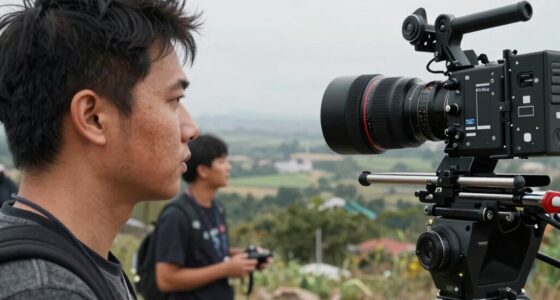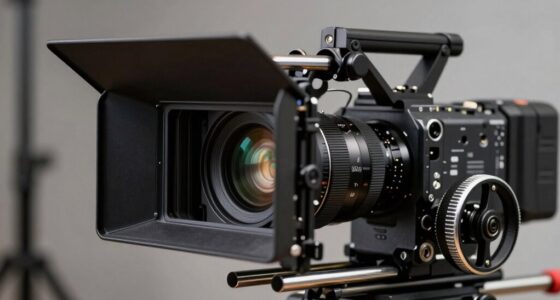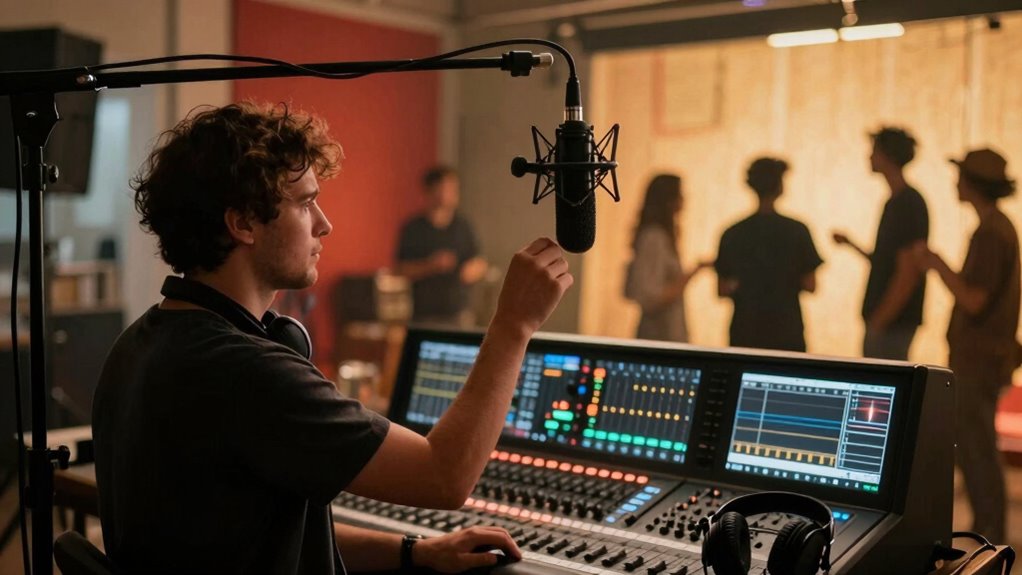

Proper audio planning before rolling helps you get clear, professional sound and avoids costly re-shoots. By choosing the right microphone placement and evaluating your environment, you can minimize background noise and echoes. Testing equipment and adjusting settings early guarantees consistent audio quality. Taking these steps boosts your production’s overall professionalism and effectiveness. If you keep exploring, you’ll discover how thoughtful preparation can make a real difference in your final content.
Key Takeaways
- Proper audio planning ensures optimal microphone placement for clear, balanced sound and minimizes background noise.
- Evaluating room acoustics beforehand prevents echoes and muddy audio, improving overall sound quality.
- Testing audio setup early helps identify issues, reducing the need for re-shoots and saving production time.
- Thoughtful preparation allows for selecting appropriate accessories like windshields and filters to enhance sound.
- Good audio planning results in professional, engaging content that effectively conveys the message.
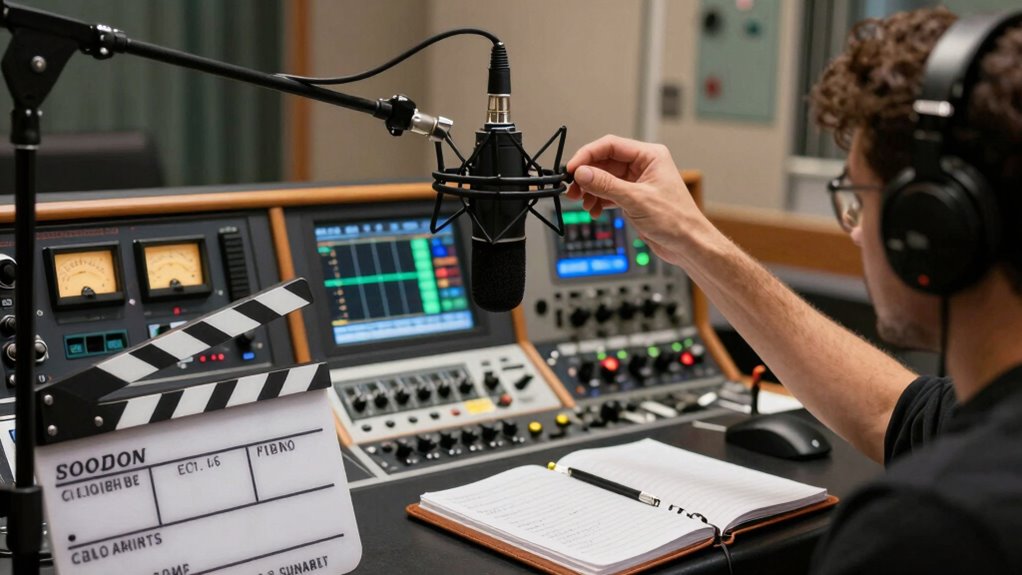
Have you ever wondered why some videos sound crystal clear while others struggle with background noise or muffled audio? The answer often lies in the planning you do before hitting record. Sound quality isn’t just about having a good microphone; it’s about how you position that microphone and anticipate the acoustics of your environment. Proper audio planning ensures your message comes through loud and clear, making your content more professional and engaging.
One of the first things you need to think about is microphone placement. Where you position your microphone dramatically impacts the clarity of your audio. If it’s too far from the speaker, you risk capturing more ambient noise and losing vocal detail. If it’s too close, you might get unwanted popping sounds or exaggerate mouth noises. The goal is to find a sweet spot that captures the voice directly while minimizing background sounds. Using a directional microphone, like a shotgun mic, can help focus on your subject’s voice and reduce room reflections or other environmental noises. Proper placement also involves considering the distance from the sound source and the angle, ensuring consistent audio levels and avoiding phase issues.
Sound quality depends on more than just microphone placement. You should also think about the environment. Is the room acoustically treated? Are there hard surfaces that reflect sound and create echoes? These factors influence how sound travels and can make your audio muddy or uneven. If you’re filming in a space with lots of hard surfaces, consider adding soft materials like curtains, rugs, or acoustic panels to dampen reflections. This reduces echo and makes your audio clearer, which is essential for a professional feel. Additionally, understanding the environmental acoustics of your space can help you further optimize your setup. Taking a moment to evaluate your environment can be the difference between good and great sound. Incorporating knowledge about soundproofing solutions can also help in creating a controlled audio environment, especially in noisy or reflective spaces. Being aware of room acoustics and how they influence sound can lead to better decisions in your setup.
Planning your audio setup beforehand saves you time during the actual shoot. It allows you to test different microphone positions, adjust levels, and identify potential noise issues before recording begins. This way, you avoid the frustration of having to re-shoot because of poor audio quality. Additionally, knowing your environment and equipment capabilities helps you make smarter choices about accessories like windshields, pop filters, or wireless transmitters.
In the end, good audio isn’t accidental; it’s a result of thoughtful planning. By paying attention to microphone placement and environment, you can dramatically improve your sound quality. When your audio is clear and well-balanced, your viewers stay engaged, and your message resonates more effectively. So, take the time to plan your audio setup before cameras roll, and you’ll see a noticeable difference in your final product.
As an affiliate, we earn on qualifying purchases.
Frequently Asked Questions
How Early Should Audio Planning Start in a Production?
You should start audio planning as early as possible, ideally during script development. Early planning allows you to focus on sound calibration and proper microphone placement from the start. By identifying potential issues beforehand, you prevent re-shoots and poor audio quality. Collaborate with your team, test equipment, and map out audio needs well before filming begins. This proactive approach guarantees clear, professional sound that enhances the overall production.
What Common Audio Issues Are Prevented With Proper Planning?
Imagine a documentary where poor sound quality ruins the scene. Proper planning helps you prevent issues like muffled audio or background noise. With thorough preparation, you control noise levels and select the right microphones, ensuring clear dialogue and crisp sound. This proactive approach avoids the need for costly post-production fixes, allowing you to capture high-quality audio that enhances your story’s impact and keeps viewers engaged.
How Do Budget Constraints Affect Audio Planning Choices?
Budget constraints force you to prioritize audio needs carefully. You must focus on essential equipment allocation, choosing gear that offers the best quality within your limited budget. This might mean investing more in a reliable microphone or sound mixer rather than numerous accessories. Smart budget prioritization guarantees you maximize audio clarity and minimize issues, making sure your production’s sound quality remains professional despite financial limitations.
What Are Essential Audio Equipment Considerations Before Filming?
Before filming, you should prioritize soundproofing techniques to minimize unwanted noise and guarantee clear audio. Consider using portable soundproof panels or blankets for control over your environment. Additionally, evaluate wireless microphone options that suit your scene’s needs, offering mobility and quick setup. These choices help you capture high-quality sound, prevent re-shoots, and keep your production on schedule without breaking the bank.
How Does Location Impact Audio Planning Strategies?
Your location is the battlefield where ambient noise can turn your audio into a muddy puddle. During location scouting, you identify potential sound issues and plan accordingly. Different environments, like busy streets or quiet rooms, demand tailored strategies, such as directional mics or soundproofing. By understanding how your chosen location influences ambient noise, you can set your audio plan up for success before the cameras start rolling.
As an affiliate, we earn on qualifying purchases.
Conclusion
If you skip audio planning, you risk turning your film into a silent disaster, where every word is lost in a sea of static and chaos. Imagine your audience desperately straining to hear what’s being said, only to be met with frustrating silence or unbearable noise. Proper planning isn’t just a step—it’s the magic shield that guarantees your story rings loud and clear, enthralling your viewers from start to finish. Don’t let poor audio sink your masterpiece!
windshield microphone for outdoor filming
As an affiliate, we earn on qualifying purchases.
As an affiliate, we earn on qualifying purchases.
audio test kit for video production
As an affiliate, we earn on qualifying purchases.
As an affiliate, we earn on qualifying purchases.